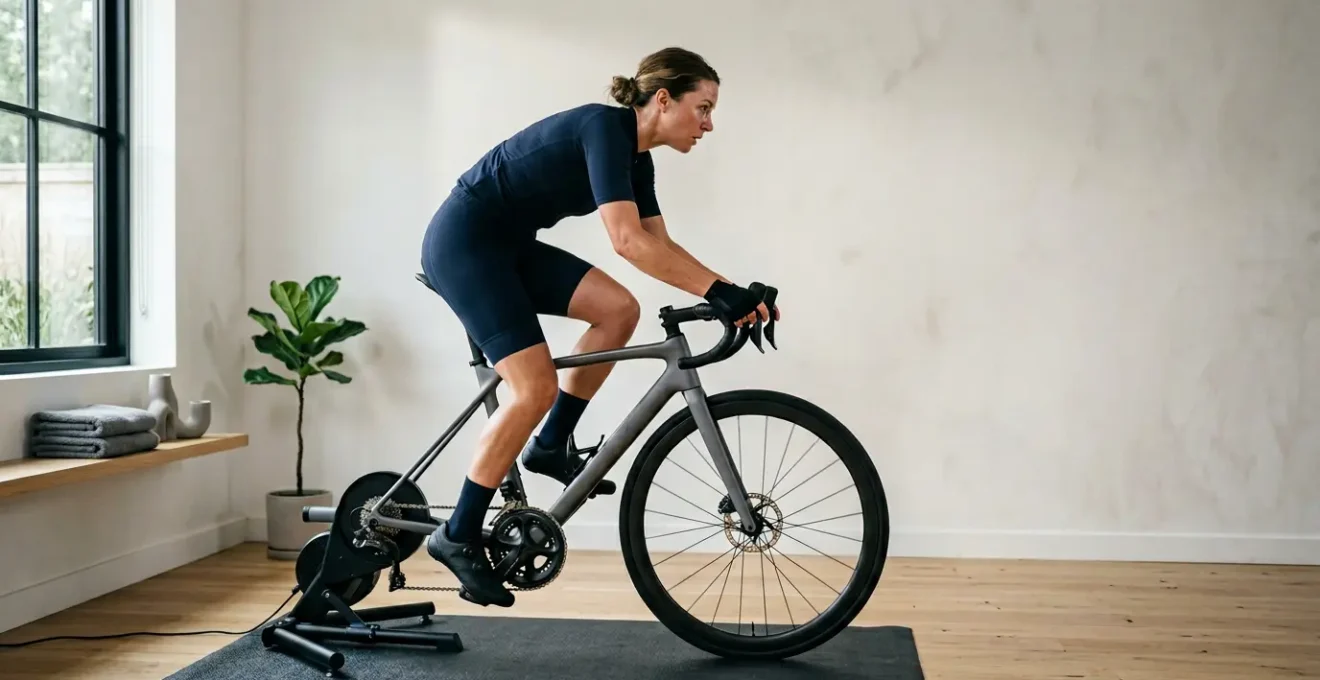
Contrary to popular belief, tracking cycling progress isn’t about chasing a single, intimidating FTP number; it’s about understanding the language of power to train smarter.
- Consistent data from any power meter is more valuable than sporadic, “perfect” data.
- Simple maintenance like cleaning your chain and calibrating your equipment provides more reliable performance gains than many expensive upgrades.
Recommendation: Focus first on understanding your equipment and key metrics like Normalized Power. This builds a foundation of ‘data fluency’ that makes every ride a better measure of progress.
If you’ve started to take cycling more seriously, you’ve undoubtedly encountered the three-letter acronym that dominates training conversations: FTP. Functional Threshold Power. It’s presented as the ultimate benchmark of fitness, the key to structured training, and the number that separates the casual rider from the dedicated athlete. This focus often leads to one place: the dreaded FTP test, a gruelling all-out effort that can feel more like a punishment than a tool for improvement. For an amateur cyclist, the protocols, the data, and the pressure can be incredibly intimidating.
The common advice is to simply “do a 20-minute test” and get a number. But this approach misses the bigger picture and often leads to anxiety and burnout. What if the key to progress isn’t just about measuring a single peak performance under duress? What if the real secret lies in developing “data fluency”—the ability to understand the nuances of power, how your equipment affects it, and how to use it to pace yourself on any ride, not just during a test? This perspective transforms power data from a source of stress into your most valuable coaching tool.
This guide is designed to be your remote cycling coach. We’re going to demystify the entire ecosystem around power measurement. We’ll break down the technical jargon, explain the “why” behind the “what,” and give you the confidence to not only measure your progress but to fundamentally understand it. Forget the lab-coat anxiety; it’s time to learn the true language of power and make it work for you.
To navigate this complex world, we will break down the essential components of at-home power training. This structured approach will provide you with a clear roadmap, from understanding your gear to executing smarter workouts.
Summary: Your Practical Guide to Mastering At-Home Power Training
- Single vs Dual Sided Power: Is Left-Only Measurement Accurate Enough?
- Normalized Power vs Average Power: Which Metric Matters for Fatigue?
- Erg Mode vs Slope Mode: Which Is Better for FTP Intervals?
- The “Match burning” Concept: How to Use Power to Pace a Hilly Ride?
- Zero Offset: Why You Must Calibrate Your Power Meter Before Every Ride?
- Smart Trainer Difficulty: What Setting Best Mimics Alpe d’Huez?
- £300 for 2 Watts: Is a Clean Chain a Better Investment?
- HIIT Cycling Workouts: Boosting Power for Short Steep British Climbs?
Single vs Dual Sided Power: Is Left-Only Measurement Accurate Enough?
One of the first hurdles when entering the world of power is equipment choice. You’ll see single-sided power meters (measuring power from one leg and doubling it) and dual-sided meters (measuring each leg independently). For an amateur cyclist, the price difference can be significant, leading to a crucial question: is a left-only measurement good enough? The short answer is yes, absolutely—with one important caveat. The key to effective training is consistency, not absolute accuracy.
While a dual-sided meter can reveal imbalances between your left and right leg, this is a fine-tuning detail for more advanced athletes. For someone starting out, the primary goal is to establish a reliable baseline to track progress. A single-sided meter provides exactly that. Your power readings will be consistent with themselves over time, which is all you need to see if your training is working. As the experts at CyclistsHub note, the principle is simple: consistency is king.
If you use the same power meter, you will have the same ‘baseline.’ Realistically, your power output may not be accurate, but it will be consistent.
– CyclistsHub, Single vs. Dual-Sided Power Meter: Which One to Buy?
Don’t let the pursuit of perfection become the enemy of good. A consistent, single-sided power meter is an excellent and affordable tool for measuring your progress. Focus on using the same equipment for all your key workouts and tests to ensure your data tells a coherent story over time. This is the first step in building what we call “hardware honesty” – understanding and working with the tools you have.
Normalized Power vs Average Power: Which Metric Matters for Fatigue?
Once you have a power meter, you’ll be flooded with data. Two of the most common metrics you’ll see are Average Power and Normalized Power (NP). While Average Power is straightforward—the mathematical average of your power output over a ride—Normalized Power is a more sophisticated and, frankly, more useful metric for understanding the true physiological cost of your effort. Think of it this way: riding at a steady 200 watts for an hour is far less taxing than an hour of surging to 400 watts and coasting, even if both rides have the same Average Power.
This is where NP shines. It uses an algorithm to estimate the power you *could have* maintained for the same physiological cost if your effort had been perfectly smooth. It accounts for the spikes and lulls in your output, which are much more metabolically demanding. For any ride with variable terrain or effort, like a hilly route or an interval session, NP will be a truer reflection of how hard the ride actually felt. As coach Jeff Bowman explains, it aligns with your body’s experience.
Normalized Power is more accurate to what your body is actually feeling.
– Jeff Bowman, Rev Tri Coaching, What is Normalized Power vs. Average Power? – Triathlete
This concept of variable effort is crucial to understanding fatigue and pacing, which we’ll explore further.
As you can see, the fluctuations in effort are what truly define the ride’s difficulty. For an amateur cyclist, the key takeaway is simple: when you’re looking at your ride data to gauge how tough it was, look at Normalized Power. It’s your best indicator of fatigue and a critical component of developing data fluency.
Erg Mode vs Slope Mode: Which Is Better for FTP Intervals?
If you use a smart trainer, you’ll encounter two primary modes for structured workouts: ERG mode and Slope (or Resistance) mode. ERG mode is the “smart” one: it automatically adjusts the resistance to keep you at a specific target power, regardless of your cadence or gearing. Slope mode, on the other hand, simulates a specific gradient, and you control the power output by changing your cadence and gears, just like riding outdoors. For FTP intervals, which mode is better?
For a beginner, ERG mode seems like the perfect solution. You just set your target power and pedal. However, it comes with a significant pitfall that has caught out many riders. This is where understanding the hardware becomes crucial to avoid a common training disaster.
Case Study: The ERG Mode Spiral of Death
The dreaded ‘spiral of death’ is a well-documented phenomenon that occurs when a rider’s cadence drops during an ERG mode interval. As you tire and your pedal speed falls, the trainer detects the drop in power and dramatically increases resistance to force you back to the target. This higher resistance makes it even harder to pedal, causing your cadence to drop further. It’s a vicious cycle that quickly grinds you to a halt, leaving you frustrated and unable to complete the interval. According to an analysis by BikeRadar on understanding and preventing this issue, a key prevention strategy is to start intervals with a slightly elevated cadence.
While ERG mode is great for shorter, high-cadence efforts, for longer FTP-style intervals, Slope mode is often a better choice for learning. It forces you to develop pacing skills, concentration, and a feel for your effort level—the very skills you need for riding outdoors. It teaches you to hold a specific power output through your own control. To get the best of both worlds and avoid the dreaded spiral, you can follow a specific protocol.
Your 5-Step Protocol to Master ERG Mode Intervals
- Warm up thoroughly (10-15 minutes) to allow your trainer and power meter to stabilize at their operating temperature.
- Select your gearing: use the small chainring up front and a cog in the middle of your cassette to optimize flywheel speed and trainer responsiveness.
- Execute a pre-emptive cadence boost: consciously increase your cadence by 5-10 RPM about 10 seconds before the interval is scheduled to begin.
- Focus on maintaining a steady and smooth cadence throughout the entire interval, rather than reacting to minor power fluctuations on your screen.
- If you feel the spiral begin, stop pedaling for a moment to force the trainer to release resistance, then immediately resume pedaling at a higher cadence.
The “Match burning” Concept: How to Use Power to Pace a Hilly Ride?
Power data isn’t just for testing; it’s a real-time guide for pacing. One of the most powerful concepts for this is the idea of “burning matches.” Think of your energy for a ride as a limited book of matches. Each time you make a very hard effort—surging up a short, steep climb, sprinting for a sign, or closing a gap—you burn a match. Once they’re all gone, you’re spent. The key to finishing a long, hilly ride strong is to use your matches wisely.
But what constitutes a “match”? It’s more than just riding hard. It’s a significant effort above your sustainable threshold. Hunter Allen, one of the pioneers of training with power, provides a clear, data-driven definition.
As a starting point, I propose that for most riders and racers, a match can be defined as an effort in which you go over threshold power by at least 20% and hold it there for at least one minute.
– Hunter Allen, Peaks Coaching Group, What Is A Match? – TrainingPeaks
This idea of an “effort economy” is a strategic game-changer. On a hilly ride, it’s tempting to attack every climb. But a power meter teaches you to be strategic. You learn to ride the climbs at or just below your threshold, saving your high-intensity “matches” for only the most critical moments or the final push to the finish.
For the amateur cyclist, this is liberating. You no longer have to guess your effort. You can look at your head unit and know, “This effort is sustainable” or “Warning: I’m about to burn a valuable match.” It transforms pacing from a dark art into a manageable science, ensuring you have energy left for the entire ride.
Zero Offset: Why You Must Calibrate Your Power Meter Before Every Ride?
Here is one of the most important, yet often overlooked, aspects of training with power: calibration. You can have the most expensive power meter on the market, but if you don’t calibrate it, the data it provides is unreliable. This isn’t about a major, time-consuming service; it’s a simple 10-second procedure called a “zero offset.” Think of it like setting the scale to zero before you weigh yourself. It tells the power meter what “zero torque” feels like, creating an accurate baseline for all subsequent measurements.
Why is this so critical? Power meters are sensitive electronic instruments, and their accuracy can be affected by changes in temperature. The metal in the crank or pedals expands and contracts with temperature shifts, which can throw off the strain gauges that measure force. If you store your bike in a cool garage and then ride it out into the warm sun, the readings can be significantly skewed without a fresh calibration. This is not a minor detail; it can introduce significant errors.
For example, research and data from manufacturers like Favero show that even moderate temperature fluctuations can introduce a 5-10 watt drift in power readings. That’s a huge margin of error when you’re trying to perform an FTP test or hold a precise interval. Failing to calibrate means you might be working much harder—or easier—than you think, making your training data inconsistent and misleading.
The solution is simple: perform a zero offset before every single ride. After you’ve rolled your bike outside and it has had a minute to acclimate, use your head unit to perform the calibration. It’s a non-negotiable step for maintaining what we call “system integrity.” Your data is only as good as the system that collects it, and calibration is the foundation of that system.
Smart Trainer Difficulty: What Setting Best Mimics Alpe d’Huez?
One of the most confusing settings for new smart trainer owners is “Trainer Difficulty.” Many platforms, like Zwift, default this to 50%. This often leads to the question: “To make it realistic, should I set it to 100%?” When trying to simulate a famous, steep climb like Alpe d’Huez, the instinct is to crank it up to the max for the “real feel.” However, this misunderstands the purpose of the setting and can actually make your training less effective.
The Trainer Difficulty setting does not change the power required to get up the virtual hill. 100 watts is 100 watts, regardless of the setting. What it *does* change is how the trainer translates the virtual gradient into a “felt” resistance. At 100% difficulty, the trainer mimics the gradient exactly. When the road on screen pitches up to 10%, your trainer will feel like a 10% grade, forcing you to shift into your easiest gears to maintain cadence, just as you would outside. At 50% difficulty, that same 10% virtual gradient will feel like a 5% grade to your legs, requiring less shifting.
For an amateur cyclist, a 100% setting on a steep virtual climb can be brutal. It necessitates constant shifting and can lead to grinding at very low cadences if you run out of gears—a recipe for muscular fatigue and knee strain. A setting around 25-50% is often a much better choice. It smooths out the gradients, allowing you to maintain a more consistent cadence and power output by making smaller gear changes. You still have to produce the power, but you can do it in a more controlled, biomechanically efficient way.
So, what setting best mimics Alpe d’Huez? Paradoxically, for most people, it’s not 100%. A lower setting allows you to focus on producing steady power for the duration of the climb, which is the true challenge of a long ascent, without the added complexity of frantic gear changes. It’s about training the engine, not just simulating the road.
Key takeaways
- For beginners, the consistency of data from any power meter is far more valuable than the absolute accuracy of a lab-grade device.
- Pacing isn’t guesswork; it’s a form of ‘effort economy’ where you strategically manage your high-intensity “matches” to finish strong.
- The integrity of your training data depends on simple, non-negotiable habits like calibrating your power meter and maintaining a clean drivetrain.
£300 for 2 Watts: Is a Clean Chain a Better Investment?
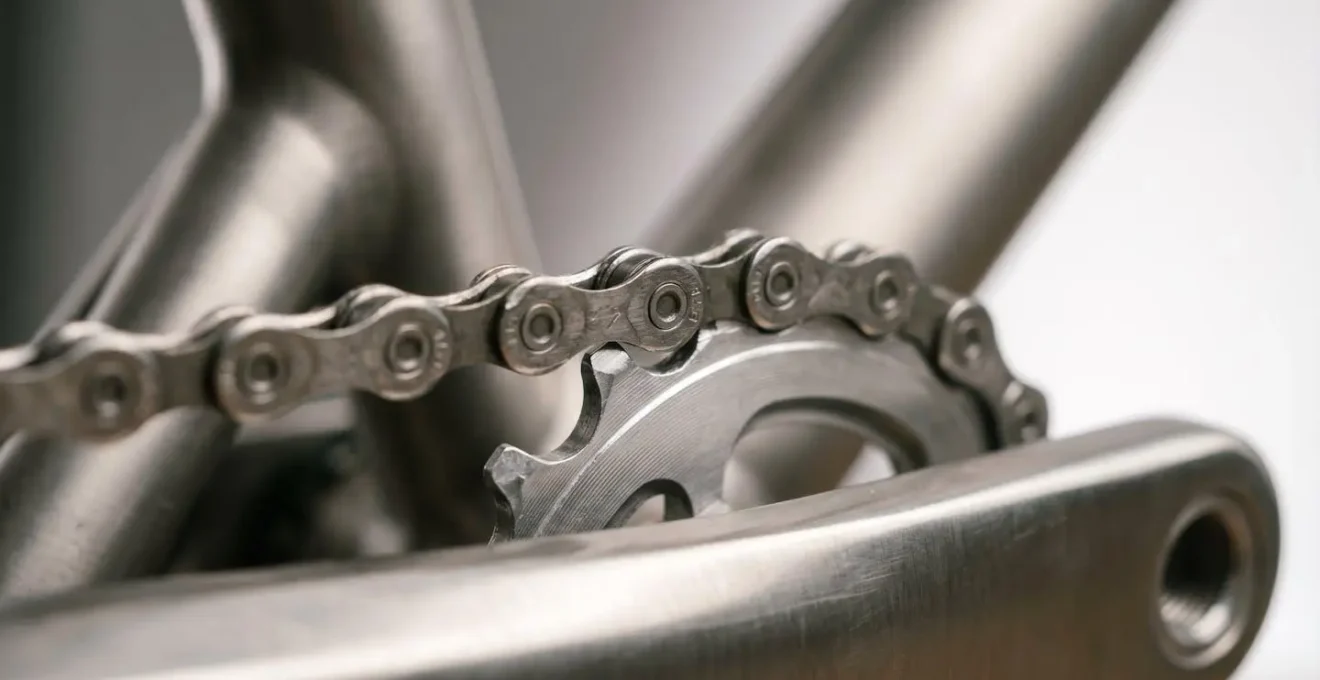
The cycling industry is full of expensive upgrades promising marginal gains. Carbon bottle cages, ceramic bearings, and ultra-light components can cost hundreds of pounds for a handful of saved watts. But for an amateur cyclist looking for affordable ways to improve, there’s a much cheaper, more effective investment you can make: a clean and properly lubricated drivetrain. It sounds too simple to be true, but a dirty, gritty chain is a significant source of power loss.
Every time your chain moves through the cassette, chainrings, and derailleur pulleys, it creates friction. When your chain is dirty, that friction increases dramatically. Grit and grime act like sandpaper, wearing down components and, more importantly, robbing you of precious power. You are literally working harder just to overcome the inefficiency of your own bike. The watts you produce with your legs are being wasted before they even reach the rear wheel.
How much power are we talking about? It’s not an insignificant amount. While it’s easy to dismiss, the data shows a clear and measurable impact. In fact, multiple independent tests demonstrate that a dirty and poorly-lubricated drivetrain can cost you anywhere from 5 to 10 watts compared to a clean one. That is a substantial, free performance boost waiting to be unlocked.
Think about that in context. Athletes will spend hundreds, even thousands, on aerodynamic wheels or frames to save a similar number of watts. For the cost of a bottle of degreaser and some chain lube—perhaps £20—you can gain the same advantage. This isn’t just about maintenance; it’s about performance optimization. Before you start saving for that new carbon component, look at your chain. A clean chain is one of the best watts-per-pound investments you can possibly make.
HIIT Cycling Workouts: Boosting Power for Short Steep British Climbs?
Now that we’ve covered the fundamentals of understanding power, it’s time to put it into action. One of the best ways to see rapid improvement in your FTP and overall power is through High-Intensity Interval Training (HIIT). These workouts involve short, intense bursts of effort followed by recovery periods. This type of training is particularly effective for preparing for the punchy, short, steep climbs common in many regions, such as the UK.
These climbs demand the ability to produce high power for a few minutes, recover quickly, and do it again. A steady-state FTP effort won’t prepare you for this. HIIT workouts, on the other hand, directly train the physiological systems needed to handle these repeated, sharp efforts. They improve your lactate clearance, boost your top-end power, and increase your ability to recover from hard surges. Here are three essential HIIT protocols you can do on your smart trainer to specifically target the demands of punchy climbing:
- Over-Under Intervals: This classic workout trains your body to clear lactate while working at a high intensity. Perform 2 minutes at 95% of your FTP immediately followed by a 30-second surge at 120% FTP. Recover and repeat 4-6 times. This simulates cresting a climb and having to push over the top.
- Low Cadence High Torque: Many steep climbs force you into a low-cadence grind. To prepare for this, perform 5-minute intervals at a low cadence of 50-60 RPM while holding Sweet Spot power (88-93% FTP). This builds specific muscular strength that high-cadence intervals neglect.
- Attack & Settle Simulation: This workout mimics the real-world pacing of attacking a short climb. Start with a 20-second out-of-the-saddle surge at 150% of FTP, then immediately transition to a seated 3-minute effort at 105% FTP. This teaches you to settle into a hard but sustainable pace after an initial attack.
Incorporating one of these sessions into your weekly routine will have a dramatic impact on your ability to handle sharp climbs. It’s the perfect way to translate your understanding of power into real-world performance gains, turning data into speed.
Start by incorporating one of these HIIT sessions into your weekly training schedule. You have the knowledge and the tools; the next step is to apply them consistently to transform your climbing performance.