
Passive safety tech promises a digital guardian angel for solo riders, but our rigorous testing reveals a critical gap between marketing claims and real-world reliability.
- Crash detection algorithms are tuned with a bias that can lead to frequent false positives, eroding a rider’s trust in the system.
- Digital ID services often fail due to a “first responder gap,” as many paramedics are not trained or equipped to use them in an emergency.
- Over-reliance on assistive tech like radar can create “automation complacency,” potentially making riders less vigilant.
Recommendation: A truly robust safety plan requires understanding your technology’s specific failure modes and building a redundant, multi-layered system, not just buying the latest gadget.
The quiet crunch of tyres on a deserted country lane is a joy unique to cycling. But for the solo rider, that idyllic silence carries a persistent, low-level anxiety: what if something happens out here? What if you crash, incapacitated, with no one around to help? Wearable tech companies have swooped in to answer this fear, offering a suite of passive safety devices—from helmet-mounted crash sensors to digital IDs—that promise to be your silent guardian. They sell peace of mind in a small, battery-powered package.
The typical advice is to simply buy a device, pair it with your phone, and trust it to call for help when you can’t. But this glosses over a far more complex reality. The effectiveness of these systems isn’t a simple “on/off” switch. It’s a spectrum of reliability governed by algorithms, user behaviour, and, most critically, how the technology intersects with the chaotic, unpredictable human world of emergency response. The real question isn’t just *if* these devices work, but *under what specific conditions* they fail.
This deep dive moves beyond the marketing hype. We will rigorously examine the failure points of these systems, from the algorithm tuning that causes false alarms to the sobering reality of how first responders interact with your tech at a crash scene. By dissecting the technology’s real-world performance, we will build a framework for you, the solo rider, to create a safety net that is genuinely reliable, because it’s built on critical understanding, not blind faith.
This article provides a rigorous, evidence-based analysis of the key passive safety technologies available to cyclists today. Explore our findings to make informed decisions about your personal safety system.
Summary: A Critical Field Test of Cycling Safety Tech Reliability
- Crash Detection Features: Do They Actually Work When You Fall?
- False Positives: How to Stop Your Device Calling 999 When You Hit a Pothole?
- MIPS vs WaveCel: Is the Extra £50 Worth It for Urban Commuting Safety?
- Digital ID: How Paramedics Access Your Data If You Are Unconscious?
- Evidence Gathering: Do Cameras Actually Lead to Prosecutions in the UK?
- The “White Van” Effect: Does Radar Make You Complacent on Shoulder Checks?
- Open-Ear Audio: Can You Safely Listen to Music While Hearing Traffic?
- Anti-Lock Brakes on Bikes: Is It a Gimmick or a Lifesaver in Rain?
Crash Detection Features: Do They Actually Work When You Fall?
The core promise of any crash detector is simple: if you have a serious fall and are unresponsive, it will automatically alert your emergency contacts. In a best-case scenario, this feature is a literal lifesaver. And sometimes, the technology performs exactly as advertised. Real-world accounts confirm that these systems can and do work in genuine emergencies, providing a critical link to help when a rider is most vulnerable.
I was T-boned by a car and suffered 3 compression vertebrae fractures, a fractured rib and collapsed left lung. While I was laying in the fetal position on the road, I clearly heard my 1030 chirping away as it had detected the accident and it did notify my gf who was an emergency contact of mine. It worked for me and I am very thankful for this particular feature.
– Garmin Edge 1030 user, Garmin Forums
This powerful testimony illustrates the technology functioning under ideal conditions. The device’s accelerometers and gyroscopes correctly identified the signature forces of a genuine, severe impact and initiated the alert protocol. For this rider, the feature wasn’t a gimmick; it was a crucial part of his emergency response chain. However, the success of this single event doesn’t guarantee universal reliability. The system’s effectiveness is entirely dependent on its ability to distinguish a catastrophic event like this from a minor, everyday jolt.
The challenge for manufacturers is programming an algorithm that can interpret the vast spectrum of forces a cyclist might experience. A high-speed collision with a vehicle generates a very different data signature from a low-speed slide on loose gravel or a sudden stop that throws the rider off balance. The system’s success hinges on its algorithm’s ability to match the event to a pre-defined “crash” profile, a task that is far from straightforward and leads to significant inconsistencies in performance, as we will explore.

This inherent uncertainty means that while crash detection is a valuable layer of a safety plan, it shouldn’t be the only one. Its digital nature makes it vulnerable to software bugs, battery death, and connectivity issues. Therefore, it’s best viewed as one component in a broader strategy of system redundancy, where technology complements traditional safety measures like informing someone of your route and expected return time.
False Positives: How to Stop Your Device Calling 999 When You Hit a Pothole?
The single greatest threat to the effectiveness of a crash detection system is not a failure to detect a real crash, but the frequency of false positives. When your device triggers an emergency alert because you hit a pothole, dropped your bike, or even just braked hard, it creates a phenomenon of trust erosion. After cancelling a few false alarms sent to worried loved ones, many users simply turn the feature off, rendering it useless. The technology’s own sensitivity becomes its undoing.
These false alarms are not random bugs; they are a direct consequence of “algorithm tuning.” Developers must decide where to set the threshold for an impact. Set it too high, and the device might miss a real, low-G impact crash. Set it too low, and it becomes oversensitive. Most manufacturers choose to err on the side of caution. As one brand noted, it’s better to have a false alarm than to ignore a real emergency. This philosophy, however, externalises the cost of that caution onto the user and their emergency contacts.
The data from real-world use is telling. Riders frequently report issues with over-sensitivity, with some user experiences documented in cycling forums suggesting devices can be triggered by routine riding events. For example, some Garmin Edge users report the incident detection ‘went off randomly when going over bumps and down steep bits’. This inconsistency means the rider can never be fully confident in the system. An Apple Watch user noted their fall detection activated on a gentle three-foot drop but failed to trigger on a much harder landing, highlighting the unpredictable nature of these sensors across different scenarios.
Ultimately, you can’t completely stop your device from misinterpreting a pothole as a catastrophe. However, you can take control by understanding your device’s specific settings and limitations. Some devices allow for sensitivity adjustments, and knowing how to quickly cancel the 30- or 60-second countdown before an alert is sent is a non-negotiable skill for any user. Managing false positives is as much a part of using the tech as charging it.
Your Pre-Ride Safety Tech Audit
- Contact & Message Review: Check that your designated emergency contacts are up to date. Read the exact default message your device sends. Is it clear? Does it provide a location? Customise it if possible for clarity.
- Sensitivity Calibration: If your device allows (e.g., Tocsen app), review the sensitivity setting. If you are a mountain biker or ride on rough roads, consider starting with a lower sensitivity to reduce false alarms.
- Cancellation Drill: Practice cancelling a false alarm. You need to be able to do this quickly and instinctively, even when flustered after a minor jolt or drop. This is the most critical step to prevent trust erosion.
- Connectivity Check: Ensure your detection device (e.g., helmet sensor) is properly paired with your phone and that your phone has cellular service. Many systems are useless without a connection to send the alert.
- Redundancy Plan: Acknowledge the tech might fail. Before every solo ride, tell someone your route, your intended direction of travel, and your estimated return time. This is your non-digital backup.
MIPS vs WaveCel: Is the Extra £50 Worth It for Urban Commuting Safety?
When discussing helmet safety, the conversation has evolved from simple impact absorption to managing dangerous rotational forces. Technologies like MIPS (Multi-directional Impact Protection System) and Trek’s proprietary WaveCel are designed to mitigate the twisting and shearing motions that can cause severe brain injury, even in low-speed impacts. MIPS uses a low-friction slip-plane liner inside the helmet, while WaveCel is a collapsible cellular structure. Both aim to allow the helmet to rotate slightly relative to the head upon impact, dissipating harmful forces.
The question for the safety-conscious rider is whether the significant price increase for these technologies is justified, especially for the typical urban commute. While both have demonstrated superior performance in lab tests compared to standard EPS foam helmets, the real-world benefit is a matter of statistical probability. You are paying for an extra layer of protection against a specific type of impact. For a rider concerned with worst-case scenarios, that extra £50 can be seen as a small price for a potentially brain-saving feature.
This concept of advanced force detection is now also being integrated into crash sensors themselves. Systems like Specialized’s ANGi (Angular and G-Force indicator) go a step further than basic accelerometers. A representative for the brand highlights its key advantage: “ANGi can detect potentially dangerous rotational forces even if your head doesn’t impact anything.” This means it could trigger an alert from a violent whiplash event—for instance, from hitting a car door or being thrown sideways—where a standard sensor that only measures linear impact might remain silent. This represents a more sophisticated approach to crash detection, moving beyond simple falls.
So, is it worth it? The answer depends on your personal risk assessment. If your commute involves high-traffic areas or you are simply looking for the highest possible level of protection, the investment in a helmet with MIPS or WaveCel, potentially paired with a rotation-sensing device like ANGi, offers a demonstrably higher tier of safety. It’s a calculated investment in mitigating a wider range of injury types.
Digital ID: How Paramedics Access Your Data If You Are Unconscious?
The idea behind digital ID bracelets and helmet stickers (like those from RoadID or ICEdot) is compelling: if you’re found unconscious, first responders can scan a QR code or visit a website, enter your unique PIN, and access your vital medical information and emergency contacts. In theory, it bridges the information gap when you can’t speak for yourself. The marketing presents a seamless, high-tech solution. The reality on the ground, however, is dangerously different.
The system’s primary failure point is the “First Responder Gap”—a significant disconnect between the technology’s capability and the protocols and training of emergency medical services (EMS). Many paramedics are either unaware of these consumer-grade systems or are explicitly or implicitly discouraged from using them due to patient privacy concerns (like HIPAA in the US) and, most critically, a lack of time in a high-stakes emergency.
I can tell you that as a Paramedic, I won’t be calling anyone’s number on a bracelet. Due to medical privacy, I won’t call anyone unless specifically requested, and I usually don’t have time for that sort of thing anyway.
– Paramedic blogger, Road to Cat 1
This blunt assessment from the front lines is a devastating critique of the entire digital ID model. A paramedic’s priority is to assess injuries, stabilise the patient, and transport them to a hospital. Fiddling with a phone to log into a third-party website is not part of their standard procedure, and this lack of familiarity is widespread.
Case Study: The Awareness Gap in Emergency Services
A stark illustration of this issue comes from an EMS chief in Shreveport, Louisiana, who oversaw around 600 first responders. When asked about RoadID, he had never heard of the system. His reaction was telling: ‘If we were to roll up on one with that bracelet, I would venture to say very few would realize what they needed to do next.’ This reveals that even at a leadership level, awareness of these popular cyclist safety products can be non-existent, creating a critical point of failure in the information chain.
This doesn’t mean all ID is useless. A simple, engraved bracelet with a primary medical condition (e.g., “DIABETIC TYPE 1”) and an emergency contact number (labelled “ICE”) is far more effective. It presents passive, immediately readable information that requires no special technology or training to interpret. For a solo rider, relying on a low-tech, universally understood solution is demonstrably more reliable than a high-tech one that exists outside of official EMS protocols.
Evidence Gathering: Do Cameras Actually Lead to Prosecutions in the UK?
Beyond personal safety, another class of cycling tech aims to provide justice: the bike camera. For years, cyclists have used cameras to document close passes and dangerous driving, but often with a sense of futility, feeling the footage would be ignored. However, recent data from the UK shows a significant shift. Police forces are increasingly embracing cyclist-submitted footage as a valid source of evidence, and it is leading to real consequences for dangerous drivers.
The numbers paint a clear picture of this trend. Police forces have streamlined the process for submitting video evidence through online portals, and this has been met with a surge in rider participation. In 2024, a record 15,779 cyclists submitted footage of poor driving to police. More importantly, this evidence is being acted upon. The percentage of cyclist-submitted camera footage reports leading to a Notice of Intended Prosecution (NIP) has shown a marked increase. Recent data from UK police forces shows the percentage of reports leading to prosecution rose from 38% in 2021 to 54% in 2024. This demonstrates that a well-captured video is no longer just for venting on social media; it’s a viable tool for enforcement.
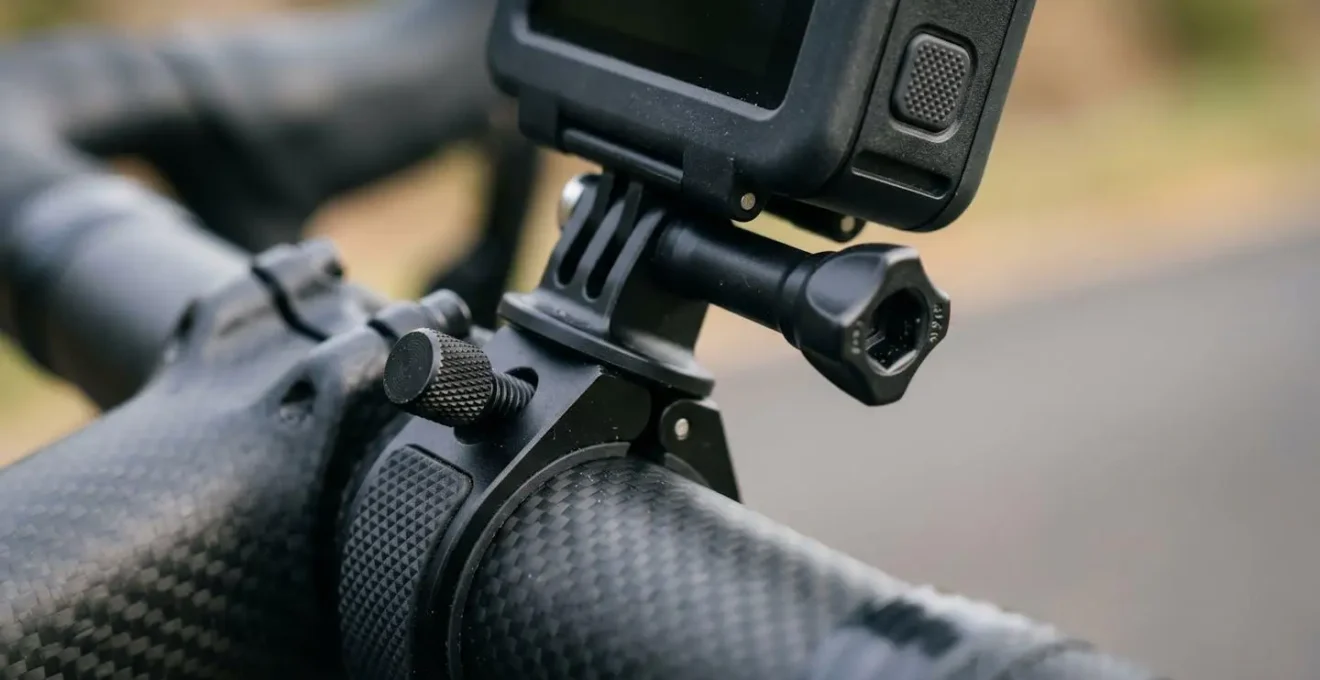
For a camera to be effective as evidence, however, it must meet certain standards. The footage needs to be clear, stable, and unedited. Crucially, it should capture the entire context of the event, including the lead-up and aftermath. Features like GPS overlays showing speed and location, and a long enough battery life to record a full ride, are essential. The goal is to create an unimpeachable chain of evidence that clearly shows the dangerous behaviour and identifies the vehicle involved, most importantly by capturing the license plate.
While a camera won’t prevent a crash in the moment, it serves two powerful purposes. Firstly, it acts as a deterrent; the knowledge that more cyclists are recording can influence driver behaviour. Secondly, it empowers the rider, providing a concrete way to seek recourse when wronged. For solo riders on rural lanes who often feel invisible and vulnerable, a camera can be a powerful tool for accountability.
The “White Van” Effect: Does Radar Make You Complacent on Shoulder Checks?
Rear-facing radar, popularised by the Garmin Varia line, is another preventative safety tool. It scans for approaching vehicles from behind and provides visual and audible alerts on a head unit, telling the rider the number of vehicles and their proximity. For many cyclists, especially on busy roads, it’s a game-changer, significantly boosting their situational awareness of what’s coming from the rear. It helps eliminate the surprise of a fast-approaching vehicle, the infamous “white van” that seems to appear from nowhere.
However, like any assistive technology, it carries a subtle psychological risk: automation complacency. This is the tendency for humans to become less vigilant when a task is handed over to an automated system. When you learn to trust the radar’s beeps, there’s a danger that you begin to neglect the fundamental, life-saving habit of the shoulder check. You start to rely on the screen’s “all clear” signal instead of your own eyes and ears before making a manoeuvre.
This is a critical failure mode that exists in the rider’s mind, not in the device’s hardware. The radar itself is exceptionally reliable at what it does: detecting vehicles approaching from directly behind. But it has blind spots. It can’t detect a vehicle that has been sitting behind you in the same position, or one approaching from a side road, or another cyclist about to overtake. The shoulder check covers these scenarios. By offloading the task of “looking behind” to the radar, a rider may inadvertently create new risks for themselves.
The key to using radar safely is to treat it as an *additional* source of information, not a replacement for your own senses. It’s a “heads-up” display, not a “head-down” one. The alert should prompt a shoulder check, not replace it. The goal is to integrate the radar’s data into your existing safety routine—check mirrors, listen for traffic, glance over your shoulder—to build a more complete, 360-degree picture of your environment. Complacency is the enemy of the solo rider, and technology should be used to fight it, not encourage it.
Open-Ear Audio: Can You Safely Listen to Music While Hearing Traffic?
For many riders, music or podcasts can make a long solo ride more enjoyable. However, traditional earbuds that block the ear canal are undeniably dangerous for cycling, as they severely compromise situational awareness. They prevent you from hearing the critical auditory cues of your environment: the whir of an approaching electric car, the shout of another cyclist, or the rumble of a truck. Open-ear headphones, which use bone conduction or small directional speakers, promise a solution: listen to your audio while keeping your ears completely open to traffic.
The technology behind most of these devices is bone conduction. Pads rest on your cheekbones, just in front of your ears, and transmit sound vibrations through your skull directly to the inner ear, bypassing the eardrum. This leaves your ear canal completely unobstructed to receive ambient sound. In theory, it’s the best of both worlds. In practice, the effectiveness is highly dependent on volume and environment.
The primary challenge is the trade-off between the volume of your chosen audio and the volume of the outside world. At low to moderate volumes on a quiet country lane, bone conduction headphones perform remarkably well, allowing you to enjoy a podcast while still clearly hearing birdsong or a car approaching from a distance. However, as your speed increases, wind noise becomes a significant factor. The roar of wind past your ears can easily drown out the subtle sound of an approaching vehicle. To compensate, you might turn up the headphone volume, which in turn can mask those same external sounds. You risk creating a bubble of “attentional noise” that is just as dangerous as wearing traditional earbuds.
Therefore, using open-ear audio safely requires discipline. It’s not a license to blast music at full volume. The audio should be treated as background ambience, not the primary focus of your attention. For the solo rider, the ability to hear your surroundings is a non-negotiable safety requirement. Open-ear headphones can be a compatible tool, but only if used responsibly, with a constant, conscious prioritisation of traffic sounds over your playlist.
Key Takeaways
- Crash detection reliability is a spectrum, not a certainty, heavily influenced by algorithmic tuning and real-world conditions.
- A significant “first responder gap” exists, where consumer digital ID tech is often incompatible with on-the-ground emergency protocols.
- Passive safety tech can induce “automation complacency,” where over-reliance on a device (like radar) can degrade fundamental safety habits (like shoulder checks).
Anti-Lock Brakes on Bikes: Is It a Gimmick or a Lifesaver in Rain?
The concept of an Anti-lock Braking System (ABS) has been standard in cars for decades, and now it’s making its way to bicycles, particularly e-bikes. The system is designed to prevent the most common cause of serious braking-related crashes: the front wheel locking up. When you panic-brake, especially in wet or loose conditions, a locked front wheel loses all steering control and almost guarantees a fall. Bike ABS works by using wheel speed sensors to detect an imminent lock-up and rapidly modulates the brake pressure, allowing the wheel to keep spinning just enough to maintain traction and control.
The question is whether this is a necessary innovation or a solution in search of a problem. According to Bosch, a leading developer of e-bike systems, the data suggests it’s a significant safety improvement. Research from Bosch indicates that around 25% of bicycle accidents are caused by the front wheel locking up. The manufacturer further claims that their system could prevent or mitigate up to 29% of all accidents involving pedelecs. While these figures come from an industry source and should be viewed with a degree of skepticism, they point to a genuine problem that the technology aims to solve.
The primary benefit of ABS is most pronounced for two types of riders. First, less experienced or more nervous riders who may not have the finely-honed skill to modulate their front brake in an emergency. ABS provides a crucial safety net, allowing them to brake hard without the fear of an instant loss of control. Second, for any rider in adverse conditions—rain, slick leaves, or loose gravel—where the threshold for a wheel lock-up is dramatically lower. In these scenarios, even an expert rider can misjudge the available grip, and ABS can be the difference between a controlled stop and a painful crash.
For a solo rider on rural lanes, where road surfaces can be unpredictable and help is far away, a system that prevents the most catastrophic type of braking error has clear merit. While skilled riders may argue that proper technique makes ABS redundant, technology that provides a fail-safe in a moment of panic or surprise is a powerful safety feature. It’s not a gimmick, but a specialised tool whose value is directly proportional to the rider’s skill level and the unpredictability of their riding environment.
Your safety on a solo ride cannot be outsourced to a single gadget. As we’ve seen, every piece of passive safety tech comes with its own set of failure modes, from algorithmic quirks and trust-eroding false alarms to the sobering reality of the first-responder gap. True security comes not from blind faith in a device, but from a deep, skeptical understanding of its limitations. The most effective safety system is a multi-layered, redundant one that you build yourself—combining the best of what technology can offer with the timeless reliability of common sense and preparation. Evaluate your tools, understand their weaknesses, and always have a backup plan. Begin today by building a personal safety protocol that is as resilient and adaptable as you are.