Technology & Innovation
Cycling has transformed from a purely mechanical pursuit into a data-rich, electronically-assisted experience. Whether you’re considering your first e-bike, wondering if electronic shifting justifies the expense, or trying to decode the alphabet soup of power metrics on your screen, modern cycling technology presents both tremendous opportunity and genuine confusion. The challenge isn’t the availability of innovation—it’s understanding which technologies genuinely enhance your riding and which are expensive distractions.
This landscape spans everything from the legal complexities of e-bike motor systems to the practicalities of choosing between a touchscreen and buttons on a winter ride. Some innovations, like torque-sensing e-bike motors, fundamentally change how a bike feels beneath you. Others, like radar detection systems, promise safety benefits but may introduce new risks through behavioral changes. The key is approaching each technology with a clear understanding of what problem it solves and whether that problem actually affects your riding.
The following guide breaks down cycling technology into digestible categories, explaining core concepts, comparing competing approaches, and highlighting practical considerations that manufacturers rarely discuss in their marketing materials.
E-Bike Motor Systems and Power Regulations
Electric bikes represent perhaps the most significant technological shift in cycling since the derailleur, but the category is far from monolithic. The experience of riding an e-bike varies dramatically based on motor placement, sensor technology, and the regulatory framework governing what’s legally considered a bicycle versus a motorbike.
In Britain and most of Europe, the legal threshold sits at 250 watts continuous rated power, though peak power during acceleration can substantially exceed this figure. This distinction confuses many buyers who see motors advertised with peak outputs of 500W or more—the continuous rating is what matters legally. Throttle-equipped “twist and go” e-bikes occupy a grey area, generally requiring registration, insurance, and a license unless the throttle is limited to 6 km/h for walking assistance.
Motor placement fundamentally affects handling and suitability for different riding styles. Front hub motors, popular in conversion kits, can feel unnatural on loose surfaces and may compromise steering precision. Rear hub motors provide better traction but complicate wheel removal and aren’t compatible with all dropout designs. Mid-drive systems from manufacturers like Bosch and Shimano leverage the bike’s existing gears, making them more efficient on varied terrain and feeling more natural, though they’re typically quieter and more expensive.
The difference between torque sensors and cadence sensors profoundly impacts ride quality. Cadence sensors simply detect pedaling and deliver power in on-off fashion, creating a somewhat artificial feel. Torque sensors measure how hard you’re pushing and modulate assistance proportionally, creating a seamless experience that feels like having stronger legs rather than riding a motor. For riders tackling steep climbs, particularly heavier riders, motor torque ratings matter—85Nm has become a benchmark for confidently ascending steep gradients without excessive effort.
Battery capacity, measured in watt-hours (Wh), determines range, but real-world mileage depends heavily on terrain, rider weight, and assistance level. Using turbo mode on extended climbs can drain even a substantial 500Wh battery in under two hours, while eco mode on flat terrain might stretch the same battery across 100 kilometers or more.
Performance Metrics: Understanding Your Numbers
The proliferation of power meters, heart rate monitors, and GPS computers has made cycling intensely measurable. This data can transform training effectiveness, but only if you understand what the numbers actually represent and which metrics genuinely matter.
Resting heart rate, measured first thing in the morning before getting out of bed, serves as one of the most reliable indicators of cardiovascular fitness and recovery status. A gradual decline over weeks indicates improving fitness, while an elevated reading suggests inadequate recovery or impending illness. Unlike in-ride metrics that vary with conditions, resting heart rate provides a consistent baseline.
Power-based metrics offer objective measurement independent of wind, gradient, or fatigue perception. However, not all power numbers are created equal. Normalized Power accounts for the physiological cost of variable efforts, providing a more accurate representation of how hard a ride truly was compared to simple average power. A ride with constant effort might show average and normalized power within a few watts of each other, while a criterium with repeated attacks might show normalized power 30-40 watts higher than average despite identical overall averages.
The concept of W’ (W Prime)—your finite capacity for efforts above threshold—explains why you can sprint repeatedly at the start of a fresh ride but struggle to respond to a single attack after a hard hour. Think of it as a battery that drains with every surge and recharges slowly during easier efforts. Understanding this depletion helps pace efforts strategically rather than emptying the tank on the first climb.
For climbers, VAM (Vertical Ascent in Meters per hour) provides a gradient-independent measure of climbing performance. A VAM of 1,200 m/h represents solid recreational climbing fitness, while professional racers on major alpine ascents might sustain 1,600-1,800 m/h. Using VAM to pace long climbs prevents the common mistake of starting too hard and fading halfway up.
Segment-based features allow you to use specific sections of road or trail as repeatable fitness tests. Rather than needing a power meter or lab, a simple stopwatch and a local hill can track fitness gains week to week, making performance measurement accessible to anyone willing to suffer consistently up the same climb.
GPS Computers and Navigation Technology
Modern bike computers have evolved from simple speedometers into sophisticated navigation devices, but this complexity introduces new questions about feature necessity, usability, and reliability.
The fundamental choice between dedicated GPS computers and smartphones involves trade-offs beyond just cost. Dedicated units typically offer superior battery life, better screen visibility in bright sunlight, weatherproofing, and purpose-built mounts. Smartphones provide larger screens and more flexible app ecosystems but drain batteries quickly and may become unresponsive with gloved fingers or rain on the screen.
Mapping detail varies significantly between devices and platforms. Base maps show roads and basic features adequately for road cycling, while topographic maps with contour lines help off-road riders assess terrain difficulty and identify features not visible on simplified maps. For road riders, detailed contours rarely justify the storage space and visual clutter, while mountain bikers and gravel riders benefit substantially from terrain visualization.
Turn-by-turn navigation has become remarkably sophisticated, but effectiveness depends on proper route preparation and understanding your device’s limitations. The persistent Bluetooth sync nightmare—routes that won’t transfer from phone to computer—typically stems from file format incompatibilities or outdated firmware. Ensuring your route is saved in the correct format (.gpx or .fit) and closing background apps during transfer resolves most issues.
Advanced features like ClimbPro break upcoming ascents into segments, showing gradient and remaining distance for each section. This transforms pacing on unfamiliar climbs from guesswork into informed effort distribution. Similarly, popularity-based routing uses aggregated rider data to suggest roads and paths actually ridden by other cyclists, helping avoid paper streets, impassable rights-of-way, and unexpectedly rough surfaces.
Battery management becomes critical on long rides. Sleep mode during café stops can extend battery life significantly, but aggressive auto-sleep settings may miss portions of your ride. For ultra-distance events, understanding your device’s consumption rate in different modes allows accurate planning—most modern units manage 15-20 hours with GPS and basic sensors, but adding radar, lights via ANT+ networks, and continuous navigation reduces this substantially.
Safety Technology: Lights, Cameras, and Collision Detection
Technology promises to make cycling safer through better visibility, evidence gathering, and threat awareness, but effectiveness depends on proper implementation and understanding the limitations of each system.
Light brightness and beam patterns matter more than raw lumen numbers. Super-bright lights poorly aimed can dazzle oncoming road users, potentially creating hazards rather than preventing them. Current UK regulations set maximum brightness levels for lights used on public roads, though enforcement remains inconsistent. The mode debate—flashing versus steady—depends on context: flashing attracts attention in daylight and helps drivers judge distance in traffic, while steady beams provide the illumination needed for seeing (not just being seen) on unlit roads.
Daytime running lights have become standard on many bikes, drawing on automotive safety research suggesting conspicuity reduces collision risk. The benefit appears most pronounced in overcast conditions where cyclists can blend into grey backgrounds. However, the effect size remains debated, and lights are no substitute for defensive positioning and awareness.
Cameras serve dual purposes: deterring poor driving behavior and providing evidence if incidents occur. In the UK, prosecution rates from cyclist-submitted footage remain low, with many police forces lacking resources to process submissions unless injuries occurred. Nevertheless, the existence of footage can expedite insurance claims and occasionally leads to warning letters or driver education referrals.
Rear-facing radar systems detect approaching vehicles and alert riders via screen or audible warning. In practice, they work remarkably well in detecting single vehicles but can struggle with convoys, sometimes lumping multiple cars into a single threat. The concerning behavioral effect—the “white van effect”—occurs when riders become over-reliant on technology and reduce shoulder-checking frequency. Radar should supplement, not replace, visual awareness.
Crash detection features attempt to automatically alert emergency contacts when the device detects impact. False positive rates remain problematic, with hard pothole strikes occasionally triggering emergency calls. Sensitivity settings help but require individual calibration based on typical riding terrain.
Electronic Shifting and Wireless Drivetrain Systems
Electronic shifting represents one of cycling’s most debated upgrades—transforming a purely mechanical function into a battery-dependent electronic system with measurably faster, more precise shifts but introducing new failure modes and maintenance requirements.
The core advantage is consistent, precise shifting regardless of cable contamination, housing friction, or setup degradation. Electronic derailleurs hold adjustment indefinitely and shift with identical force in all conditions. The front derailleur, traditionally the most finicky component to adjust, becomes utterly reliable with electronic systems automatically trimming to eliminate chain rub in every gear combination.
Modern wireless systems eliminate routing challenges and create clean cockpits, but the shift from cables to radio introduces latency concerns. In practice, high-quality wireless systems achieve shift completion faster than mechanical cables, with lag measured in milliseconds and imperceptible during actual riding. The real wireless limitation is battery management—unlike dynamo systems or wired electronic groups, wireless components require periodic charging, typically every few months for shifters and 1-2 years for derailleurs.
Customization options far exceed mechanical shifting. Programmable buttons can control GPS computers, activate cameras, or adjust suspension settings. Multi-shift allows holding a lever to sweep across multiple cogs. Synchronized shifting can automatically adjust the front derailleur when the rear reaches certain cogs, simplifying gear selection to a single action.
The durability question centers on crash damage. While mechanical hangers are designed as sacrificial components, electronic derailleurs cost substantially more to replace. However, the housings are typically more robust than they appear, and many riders report electronic systems surviving impacts that would have destroyed mechanical setups.
Winter operation raises legitimate concerns about glove compatibility. Thick winter gloves can make small mechanical shift levers difficult to operate, but electronic buttons require less force and travel, often proving easier to use when bundled up. Battery performance does decline in freezing temperatures, but well-maintained systems remain functional well below zero.
Choosing Technology That Enhances Your Riding
The cycling technology landscape will continue evolving, with each season bringing new features, connectivity options, and promised improvements. The most valuable technologies are those that solve actual problems you experience regularly rather than hypothetical scenarios or marginal gains measurable only in laboratory conditions.
Start by identifying genuine friction points in your current riding: Do you actually get lost frequently enough to need turn-by-turn navigation, or would basic GPS tracking suffice? Are you training with specific intensity targets that require power measurement, or would perceived effort and heart rate serve you adequately? Does your current mechanical shifting fail you, or are you solving a problem that doesn’t exist?
Technology should reduce cognitive load and enhance enjoyment, not create new sources of anxiety. Information overload—screens crammed with data fields you don’t understand or use—can paradoxically slow you down by creating distraction. Similarly, notification fatigue from text messages synced to your head unit fragments attention exactly when you need focus. Less data, chosen deliberately, often produces better results than comprehensive measurement poorly understood.
The most enduring cycling technologies are those that disappear into the background, working reliably without demanding attention. A well-adjusted mechanical drivetrain, a simple reliable light, and basic fitness awareness built through consistent riding remain more valuable than the latest connected devices poorly integrated into your actual cycling practice.
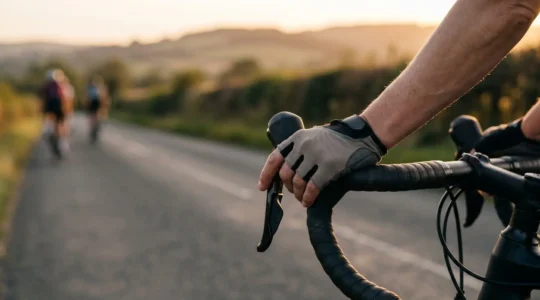
Electronic Shifting: Is It Worth the £800 Premium for Weekend Club Riders?
The £800 premium for electronic shifting is a complex investment for amateurs, offering undeniable convenience but also introducing significant financial risks. It delivers perfect, maintenance-free shifting and measurably boosts a…
Read more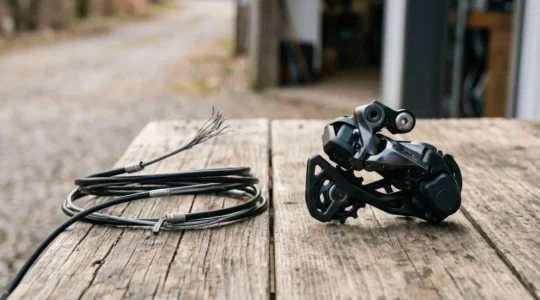
Cable Stretch vs Dead Batteries: Which Gear Failure Is Easier to Fix Roadside?
The core debate isn’t about speed, but about failure predictability: mechanical systems degrade predictably, while electronic systems fail catastrophically but far less often. Mechanical failure (cable stretch) is gradual and…
Read more
Radar Tech: Is Knowing a Car Is Coming Worth £170 for Solo Riders?
Bike radar is more than a safety gadget; it’s a cognitive enhancement that reclaims your mental energy on solo rides. It virtually eliminates the constant, anxious need for shoulder-checks, allowing…
Read more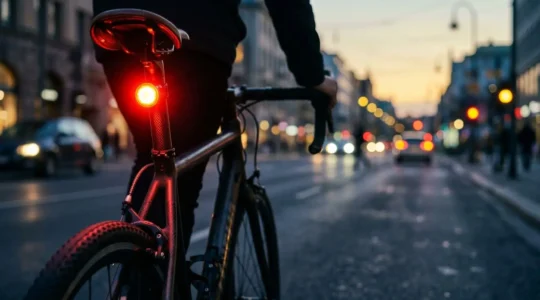
Auto-Deceleration Lights: Do Brake Lights on Bikes Actually Prevent Rear-Ends?
Contrary to marketing hype, the effectiveness of smart safety tech is not in the feature itself, but in how it interacts with human behavior. Automated lights and radar provide valuable…
Read more
Mapping Ecosystems: Why Switching Brands Means Rebuilding Your Route Library
Switching GPS brands is more than a hardware change; it’s a destructive migration of your accumulated ride intelligence and data legacy. Ecosystem-specific features create “siloed value” (like detailed climb analytics…
Read more
Crash Detection Sensors: Are They Reliable Enough for Solo Rural Riders?
Passive safety tech promises a digital guardian angel for solo riders, but our rigorous testing reveals a critical gap between marketing claims and real-world reliability. Crash detection algorithms are tuned…
Read more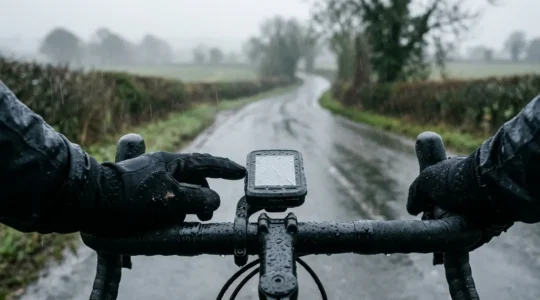
Garmin vs Wahoo: Choosing the Best Head Unit for Rainy Rides
The best cycling computer for wet weather isn’t the one with the most features, but the one with the highest cognitive resilience, minimising interface friction when you need it most….
Read more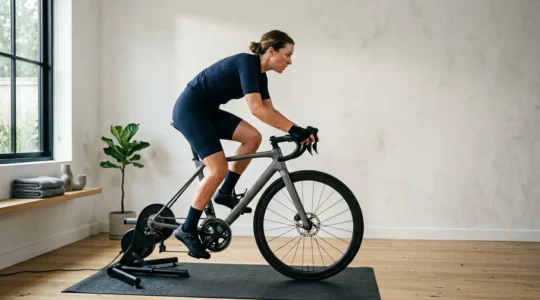
FTP Testing at Home: How to Measure Progress Without a Lab?
Contrary to popular belief, tracking cycling progress isn’t about chasing a single, intimidating FTP number; it’s about understanding the language of power to train smarter. Consistent data from any power…
Read more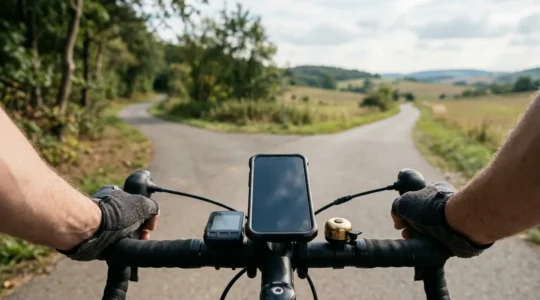
Strava vs Komoot: Which App Actually Improves Your Route Planning?
The real choice between Strava Premium and Komoot isn’t social vs. planning, but their fundamental data philosophy. Strava leverages past performance data to fuel competition and fitness benchmarks. Komoot uses…
Read more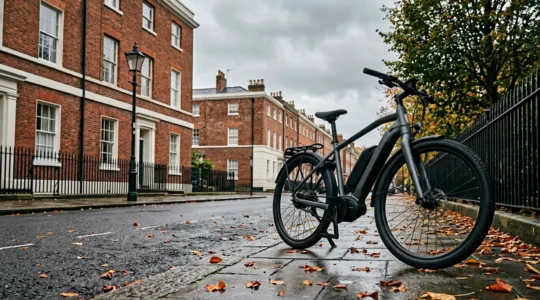
UK E-Bike Law: Is ‘Chipping’ Worth a £1,000 Fine and Legal Ruin?
Modifying your e-bike is not a minor tweak; it legally transforms it into an uninsured moped, exposing you to severe motor vehicle penalties. Any motor with a continuous power output…
Read more