Clothing & Protection
Cycling clothing isn’t just about looking the part. The difference between an uncomfortable slog and an enjoyable ride often comes down to what you’re wearing. Whether you’re commuting through unpredictable weather, tackling winter training miles, or simply trying to arrive at your destination without being drenched in sweat, the right combination of clothing and protective equipment transforms your experience on the bike.
Unlike everyday casual wear, cycling-specific gear addresses unique challenges: managing body heat during exertion, staying dry in rain without overheating, remaining visible in low light, and protecting yourself if things go wrong. Understanding the fundamentals of weather protection, helmet safety, visibility strategies, footwear selection, and fabric technology empowers you to make informed choices rather than relying on marketing claims or trial-and-error purchases.
This guide explores the core principles behind cycling clothing and protection, connecting the technical details to real-world riding scenarios. From understanding why certain jackets make you sweat from the inside to knowing when a helmet must be replaced, you’ll gain the foundational knowledge needed to build a versatile cycling wardrobe that keeps you comfortable, visible, and safe across all conditions.
Understanding Weather Protection Systems
Staying dry while cycling presents a paradox: you need protection from external moisture while simultaneously managing the sweat your body produces during exertion. This challenge has driven decades of fabric innovation, resulting in a complex marketplace of membranes, ratings, and treatments that can bewilder newcomers.
Waterproof Membranes and Breathability
At the heart of any quality rain jacket lies a waterproof-breathable membrane, a thin layer engineered to block liquid water droplets while allowing water vapor (sweat) to escape. The most recognized name is Gore-Tex, but numerous proprietary alternatives exist, often at lower price points. The crucial metric to understand is the RET (Resistance to Evaporative Transfer) rating, which measures how easily moisture escapes. Lower numbers indicate better breathability: an RET below 6 is considered extremely breathable, while ratings above 12 can leave you feeling clammy during moderate effort.
The challenge with budget jackets isn’t always the membrane itself, but the construction details. Taped seams prevent water seeping through stitch holes, yet cheap tape often delaminates after repeated washing or flexing, creating leak points precisely where rain concentrates. Similarly, DWR (Durable Water Repellent) treatments on the outer fabric cause water to bead and roll off rather than saturating the material. When DWR fails, the outer layer becomes waterlogged, blocking breathability even if the membrane remains functional. Tumble drying on low heat can reactivate DWR, though this represents a temporary fix rather than a permanent solution.
The Art of Layering
Professional cyclists and experienced commuters rely on the three-layer system: a base layer to manage moisture against skin, an insulating mid-layer for warmth, and an outer shell for weather protection. The genius of this approach lies in its adaptability. As conditions change mid-ride, you can add or remove layers rather than suffering in a single heavy jacket that’s either too warm or insufficient.
Key versatile pieces include:
- Arm warmers and leg warmers: Easily removed and stowed as temperatures rise
- Gilets (vests): Protect your core from wind chill while allowing arm ventilation; models with mesh backs prevent the greenhouse effect, and two-way zippers enable bottom-up venting without exposing your lower back
- Skull caps: Thin head coverings that fit under helmets, remarkably effective at maintaining core temperature by preventing heat loss through your head and ears
The ability to fold a gilet small enough to fit in a jersey pocket transforms it from theoretical versatility into practical utility. Practice the technique at home: lay flat, fold sleeves inward, then roll tightly from bottom to collar.
Caring for Technical Fabrics
Technical cycling clothing demands specific care to maintain performance. Standard laundry detergents often contain enzymes designed to break down organic compounds, which can be effective at eliminating the persistent odor that synthetic fabrics develop over time. However, these same enzymes may degrade DWR treatments and delicate membrane structures.
Merino wool base layers require gentler treatment: wash in cool water with wool-specific detergent to prevent shrinkage, and store properly to avoid moth damage during off-season. The extra care proves worthwhile, as quality merino regulates temperature effectively and resists odor far better than synthetics, remaining fresh across multiple rides.
Helmet Safety and Selection
Your helmet represents the single most critical piece of protective equipment, yet widespread misconceptions persist about how they work, when they fail, and what the safety ratings actually measure.
Understanding Safety Standards
The EN1078 standard (or CPSC in North America, AS/NZS in Australia) certifies that a helmet meets minimum impact protection requirements. However, these tests involve dropping helmets onto flat anvils or kerbstones from prescribed heights. Critics note that real-world cycling crashes often involve oblique impacts against tarmac, generating rotational forces that current standards don’t adequately address. Some manufacturers now incorporate technologies like MIPS (Multi-directional Impact Protection System) to reduce rotational acceleration, though these remain optional additions rather than regulatory requirements.
The EPS (Expanded Polystyrene) foam that provides impact protection degrades over time. UV exposure from sunlight and the salts in sweat gradually compromise the foam’s structure, reducing its ability to absorb impact. While manufacturers typically recommend replacement every three to five years, visible signs of degradation (yellowing, brittleness) or any crash involvement should prompt immediate replacement, regardless of age.
Fit, Retention, and Replacement
A helmet that rotates freely on your head during the shake test (vigorously shaking your head with the chin strap unbuckled) won’t stay in position during a crash, potentially leaving vulnerable areas exposed. Proper fit requires the helmet to sit level on your head—not tilted back exposing your forehead—with the retention system snug enough to prevent rotation but not so tight it causes headaches.
The replacement rule extends beyond obvious crashes. Dropping your helmet onto a hard surface from even modest height can create micro-cracks in the EPS foam that compromise its protective capability. The foam is designed to crush once, absorbing energy through controlled destruction. Once crushed or cracked, it cannot perform this function again. When in doubt, replace it.
Balancing Ventilation and Protection
The ongoing tension between aerodynamics, ventilation, and protection manifests clearly in helmet design. Aero helmets reduce drag but typically offer fewer vents, raising questions about whether they sacrifice impact protection in pursuit of speed. Most quality helmets meet the same safety standards regardless of vent count, but reduced ventilation can cause overheating during hard efforts or hot conditions.
Visibility represents another consideration: while black helmets may look sleek, white or brightly colored helmets increase conspicuity, particularly from side angles where your head may be visible above car rooflines before the rest of your body emerges from behind obstacles.
Visibility: Being Seen Is Being Safe
The most protective clothing and helmet offer no benefit if a driver simply doesn’t see you. Visibility strategies involve understanding human perception, contrast, and the specific conditions under which you ride.
Reflective Elements and High-Visibility Clothing
Reflective materials only work when light hits them—specifically, vehicle headlights in low-light conditions. During daylight or dusk, reflective piping on otherwise dark clothing provides minimal benefit. This is where high-visibility colors (fluorescent yellow, orange, or pink) excel: they stand out against typical backgrounds through color contrast rather than light reflection.
The choice between solid fluorescent colors and pattern-breaking designs depends on your typical riding environment. Against hedge-lined country roads, a solid bright color may blend into variegated backgrounds, while geometric patterns disrupt the outline and catch the eye. Against urban environments with consistent gray or brown tones, solid high-vis colors often prove more effective.
Strategic Placement for Maximum Effect
Where you place reflective elements matters as much as their presence. Drivers primarily look for movement, so reflective strips on ankles catch attention through the circular pedaling motion, creating a distinctive pattern that reads as “cyclist” even in peripheral vision. Reflective elements on your back or shoulders remain static relative to an approaching driver, making them less instinctively noticeable despite their larger surface area.
The combination approach works best: high-visibility colors for daytime and dusk riding, supplemented with ankle reflectives and larger back panels for night riding. Don’t rely solely on bike-mounted lights; if you step away from your bike, your personal visibility disappears unless you’re wearing reflective or high-vis clothing.
Cycling Footwear: Fit, Function, and Comfort
Cycling shoes represent a critical contact point where your body interfaces with the bike. Poor fit doesn’t just cause discomfort—it can lead to chronic pain, reduced power transfer, and even injury over time.
Solving the Fit Puzzle
The most common footwear mistake is sizing up to address width problems. Cycling shoe lasts (the foot-shaped forms around which shoes are constructed) vary significantly in width between manufacturers. A shoe that’s too narrow will cause numbness, hot spots, and pain regardless of length, while simply buying a larger size creates heel lift, inefficient power transfer, and blisters. Instead, seek brands offering wide-fit options or models known for generous toe boxes.
Heel cup design determines whether your foot stays locked in position or lifts with each pedal stroke. A well-designed heel cup cradles your heel snugly without requiring over-tightening of straps or dials, which can create pressure points across the top of your foot. If you’re developing blisters at your heel, the solution isn’t tighter retention but rather a better-fitting heel cup shape.
Closure Systems and Adjustability
The debate between BOA dials and traditional laces centers on adjustability versus simplicity. BOA systems allow micro-adjustment while riding, letting you tighten or loosen fit as your feet swell during long rides or in hot weather. However, they add weight, cost, and potential mechanical failure points. Laces offer infinite adjustability, no moving parts to break, and easier replacement, but require stopping to retie if adjustment is needed.
Some riders experience foot swelling during extended efforts, particularly in warm conditions. For them, the ability to release a BOA dial slightly at the two-hour mark can prevent numbness and discomfort. Others prefer the “setandforget” nature of properly tied laces.
Sole Stiffness and Off-Bike Practicality
Sole stiffness ratings (often on an index of 6 to 12, with higher numbers indicating more rigidity) directly affect power transfer and comfort. Stiffer soles distribute pressure across your entire foot rather than concentrating it under the cleat, improving efficiency and reducing hot spots during hard efforts. However, extremely stiff carbon soles transmit every road imperfection, potentially causing foot fatigue on rough surfaces.
The trade-off becomes stark off the bike: race-oriented soles with minimal tread become treacherously slippery on smooth café floors or wet surfaces, while cleats that protrude below the sole create an awkward, unstable gait. If your riding involves frequent stops or walking, prioritize shoes with recessed cleats and rubberized sole sections. Sole vents promise cooling but often simply provide an entry point for water during wet rides without meaningful temperature reduction.
Base Layers and Fabric Performance
The layer closest to your skin plays a disproportionate role in comfort by managing the moisture your body constantly produces during exercise. Cotton absorbs sweat and holds it against your skin, creating a wet, heavy layer that conducts heat away rapidly when you stop pedaling or descend, leaving you chilled precisely when you’re generating less body heat.
Modern synthetic base layers use hydrophobic fibers that don’t absorb moisture but instead spread it across a large surface area for rapid evaporation. This wicking speed keeps you dry and comfortable, though synthetics develop persistent odors as bacteria colonize the fibers. Merino wool offers natural antibacterial properties and regulates temperature across a wider range of conditions, staying comfortable when synthetic fabrics would feel clammy, though it dries more slowly and costs more.
For variable-intensity riding like commuting, where hard efforts alternate with stops at traffic lights, merino’s temperature-regulating properties prevent the overheating-then-chilling cycle that synthetic base layers can create. For sustained hard efforts in cold conditions, synthetic wicking speed often proves more effective.
Building Your Cycling Wardrobe
Rather than accumulating specialized pieces for every conceivable condition, focus on versatile items that combine effectively. A quality waterproof-breathable jacket with good breathability, a packable gilet, arm warmers, a merino base layer, and a properly fitting helmet form a core kit that adapts to most conditions through strategic layering and removal.
Prioritize fit and function over aesthetics, but don’t underestimate visibility. The most technically advanced clothing offers no protection if a driver fails to see you. Similarly, no amount of high-vis clothing compensates for a poorly fitting helmet that won’t stay in position during an impact.
As you gain experience, you’ll develop preferences based on your typical riding style, local climate, and personal physiology. Some riders run hot and prioritize breathability above all else; others feel the cold and layer heavily. There’s no universal perfect kit, but understanding the principles behind weather protection, safety equipment, visibility strategies, and fabric technology enables you to make informed decisions rather than expensive mistakes.
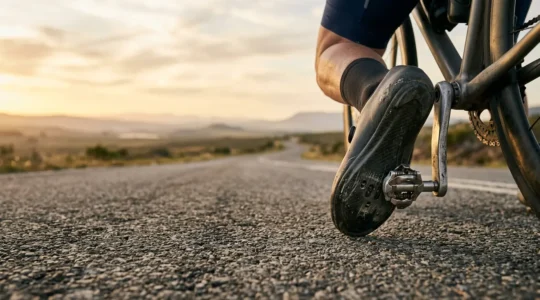
Carbon Soles: Are They Too Stiff for 100-Mile Charity Rides?
The bike industry sells stiffness as speed, but for amateur endurance riders, the opposite is often true: comfort is the real performance enhancer. Ultra-stiff soles offer negligible power gains (often…
Read more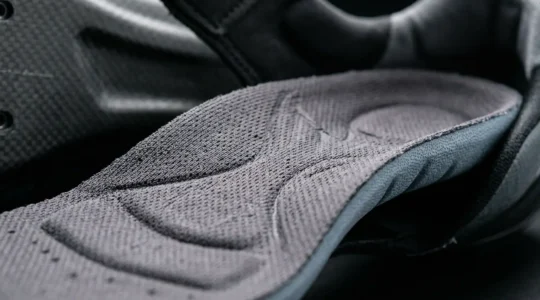
Arch Support Insoles: Do Custom Moulds Cure “Hot Foot” on 50-Mile Rides?
The burning sensation of “hot foot” is not a random gear failure; it’s a predictable biomechanical collapse that standard cycling shoes and simple tweaks cannot fix. The root cause is…
Read more
The Windproof Gilet: Why It’s the Single Most Essential Piece of Kit for UK Cyclists
The windproof gilet isn’t just an extra layer; it’s the most versatile thermal regulation tool a UK cyclist can own, allowing you to perfectly manage core temperature without overheating. Its…
Read more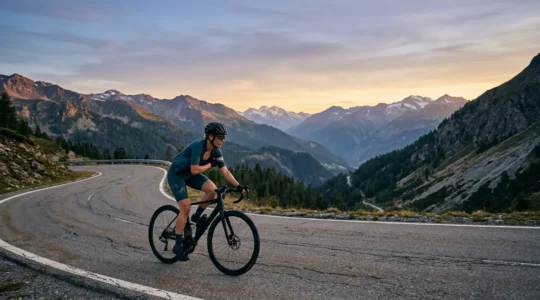
Merino vs Synthetic: Which Base Layer Handles 10°C Temperature Swings Best?
Effective layering for cyclists isn’t about the fabric type alone, but about actively managing your personal ‘micro-climate’ as a complete system. Merino wool excels at managing moisture vapour by absorbing…
Read more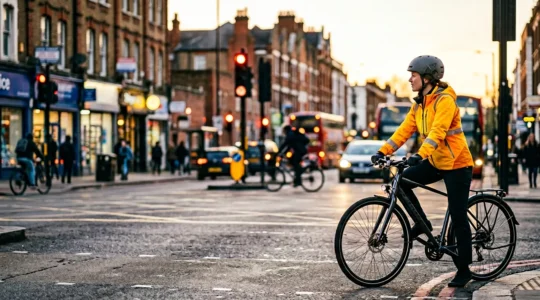
MIPS vs WaveCel: Is the Extra £50 Worth It for Urban Commuting Safety?
The marginal safety gain from MIPS or WaveCel is often less critical for urban commuters than ensuring the helmet’s fundamental integrity and proper fit. Standard helmet tests (EN1078) don’t replicate…
Read more
Does Wearing Neon Actually Reduce Close Passes on UK Roads?
High-visibility clothing is not a silver bullet; being seen by drivers is a battle for cognitive attention, not just a matter of brightness. Drivers suffer from ‘inattentional blindness’, meaning their…
Read more
How to Wash Technical Cycling Kit and Restore a Ruined DWR Coating
Using fabric softener on a waterproof jacket feels like a death sentence for its DWR coating, but it’s often a reversible chemical problem. The core issue is a hydrophilic (water-attracting)…
Read more
Waterproof vs Water-Resistant Jackets: What Actually Works in a Downpour?
The “waterproof” label on your jacket is often misleading; arriving dry depends more on the fabric’s ability to breathe than its ability to block rain. A high waterproof rating (HH)…
Read more
Beyond Hi-Vis: How to Stay Seen on Dark Country Lanes at Night
The common wisdom about cycling visibility—wear bright colours and use lights—is dangerously incomplete. True safety comes not from being bright, but from being psychologically recognisable to a driver’s brain. Your…
Read more