Travel & Leisure
Cycling transforms from a local hobby into a profound travel experience the moment you venture beyond familiar roads. Whether you’re planning your first overnight bikepacking trip through countryside trails or preparing for a multi-week tour across European borders, the intersection of cycling and travel opens a world where self-reliance, cultural immersion, and physical challenge converge into something uniquely rewarding.
This comprehensive resource addresses the practical realities that distinguish cycling tourism from daily riding: where you can legally sleep under the stars, how to navigate foreign cycling customs, what gear compromises matter most when every gram counts, and how to plan logistics that keep you moving confidently through unfamiliar territory. These fundamentals form the foundation every touring cyclist builds upon, regardless of whether your adventures span three days or three months.
The growing community of bicycle travellers has developed proven strategies for the challenges you’ll face—from finding drinkable water in remote villages to understanding why Spanish pelotons have different expectations than British group rides. Mastering these elements transforms potentially stressful situations into manageable parts of your journey.
Bikepacking Fundamentals: Where Sleep Meets the Road
The question of where to spend the night represents the most significant variable in bicycle touring. Unlike traditional accommodation-based cycle touring, bikepacking embraces lightweight camping that expands your route possibilities while reducing daily costs. However, this freedom comes with legal and practical considerations that vary dramatically by location.
Wild Camping Regulations and Stealth Strategies
Legal frameworks for wild camping differ remarkably even within the same country. In Scotland, the right to roam permits responsible wild camping on most unenclosed land, creating exceptional freedom for bicycle travellers. Cross the border into England, however, and wild camping exists in a legal grey area where permission from landowners is technically required, though enforcement varies regionally.
This discrepancy has given rise to stealth camping techniques—the practice of arriving late and leaving early to minimize visibility and impact. The core principle involves arriving after dusk, selecting inconspicuous locations away from buildings and footpaths, and departing before most people begin their day. When executed respectfully, this approach balances legal constraints with practical necessity, though it requires significantly more planning and awareness than camping in designated areas.
Shelter Selection for Unpredictable Weather
British and Northern European cyclists face a crucial gear decision: the minimalism of a bivy bag versus the protection of an ultralight tent. Bivy bags—essentially waterproof shells around your sleeping bag—weigh as little as 200-300 grams and pack smaller than a water bottle. For dry conditions or emergency shelters, they’re unmatched.
However, wet nights reveal their limitations. Condensation accumulates inside even the best breathable fabrics, and cooking or organizing gear becomes nearly impossible. A quality ultralight tent, though adding 500-900 grams, provides liveable space during extended rain—a common scenario on multi-day British routes. Most experienced bikepackers eventually own both, selecting based on forecast and terrain.
Finding and Securing Your Overnight Spots
Location scouting separates anxious evenings spent desperately searching for somewhere to sleep from confident arrivals at pre-identified spots. Modern tools have revolutionized this process, though traditional knowledge remains valuable.
Digital Scouting Techniques
Satellite imagery analysis through platforms like Google Earth allows you to identify potential camping locations days before your wheels touch the ground. Look for clearings in wooded areas at least 100 meters from roads, flat ground near water sources, or abandoned structures that might provide wind shelter. The terrain view reveals slope and vegetation density that road maps miss entirely.
Successful digital scouting involves marking multiple potential sites along your route at 10-15 kilometer intervals. Weather, timing, or unexpected closures may eliminate your primary choice, but having alternatives prevents the stress of riding into darkness hoping for options. This redundancy proves especially valuable in agricultural regions where fields that appear accessible may be fenced or actively used.
Water Sources in Remote Areas
Access to drinking water becomes your primary logistical constraint during self-supported tours through sparsely populated regions. Experienced bikepackers know that village churches and graveyards reliably feature outdoor taps, often accessible even when the building itself is locked. These sources were historically maintained for groundskeeping and flower watering, creating an informal network of refill points.
In remote UK villages where shops may be nonexistent, church taps often represent your only option between natural water sources requiring filtration. Always use water respectfully, avoid contaminating taps, and consider leaving small donations when possible. Carrying 3-4 liters of capacity allows you to span longer gaps between reliable sources, though the weight penalty impacts climbing performance.
Planning Self-Supported Multi-Day Tours
The logistics of self-supported touring differ fundamentally from day rides or supported events. You’re simultaneously managing accommodation, nutrition, navigation, and mechanical contingencies—all while maintaining forward progress toward your destination.
Classic routes like the Coast to Coast crossing exemplify these challenges. Spanning roughly 220-270 kilometers depending on your chosen variant, this three-day undertaking requires calculating daily distances that balance ambition with the reality of loaded bike handling. Most riders discover that 60-80 kilometers per day represents sustainable progress when carrying camping gear, compared to the 100+ kilometer days possible on credit-card tours using hotels.
Your supply strategy determines both bike weight and daily flexibility. Carrying three days of food eliminates dependency on shops but adds 3-4 kilograms and limits route options to those you can physically manage while loaded. Alternatively, planning routes through villages with shops every 40-50 kilometers allows lighter loads and fresh food, but constrains your path and requires contingency plans for unexpected closures. Most experienced tourers blend approaches: carrying high-calorie emergency rations while planning to resupply at realistic intervals.
Navigation technology has evolved, yet battery management remains critical. GPS devices consume power steadily, and remote routes offer few charging opportunities. Successful self-supported riders carry either backup battery packs with 10,000+ mAh capacity or maintain paper maps for their primary route, reserving electronic devices for complex urban navigation or emergency rerouting.
European Cycling Destinations Beyond Your Borders
International cycling tourism presents both new challenges and exceptional rewards. Different regions offer distinct advantages depending on your goals, fitness level, and seasonal timing.
For British cyclists, the contrast between training in flat home terrain and attempting Alpine climbs creates a fitness gap that surprises many on their first mountainous cycling holiday. The UK’s rolling hills rarely exceed 10-12% gradients for extended distances, while Alpine passes sustain 7-9% for 10-15 kilometers with segments reaching 15%. Preparing effectively requires either seeking out the steepest available climbs repeatedly or accepting that your first mountain days will involve significant adaptation stress.
Winter destination choices often come down to Mallorca versus Tenerife, each offering distinct experiences. Mallorca’s established cycling infrastructure, smooth roads, and moderate climbs attract huge numbers of riders, creating a social atmosphere but also potential crowding on popular routes like Sa Calobra. Tenerife provides dramatic elevation changes and year-round spring-like temperatures at mid-altitudes, though services are less cycling-specific and roads may be rougher. Group dynamics matter significantly: Mallorca’s cycling culture makes it easier for mixed-ability groups to find suitable routes and regroup at well-known cafés, while Tenerife rewards self-sufficient riders comfortable with more isolated riding.
Cross-Border Cycling Etiquette and Communication
Cycling cultures vary more than most riders anticipate. Practices considered courteous in one country may confuse or even irritate riders elsewhere, making cultural awareness essential for harmonious international touring.
Hand Signals and Regional Variations
The method of alerting fellow riders to road hazards changes across Europe in ways that can cause genuine safety issues if misunderstood. British cyclists typically point at potholes with a direct finger gesture, clearly identifying the hazard’s location. Much of continental Europe instead uses a waving motion—a hand moved side-to-side near the hip—to indicate rough road surfaces generally.
Neither system is superior, but mixing them creates confusion. A British rider pointing at a specific pothole might not be understood by Spanish riders expecting a wave, while the wave might not convey precise location to someone unfamiliar with the convention. When joining international groups, observe their signaling patterns for the first few kilometers and adapt accordingly.
Essential Cycling Vocabulary
Five words unlock basic communication with local cyclists in Spanish, French, and Italian-speaking regions. Learning “left” (izquierda/gauche/sinistra), “right” (derecha/droite/destra), “straight” (recto/tout droit/dritto), “stop” (para/arrêtez/ferma), and “pothole” (bache/trou/buca) allows you to give and receive essential safety communications during group rides.
Additionally, knowing how to ask “How many kilometers?” and “What’s the gradient?” shows respect for local cycling culture and helps you assess whether you can sustain pace with a group you’ve encountered. Even imperfect pronunciation demonstrates effort that most riders appreciate, often leading to richer interactions than purely transactional tourism.
Group Riding Protocols
The legality and culture of riding two abreast varies significantly. Spanish traffic law explicitly permits side-by-side riding on most roads, and local pelotons expect this formation during social rides. British regulations allow it where safe, though cultural norms vary regionally with some areas viewing it as inconsiderate despite its legality.
When joining an established local group—particularly in regions with strong club cycling traditions—observe formation and pace-setting patterns before integrating fully. Many European clubs have unwritten hierarchies where experienced members lead, and newcomers are expected to ride toward the back initially. Attempting to immediately join a rotating paceline or setting pace at the front can be perceived as disrespectful, regardless of your fitness level. Spending the first 20-30 minutes observing group dynamics before gradually participating prevents social missteps.
Preparing Your Bicycle for International Travel
Air travel with bicycles introduces mechanical considerations that don’t exist when riding from home. Protecting your bike during transport while ensuring it’s rideable immediately upon arrival requires specific preparation.
Many experienced touring cyclists now remove derailleurs when packing bikes in cardboard boxes or soft cases. Modern wireless electronic shifting systems make this practical because you’re not dealing with cable routing during reassembly. The derailleur represents the most vulnerable component during shipping—a single impact can bend the hanger, limiting your gearing for an entire trip. Removing it completely, wrapping it separately, and reinstalling at your destination adds 15 minutes of work but eliminates a significant risk point.
This approach works best with bikes already equipped for touring: strong wheels, protective cases for hydraulic brake levers, and frame protection at contact points. Budget an additional hour at your destination for full bike assembly and safety checks before riding in unfamiliar traffic conditions. Some riders carry a small bottle of assembly oil and their torque wrench in checked luggage specifically for this process.
The Health Dimension: Why Green Routes Matter
Beyond logistics and culture, the health benefits of cycling tourism vary with your environment. Recent research into green exercise—physical activity in natural settings—reveals that rides through wooded areas produce measurably lower cortisol levels than equivalent intensity efforts on roads, even when controlling for traffic stress.
The physiological mechanisms aren’t fully understood, but the practical implication is clear: routing your multi-day tours through forests, along canals, or on dedicated greenways provides recovery benefits beyond what rest days alone achieve. For riders planning back-to-back high-mileage days, incorporating stretches of traffic-free natural riding may improve both mental state and physical recovery, even if these sections add modest distance.
This consideration becomes particularly relevant when comparing route options that are similar in total distance and elevation but differ dramatically in environment. The psychologically restorative effect of natural surroundings can make the difference between arriving at camp exhausted or energized, especially during the middle days of longer tours when cumulative fatigue begins affecting decision-making and enjoyment.
Whether you’re planning your first overnight bikepacking adventure or your tenth international cycling tour, these fundamentals create the framework for confident travel by bicycle. Start with modest distances in familiar regions to test your systems, gradually expanding range and complexity as your experience grows. The unique combination of self-propulsion, cultural immersion, and outdoor sleep creates travel experiences simply impossible through any other mode of transport.
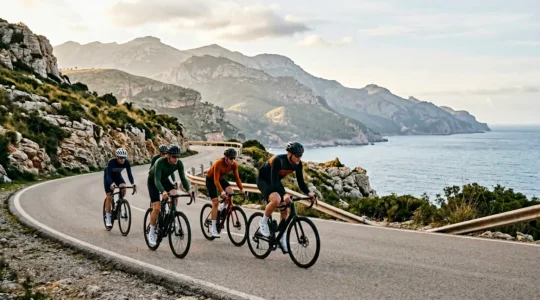
Mallorca vs Tenerife: Which Winter Destination Offers the Best Group Etiquette?
Fitting into a local peloton in Spain isn’t about having the strongest legs; it’s about mastering the unwritten social rules that show respect and cultural fluency. Group safety and cohesion…
Read more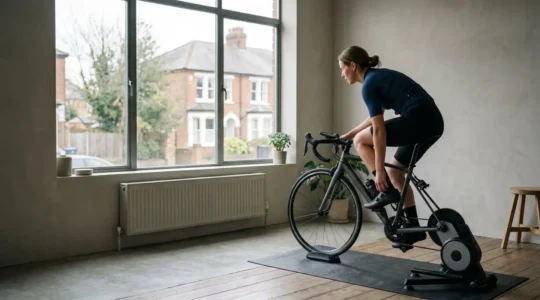
Training in the UK Flats for Your First Alps Cycling Holiday?
Successfully preparing for Alpine climbs from a flat UK region requires abandoning hill repeats and instead engineering the specific demands of mountain cycling indoors. Utilise smart trainer ‘Slope Mode’ and…
Read more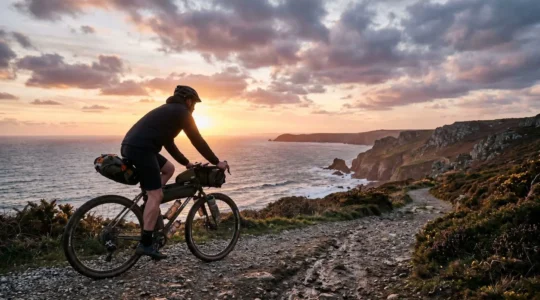
Self-Supported C2C: An Expedition Leader’s Guide to Logistics & Supplies
In summary: Successful self-supported trips rely on mastering logistical systems, not just packing lists. Prioritise gear based on its “problem-solving potential per gram,” especially for critical repairs. Manage resources like…
Read more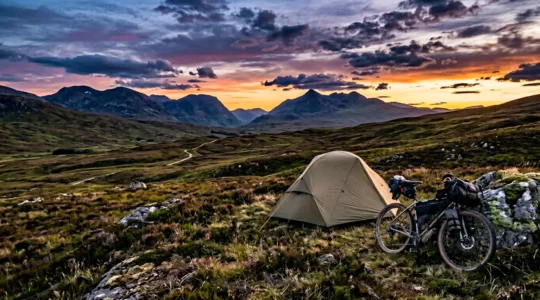
Wild Camping Rules in England vs Scotland: A Bikepacker’s Guide to Legal and Ethical Stays
The key difference between wild camping in Scotland (legal) and England (illegal without permission) is less a barrier and more a guide to adopting a better ethos: responsible invisibility. In…
Read more