Bikes
Choosing a bike today means navigating a complex landscape of frame materials, geometry terms, and component specifications that can seem overwhelming at first glance. Whether you’re planning a daily commute over potholed roads, tackling alpine climbs, or exploring gravel trails, understanding how different bike elements work together will transform your riding experience and help you make confident decisions.
This comprehensive resource breaks down the essential knowledge you need about modern bicycles. From frame geometry that dictates handling characteristics to the ongoing debate between carbon and aluminium construction, we’ll examine what truly matters for real-world riding. You’ll discover why certain specifications have become industry standards, which premium features deliver tangible benefits, and where clever marketing outpaces actual performance gains.
By understanding these foundational concepts, you’ll be equipped to evaluate any bike specification sheet, have informed conversations at bike shops, and ultimately choose equipment that genuinely suits your riding style rather than simply following trends.
Choosing the Right Bike Type for Your Riding Style
The distinction between bike categories has blurred considerably in recent years, yet understanding the core differences remains crucial for matching a bike to your primary use case. A road bike prioritises speed and efficiency on paved surfaces through lightweight construction, narrow tyres, and an aerodynamic riding position. Conversely, a hybrid bike sacrifices some speed for versatility, offering a more upright position, wider tyres, and often mounting points for racks and mudguards.
For riders facing a daily commute over poorly maintained roads, the choice hinges on route conditions and personal priorities. Road bikes with modern endurance geometry can accommodate tyres up to 32mm, providing substantial comfort without sacrificing efficiency. Hybrids excel when routes include canal paths, broken tarmac, or require frequent stops at traffic lights where their upright position offers better visibility. Neither choice is inherently superior—the question is which compromises align with your specific journey.
Beyond these categories, gravel bikes have emerged as genuine all-rounders, blending road bike efficiency with off-road capability. Their relaxed geometry, substantial tyre clearance, and often wider gear ranges make them exceptional choices for riders who value one bike that handles varied terrain confidently.
Frame Geometry: The Foundation of Bike Performance
Frame geometry determines how a bike handles, feels, and performs far more than most riders initially realise. These measurements work together as a system, with changes to one dimension affecting the entire riding experience.
Head Angle and Steering Characteristics
The head tube angle—the angle at which your fork steerer intersects the ground—fundamentally shapes steering behaviour. Steeper angles (73-74 degrees on road bikes) create quick, responsive handling ideal for competitive riding and tight cornering. Slacker angles (68-70 degrees on gravel and mountain bikes) increase stability, particularly during high-speed descents on rough terrain, though they require more deliberate steering inputs.
Think of it like shopping trolley wheels: the further the wheel contact point sits ahead of the steering axis, the more stable but less manoeuvrable the system becomes. This self-centering effect proves invaluable when navigating technical descents with one hand on the brakes.
Top Tube Length and Reach
A common error when selecting endurance bikes is choosing a frame with insufficient reach—the horizontal distance from bottom bracket to head tube. Too short a reach creates a cramped position that feels sluggish because your weight sits too far rearward, reducing front wheel traction and making the bike wander during climbs. Manufacturers sometimes compensate with longer stems, but this creates a concentrated cockpit rather than the balanced weight distribution that proper frame sizing provides.
Bottom Bracket Height Differences
Bottom bracket drop—how far the BB sits below the wheel axles—explains why cyclocross bikes feel twitchier than gravel bikes despite similar geometry elsewhere. CX bikes use less drop (higher BBs) for pedal clearance over barriers and through deep mud, raising the rider’s centre of gravity. This higher position increases leverage through the bike’s steering axis, making handling more reactive. Gravel bikes use more drop for stability during long mixed-surface rides where precise handling matters less than composure.
Frame Materials: Carbon vs Aluminium Explained
The carbon versus aluminium debate generates more confusion than almost any other bike specification, partly because both materials have evolved dramatically and partly because marketing often obscures practical reality.
Understanding Carbon Fibre Grades
Carbon frame marketing frequently highlights modulus ratings like Toray T700 versus T1000, suggesting higher numbers deliver superior performance. In reality, modulus measures stiffness—higher modulus fibres are stiffer but also more brittle. Frame builders combine different carbon grades strategically: high-modulus material where stiffness matters (bottom bracket area, head tube) and lower-modulus, tougher fibres where durability and vibration damping are priorities (seat stays, chain stays).
For amateur riders, the carbon layup schedule—how engineers orient and layer the carbon sheets—matters exponentially more than the base material grade. A well-designed T700 frame will outperform a poorly executed T1000 frame in ride quality, durability, and real-world stiffness where it actually matters for power transfer.
High-End Aluminium vs Entry-Level Carbon
This comparison reveals where material properties intersect with manufacturing quality. Premium aluminium frames use advanced tube shaping, hydroforming, and carefully selected alloys to deliver exceptional ride quality with minimal weight penalty compared to budget carbon. Entry-level carbon frames may use simpler layup schedules and heavier resin systems, sometimes resulting in frames that feel harsh despite carbon’s theoretical damping advantages.
The practical differences often emerge in longevity and maintenance. Quality aluminium tolerates minor crashes and rough handling better, whilst budget carbon may develop unseen internal damage from impacts. For riders on limited budgets, investing in high-end aluminium with better components often delivers superior overall performance than the same money spent on entry-level carbon with compromised parts.
The UV Degradation Question
Concerns about sunlight degrading carbon frames persist despite limited real-world evidence. Modern frame resins include UV inhibitors, and the paint or clear coat provides additional protection. Catastrophic UV damage requires extreme, sustained exposure rarely encountered in normal use—think years of direct equatorial sunlight without protective finish. Regular outdoor storage may eventually fade paint, but structural degradation remains exceptionally rare. Proper storage and occasional inspection matter more than elaborate UV protection measures.
Drivetrain Systems: Finding Your Perfect Gearing
Drivetrain choices directly impact your riding experience, maintenance requirements, and capability on varied terrain. Understanding the practical implications of different systems helps you match gearing to your genuine needs rather than perceived requirements.
Hub Gears vs Derailleurs
For winter riding and commuting, hub gears offer compelling advantages: sealed mechanisms that resist grit and moisture, ability to shift whilst stationary, and minimal maintenance requirements. Modern systems provide 8-14 speeds with respectable range, though they add weight and cost compared to derailleurs. The maintenance reduction proves particularly valuable for riders facing wet, gritty conditions who prioritise reliability over minimal weight.
Derailleur systems remain lighter, more efficient, and offer wider gear ranges, but require regular cleaning and adjustment, especially when exposed to winter road spray and salt. The choice often comes down to riding priorities: performance-focused riders accept the maintenance, whilst commuters increasingly value the set-and-forget nature of quality hub gears.
1x vs 2x Drivetrains
Single-ring drivetrains simplify shifting and reduce maintenance points, making them popular for gravel and mountain biking. However, the question “is a single ring enough for road sections?” depends entirely on your cassette range and local terrain. A 1x system with an 11-44 cassette provides ample range for most mixed riding, but the jumps between gears are larger, making it harder to maintain optimal cadence on rolling terrain.
Two-ring systems offer closer gear spacing and wider overall range, crucial for riders who need both very low gears for steep climbs and tight ratios for efficient road riding. The additional complexity and weight become worthwhile when your riding regularly spans extreme terrain variations.
Standard vs Compact Cranks
The alpine climbing question—do you need a 34-tooth small chainring—illustrates how gearing choices should match actual riding conditions. Standard cranks (53/39 or 52/36) work beautifully on moderate gradients and deliver marginally better efficiency at high speeds. Compact cranks (50/34) provide noticeably easier climbing gears without significant compromise elsewhere, making them sensible defaults for most riders tackling sustained alpine ascents or riding in hilly regions.
The ego-driven resistance to compact gearing persists in some circles, yet professional riders increasingly use them on mountain stages. Choose based on the gradients you actually ride and your personal fitness, not perceived status.
Wheels and Tyres: The Contact Point That Shapes Your Ride
Your tyres represent the only contact between bike and surface, making them disproportionately influential on comfort, speed, and handling. Recent developments in tyre technology have fundamentally changed optimal sizing recommendations.
Why 28mm Has Become the Minimum Standard
The shift toward 28mm tyres as the minimum for endurance riding stems from testing that challenged long-held assumptions about tyre width and speed. Wider tyres at appropriate pressures roll faster over real-world surfaces than narrow tyres at high pressure because they deform less over surface irregularities, wasting less energy. Additionally, the larger air volume provides substantial comfort gains without the weight penalty once assumed.
For UK riding conditions—characterised by deteriorating road surfaces, frequent rain, and variable grip—28mm represents a sensible baseline that balances comfort, puncture resistance, and speed. Many riders on stable, well-maintained roads now run 30-32mm without measurable speed loss and with significant comfort improvements.
Tyres vs Frame Material for Vibration Damping
The question of what absorbs more road vibration—carbon layup or tyres—reveals a common misunderstanding about how comfort works. Tyre choice and pressure influence comfort far more than frame material for the simple reason that tyres experience dramatically larger deformations. A quality aluminium frame with 30mm tyres at optimal pressure will feel more comfortable than a carbon frame with 25mm tyres at excessive pressure.
This doesn’t mean frame material is irrelevant—carbon’s damping characteristics do matter—but the effect is secondary to tyre selection. Riders seeking comfort should prioritise tyre width and pressure optimisation before considering frame material upgrades.
Suspension Design and Maintenance Considerations
For mountain biking disciplines, suspension design significantly impacts both performance and long-term maintenance requirements, particularly in harsh conditions.
The debate between single pivot and four-bar linkage designs often focuses on pedalling efficiency and suspension performance, but maintenance requirements in gritty conditions tell an equally important story. Single pivot designs use fewer bearings and simpler mechanisms, making them inherently easier to service and more tolerant of contamination. Four-bar designs can offer superior suspension characteristics and better chain growth management, but their additional pivots require more frequent servicing when exposed to mud, sand, or winter grit.
For riders in particularly harsh environments—coastal areas with sand, agricultural regions with mud, or anywhere with extended wet seasons—the maintenance differential becomes a practical consideration beyond pure performance metrics. Neither design is universally superior; the choice depends on whether you prioritise ultimate suspension performance or minimised servicing requirements.
Bottom Brackets and Component Integration
Bottom bracket standards represent one of cycling’s most frustrating areas of incompatibility, yet certain designs persist because they genuinely solve practical problems.
The continued preference among experienced mechanics for BSA threaded bottom brackets stems from practical servicing advantages rather than performance. Threaded systems allow complete disassembly, precise facing of the frame threads, and reliable reassembly without specialised tools. Press-fit systems can be lighter and allow larger bearing diameters in the same frame space, but they’re more susceptible to creaking when contamination enters the interface, and they require proper frame preparation and correct pressing tools for reliable installation.
For home mechanics and riders keeping bikes long-term, threaded systems offer meaningful advantages. The minor weight saving of press-fit rarely justifies the potential aggravation unless you’re operating at the very edge of competitive performance where every gram matters.
Similarly, the shift toward wireless electronic shifting has created an unexpected benefit: mechanics often charge less for building wireless bikes because internal cable routing—one of the most time-consuming aspects of modern bike building—becomes irrelevant. The labour saved during builds and subsequent servicing partially offsets the higher component cost, particularly for bikes with complex internal routing that would require hours of careful threading and securing of cables and housing.
Making Smart Investment Decisions
Understanding how different bike configurations hold their value helps you make financially sensible choices aligned with your actual riding plans and upgrade timeline.
Electronic shifting bikes generally demonstrate stronger resale values because the systems are expensive to retrofit, making used bikes with electronic shifting relative bargains compared to buying mechanical bikes and upgrading later. This premium proves most pronounced in the mid-range market, where electronic shifting remains a significant differentiator. However, the calculation changes if technology evolves rapidly—early electronic systems now sell for less than their mechanical contemporaries because buyers prefer current wireless technology over older wired systems.
Frame material and componentry both influence resale values, but in different ways. Carbon frames typically hold value better in the premium segment, whilst quality aluminium frames maintain value well in the entry and mid-range categories where buyers prioritise overall bike specification over frame material alone. Component groups hold value based on condition and currency—recent designs with parts availability remain desirable, whilst orphaned standards become progressively harder to sell regardless of original quality.
The most financially sound approach combines buying slightly used bikes that have absorbed initial depreciation with choosing specifications you’ll genuinely use rather than aspirational features you hope to grow into. A bike ridden regularly and maintained properly holds value better than a premium bike gathering dust because it doesn’t actually suit your riding.
These fundamentals provide the framework for evaluating any bike specification and understanding how different elements combine to create your riding experience. Whether you’re choosing your first quality bike or your fifth, these principles remain constant even as specific technologies and trends evolve.
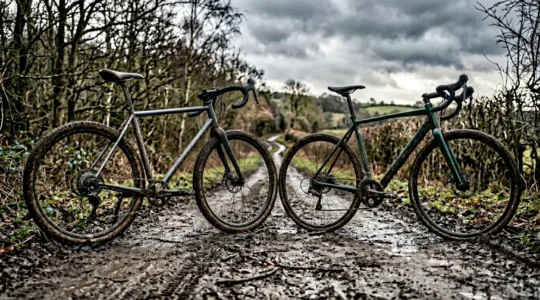
Gravel Bike vs Cyclocross: Which Handles British Winter Mud Better?
Choosing between a gravel and a cyclocross bike for a British winter comes down to a single principle: how each is designed to either shed or survive mud. Gravel bikes…
Read more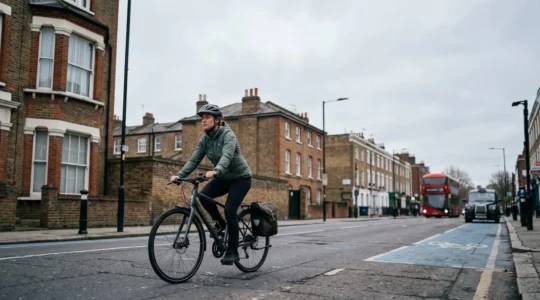
Hybrid vs. Road Bike: How to Build the Ultimate Commuter for London’s Streets
The best London commuter bike isn’t a pre-defined category like ‘hybrid’ or ‘road’—it’s a purpose-built system designed to defeat the city’s specific challenges. Your choice should be dictated by a…
Read more
Hardtail vs Full Suspension: Which Suits Bike Park Wales Best?
Contrary to the car park wisdom, you don’t need a massive enduro rig for Bike Park Wales; the right setup and a realistic maintenance budget are far more important. A…
Read more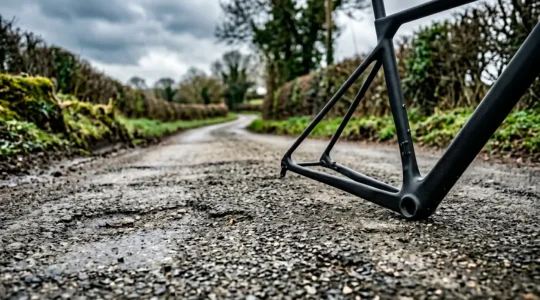
Is Buying a Cheap Carbon Frame Worth the Risk on UK Roads?
The true risk of a cheap carbon frame isn’t its price, but its unpredictable failure mode and a total cost of ownership that often exceeds that of a superior aluminium…
Read more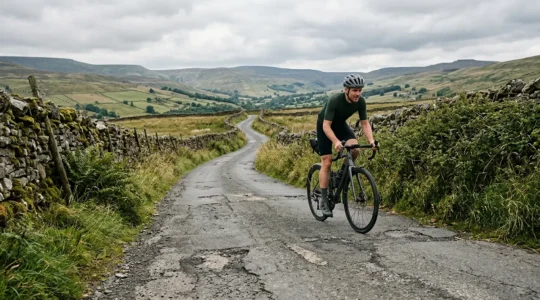
Why Endurance Geometry Stops Back Pain on Rough British Country Lanes?
The persistent back pain you feel on your race bike isn’t a sign of weakness; it’s a mechanical failure of the frame’s geometry to cope with the high-frequency vibrations of…
Read more