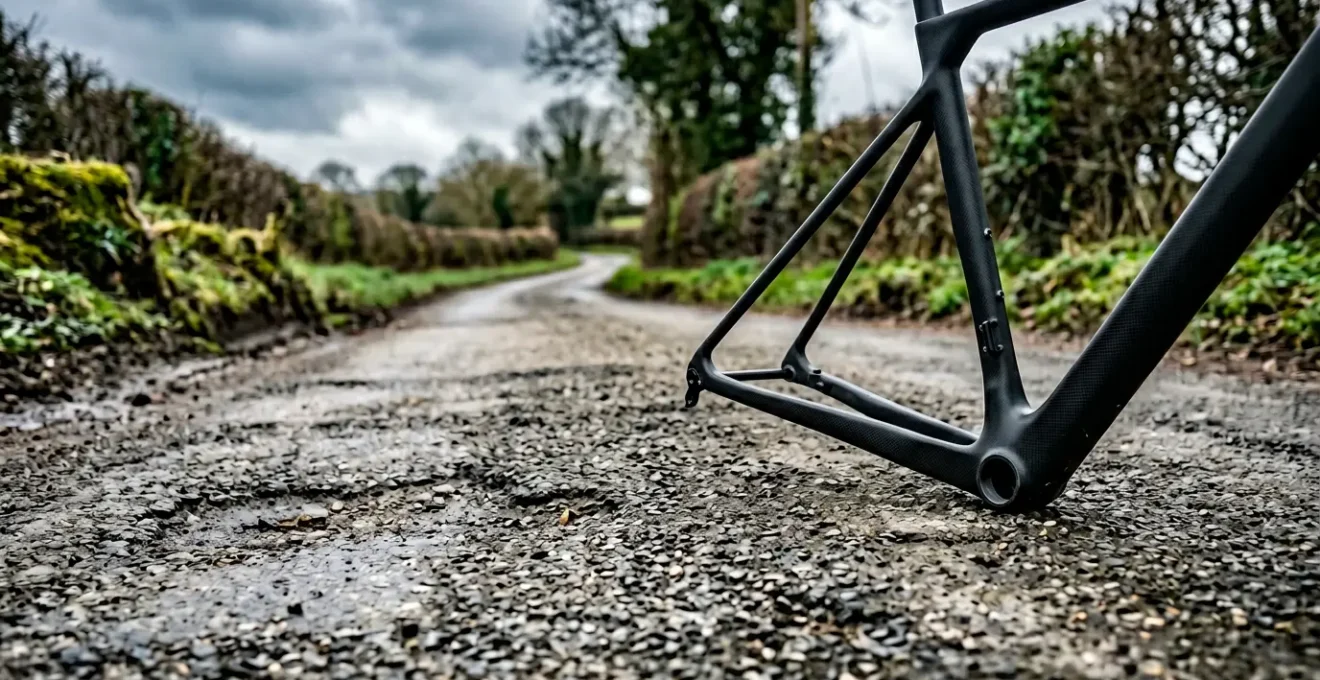
The true risk of a cheap carbon frame isn’t its price, but its unpredictable failure mode and a total cost of ownership that often exceeds that of a superior aluminium alternative.
- Unbranded carbon frames lack material traceability, meaning claims of using high-grade “T1000” carbon are often false and unverifiable.
- The initial “saving” is frequently erased by mandatory import duties, unforeseen repair costs, and near-zero resale value.
- A high-end aluminium frame from a reputable brand offers better ride quality, predictable safety characteristics, and a stronger long-term value proposition for UK conditions.
Recommendation: For most budget-conscious UK riders, investing in a premium aluminium frame from a trusted manufacturer is a significantly smarter and safer choice than gambling on an unbranded carbon import.
The allure is undeniable. Scrolling through online marketplaces, you see it: a sleek, unbranded carbon fibre road bike frame for a fraction of the price of a major brand equivalent. It promises feather-light weight and aerodynamic profiles, whispering of performance gains that were once the preserve of professional racers. The temptation for a budget-conscious cyclist is immense. Many will offer the generic advice to “check the reviews” or remind you that “you get what you pay for,” but this surface-level counsel misses the critical, often invisible, dangers lurking within these deals.
The conversation rarely moves beyond the price tag. But what if the real risk isn’t just a potential for poor quality, but a fundamental misunderstanding of the material itself? What if the true cost is hidden in compromised material science, a non-existent warranty infrastructure, and catastrophic failure modes that are unforgiving on unpredictable UK roads? The key to making a safe and financially sound decision isn’t about finding a bargain; it’s about understanding the vast delta in quality control, material traceability, and consumer recourse between a reputable manufacturer and an anonymous online seller.
This article will move beyond the superficial. We will dissect the very fabric of these frames, from the grade of carbon used to the reality of crash repairs. We will compare the total cost of ownership against high-end aluminium, debunk myths about environmental damage, and equip you with the practical knowledge to identify potential defects. This is a consumer protection guide for any UK cyclist considering the cheap carbon gamble.
Summary: Is Buying a Cheap Carbon Frame Worth the Risk on UK Roads?
- Toray T700 vs T1000: Does High Modulus Carbon Actually Matter for Amateurs?
- Can You Trust a Repaired Carbon Frame After a Crash?
- High-End Aluminium or Low-End Carbon: Which Offers Better Ride Quality?
- The UV Damage Myth: Do Carbon Frames Really Degrade in Sunlight?
- The Coin Tap Test: How to Spot Hidden Cracks in Second-Hand Carbon?
- Stainless vs Ceramic Hybrid: Which Races Rust Slower?
- Helicopter Tape: How to Stop Straps from Rubbing Paint off Your Frame?
- Why Endurance Geometry Stops Back Pain on Rough British Country Lanes?
Toray T700 vs T1000: Does High Modulus Carbon Actually Matter for Amateurs?
One of the most common marketing terms used by sellers of cheap carbon frames is the mention of “Toray T1000” carbon, implying the use of the same top-tier material found in professional-grade bikes. From a materials science perspective, this is almost certainly deceptive. Carbon fibre is graded by its tensile modulus (stiffness) and tensile strength (how much force it can take before breaking). T700 is the workhorse of the cycling industry, offering an excellent balance of strength and stiffness. Higher modulus fibres like T1000 are stiffer, allowing designers to use less material to achieve the same rigidity, thus saving weight. However, they are also more brittle and significantly more expensive.
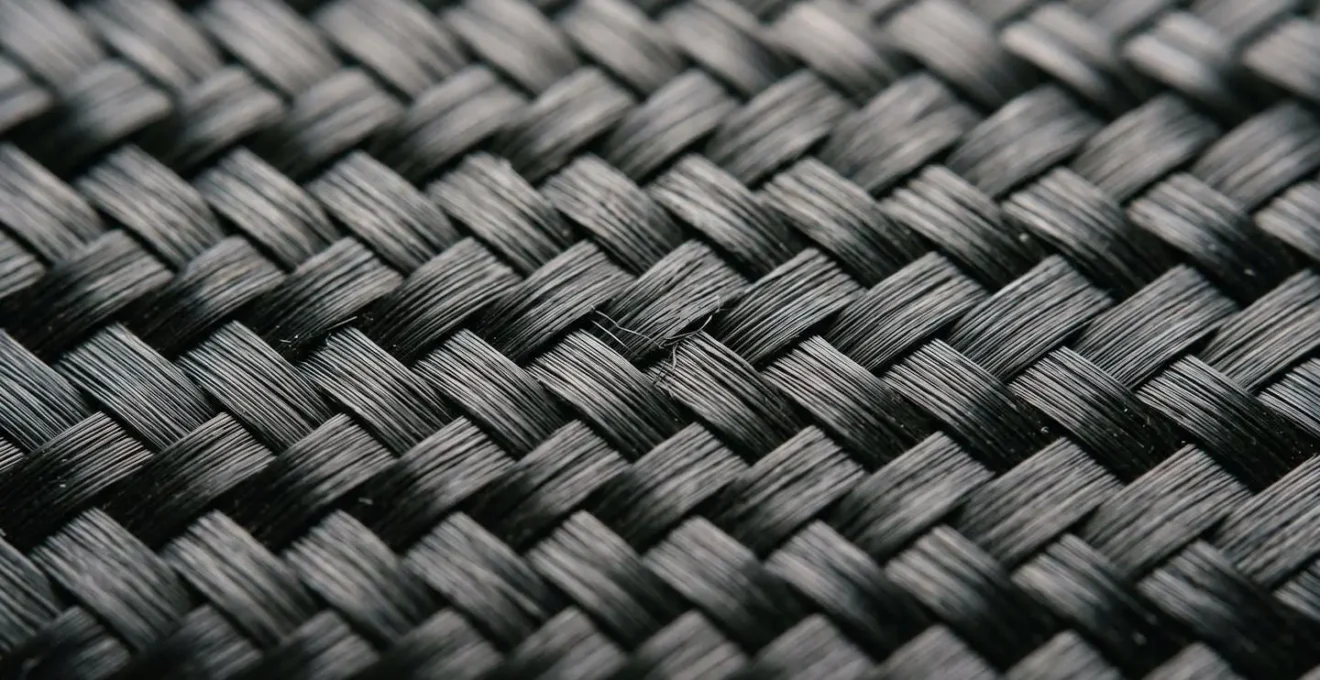
The cost implications are stark. An analysis of carbon fibre material shows that frames using T800 can be 20-30% more expensive, and T1000 frames might command a premium of 50% or more. It is economically unfeasible for a sub-£1000 frame to be constructed primarily from genuine T1000 fibre. What consumers are likely getting is a frame made from lower-grade, less consistent carbon, or a small, token amount of higher-grade material mixed in for marketing purposes. For the amateur rider, a well-engineered T700 frame from a reputable brand will always outperform an unverified, poorly designed frame made from supposed “T1000” material. The real value is in the engineering and layup design, not just a marketing buzzword.
Can You Trust a Repaired Carbon Frame After a Crash?
One of carbon fibre’s greatest strengths is its repairability. Unlike a bent aluminium frame, a cracked carbon tube can often be restored to its original strength, if not stronger. However, the critical distinction lies in *who* performs the repair and the standards they adhere to. The UK has a robust industry of professional carbon repair specialists who can save frames that would otherwise be landfill. According to industry pricing from UK carbon repair specialists, a standard tube repair can start at around £180, rising to £350 or more for multiple fractures. This cost must be factored into the “total cost of ownership” of any carbon frame, especially a budget one with questionable durability.
The issue with cheap, unbranded frames is two-fold. Firstly, their lack of a reputable origin means a professional repairer may be hesitant to work on them due to unknown material properties and layup schedules. Secondly, any warranty is non-existent. A successful repair is not a simple patch-up job; it involves scarfing away damaged material, replicating the original fibre orientation, and curing the new composite under pressure and heat.
Case Study: The Professional Standard – Carbon Bike Repair UK
Carbon Bike Repair, based in Leatherhead, serves as the benchmark for professional restoration. Having repaired over 20,000 frames by 2023, they work directly with major brands like Trek and Pinarello on warranty claims. Their use of robotic systems and offering of lifetime warranties on repairs highlights the level of engineering required for a trustworthy fix. A professional health check alone costs upwards of £125, demonstrating the expertise needed to even assess damage. This level of quality and assurance is simply not available for an anonymous, imported frame, leaving the owner to bear the full risk of a potentially unsafe, amateur repair or total loss.
High-End Aluminium or Low-End Carbon: Which Offers Better Ride Quality?
The central question for the budget-conscious cyclist is where to get the most performance and safety for their money. For years, the consensus has been that “carbon is better,” but this oversimplification ignores the vast difference between well-made and poorly-made composites. A modern, high-end aluminium frame from a reputable brand is an engineering marvel. Using advanced hydroforming and welding techniques, manufacturers can create frames that are light, stiff, and surprisingly compliant. In contrast, a low-end carbon frame must cut corners to meet its price point. As the experts at Pro’s Closet note:
Carbon is more expensive. There is more engineering required, the manufacturing process is more labor-intensive, and every frame requires a dedicated mold that further increases the cost.
– Pro’s Closet materials analysis, Carbon Fiber vs. Aluminum Bike Frames comparison article
These cut corners on a cheap carbon frame manifest as a harsh, “dead” ride feel, a lack of responsiveness, and, most worryingly, a higher risk of catastrophic failure. The table below illustrates the 5-year total cost of ownership, factoring in the realities of the UK market.
| Cost Factor | £1000 Low-End Carbon Frame | £1500 High-End Aluminium Frame |
|---|---|---|
| Initial Frame Cost | £1000 | £1500 |
| Estimated Import Duties/VAT (if applicable) | +£200-£300 | £0 (UK brand) |
| Hypothetical Repair Cost (over 5 years) | +£300 | £0 |
| 5-Year Total | £1500-£1600 | £1500 |
| Resale Value After 5 Years (estimate) | £300-£400 | £500-£600 |
| Net 5-Year Cost | £1100-£1300 | £900-£1000 |
| Corrosion Resistance (UK Winter) | Excellent (immune to salt) | Moderate (vulnerable at welds) |
The data is clear: while the initial outlay for aluminium may be higher, the net cost over five years is lower. When you factor in the superior ride quality, predictable handling, and peace of mind from a lifetime warranty, a high-end aluminium frame emerges as the far wiser investment for most UK riders.
The UV Damage Myth: Do Carbon Frames Really Degrade in Sunlight?
A persistent concern surrounding carbon frames is their supposed vulnerability to sunlight. The myth suggests that UV radiation can weaken the carbon fibres, leading to structural failure. The reality is more nuanced and directly ties into the quality difference between premium and budget frames. The carbon fibre itself is completely immune to UV degradation. However, the epoxy resin that holds the fibres together, and the clear coat that protects the frame, are not.
On a high-quality frame from a major brand, the finish includes sophisticated UV inhibitors that prevent the sun’s rays from breaking down the resin matrix. This protective layer is one of the “invisible” costs that is often eliminated on cheap, unbranded frames. Without adequate UV protection, the epoxy resin can become brittle and the clear coat can yellow, cloud, or peel over time. While this is primarily a cosmetic issue, it can mask underlying problems and will decimate any potential resale value.
For cyclists in the UK, this is more relevant than it might seem. Storing a bike in a conservatory or next to a patio door, even during the winter, exposes it to prolonged, concentrated doses of UV light. A cheap frame’s finish can begin to show signs of degradation within just a few years of such exposure. The takeaway is not that carbon frames are fragile, but that the quality of the protective finish is a non-negotiable feature, and one you are unlikely to get on a budget import.
The Coin Tap Test: How to Spot Hidden Cracks in Second-Hand Carbon?
When buying a used carbon frame, especially one of unknown origin, you become the sole quality control inspector. One of the most well-known methods for detecting delamination or internal cracks is the “coin tap test.” By gently tapping a coin across the surface of the frame’s tubes, you can listen for changes in acoustic properties. A solid, healthy section of carbon will produce a sharp, high-pitched “tock,” like tapping on a billiard ball. A damaged area, where the layers have separated or cracked, will produce a dull, muted “thud,” similar to tapping a potato. This simple test can be invaluable for identifying major flaws.
However, it is vital to approach this method with a healthy dose of expert skepticism. As legal experts in cycling accidents point out, it is not a foolproof system. A leading analysis from EB Cycling Law warns:
Carbon is incredibly difficult to test without an expensive ultrasound test. With little give, going beyond carbon’s designed specifications leads to cracks that are invisible until it is too late.
– EB Cycling Law, Carbon Failure analysis article
The tap test may miss micro-fractures, damage under thick paint, or issues in complex, high-stress areas like the bottom bracket shell or head tube. It should be considered a preliminary check, not a definitive diagnosis. For any significant second-hand purchase, a professional inspection is the only way to be truly certain.
Your Action Plan: UK Second-Hand Carbon Frame Buyer’s Checklist
- Payment Protection: Always use PayPal Goods & Services for buyer protection when purchasing on eBay UK or Facebook Marketplace. Never agree to a bank transfer or “friends and family” payment.
- High-Resolution Photos: Request clear, well-lit photos of critical stress areas: dropouts, bottom bracket shell, seat clamp area, and under the seatstay and chainstay bridges.
- Serial Number Verification: Be wary of sellers unwilling to show the frame’s serial number. This can be used to check against stolen bike databases and is often required for any potential warranty or repair.
- Professional Pre-Purchase Inspection: For any second-hand carbon frame costing over £500, invest £50-£80 in a professional inspection by a local UK bike shop or a dedicated carbon repair specialist. It’s the best money you can spend.
- Perform the Coin Tap Test: Listen carefully. A good section sounds like tapping a billiard ball (sharp, high-pitched ‘tock’), while a damaged area sounds like tapping a potato (dull, low-pitched ‘thud’).
Stainless vs Ceramic Hybrid: Which Races Rust Slower?
The frame is the skeleton, but the bearings are the joints. On the damp and often gritted roads of the UK, bearing longevity is a major concern. When manufacturers of cheap frames are under pressure to cut costs, bearings are one of the first places they look. The standard is a steel bearing with steel races, which is highly susceptible to corrosion. The slightest ingress of water can lead to rust, creating a gritty, inefficient, and ultimately self-destructive system.
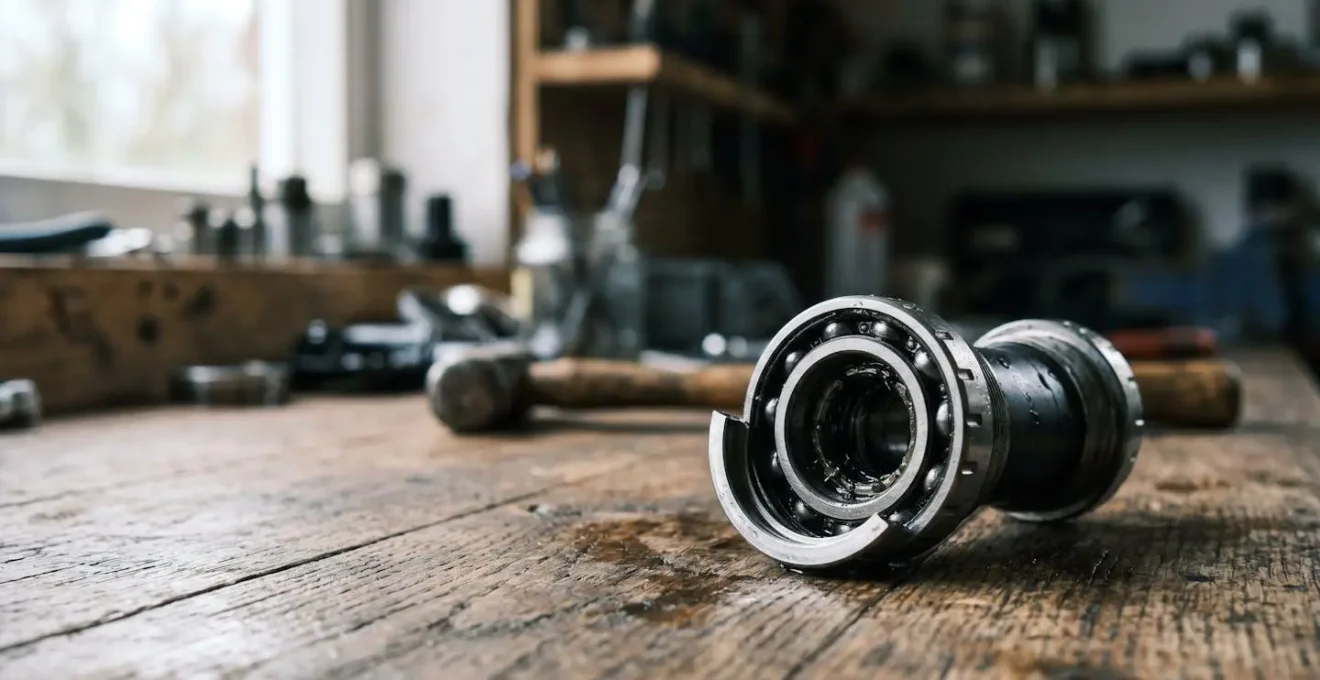
Upgrading to stainless steel bearings offers a significant improvement in corrosion resistance. However, the ultimate solution for wet conditions is often a ceramic hybrid bearing. These use ultra-hard ceramic balls (typically silicon nitride) running in stainless steel races. The ceramic balls cannot rust and their extreme hardness helps to polish the steel races, pushing away contaminants rather than being damaged by them. They offer lower friction and a much longer service life in poor conditions, but come at a premium cost. This is a cost a budget frame manufacturer will not bear. With a reported 16% increase in the price of carbon fiber from 2023 to 2024, the pressure to save money on less visible components like bearings is immense. A cheap carbon frame will almost invariably be fitted with the cheapest possible steel bearings, guaranteeing a future of premature wear, frequent replacement, and a constant battle against rust.
Helicopter Tape: How to Stop Straps from Rubbing Paint off Your Frame?
Whether you’ve invested in a premium frame or taken a gamble on a budget one, protecting your investment is paramount. One of the most common forms of damage is not from crashes, but from simple abrasion. Bikepacking straps, cable housing, and even clothing can rub against the frame’s finish, slowly wearing through the clear coat and paint. On a carbon frame, this is more than a cosmetic concern; a deep gouge can compromise the outer resin layer. The go-to solution for UK riders is frame protection film, often known as “helicopter tape” for its original use protecting helicopter rotor blades.
This presents another micro-example of the “premium vs. budget” dilemma. You can either opt for a professionally designed, custom-fit kit or take a more DIY approach.
Case Study: InvisiFRAME vs. 3M Helicopter Tape – A UK Market Comparison
UK-based company InvisiFRAME offers comprehensive, custom-cut protection kits for thousands of specific bike models. Costing between £40-£80, these kits provide a perfect, almost invisible fit that covers all high-wear areas. The DIY alternative is to buy a roll of genuine 3M helicopter tape for around £15-£25 and cut the pieces yourself. While the custom kit offers aesthetic perfection and a guaranteed fit, the DIY route offers a 60-70% cost saving and allows for customised protection based on your specific strap placement and wear patterns. For any frame, but especially a budget one with a likely fragile finish, applying some form of protection to the head tube, top tube, and seatstays is a cheap and essential insurance policy.
Protecting the finish not only keeps the bike looking good but is also crucial for maintaining any potential resale value. It’s a small, practical step that every owner should take from day one.
Key Takeaways
- The true cost of a cheap carbon frame often exceeds a superior aluminium one when import duties, repair costs, and poor resale value are considered.
- Claims of using high-grade materials like “T1000” carbon on budget frames are generally unverifiable marketing tactics, not a guarantee of quality.
- For UK conditions, a high-end aluminium frame from a reputable brand offers a safer, more reliable, and ultimately more economical investment than an unbranded carbon import.
Why Endurance Geometry Stops Back Pain on Rough British Country Lanes?
Beyond material choice, the single biggest factor in a bike’s comfort and suitability for UK roads is its geometry. Many cheap carbon frames are copies of aggressive, “race” geometry bikes. These feature long top tubes and short head tubes, forcing the rider into a low, aerodynamic position. While efficient on a perfectly smooth race circuit, this posture is punishing on the often poorly maintained, undulating, and hedge-lined country lanes that define British cycling. As the experts at Carbon Bike Repair UK state, the properties of a carbon frame are by design: bikes can be developed to be predominately stiff and racy or swift but comfortable. A cheap race-clone offers only the former.
“Endurance” geometry, by contrast, is designed specifically for long-distance comfort on imperfect surfaces. It typically features a shorter reach and a taller stack height (a higher handlebar position), which creates a more upright and relaxed riding posture. This takes pressure off the lower back, neck, and shoulders, making it vastly more suitable for absorbing the constant buzz from chipseal and the jarring impacts from hidden potholes. For a cyclist looking to spend hours in the saddle exploring the British countryside, choosing a frame with endurance geometry is not a compromise—it is an essential requirement for sustainable, pain-free riding.
If you are stuck with an aggressive race-geometry frame, not all is lost. You can make it more UK-road-friendly with a few component swaps:
- Install a shorter stem with a positive rise (10-17 degrees) to raise the handlebar position and reduce back strain.
- Swap to handlebars with a shorter reach and shallower drop to create a more upright position.
- Upgrade to the widest tires your frame can accommodate (ideally 28mm or 30mm) to add cushioning and vibration damping.
- Consider a suspension seatpost or a more compliant saddle to absorb jarring impacts from potholes.
- Adjust handlebar rotation to reduce wrist extension and improve visibility for navigating narrow lanes.
Frequently Asked Questions on Is Buying a Cheap Carbon Frame Worth the Risk on UK Roads?
Do carbon frames actually degrade from sunlight exposure?
The carbon fiber itself is immune to UV damage. However, the resin matrix and clear coat can degrade over time with prolonged UV exposure, especially on budget frames with lower-quality protective coatings. This leads to cosmetic issues like yellowing and lacquer peel rather than structural failure.
Will storing my bike near a window damage the frame?
Even intermittent exposure to sunlight through glass can accelerate cosmetic degradation of low-quality clear coats over several years. This is particularly relevant for UK cyclists who often store bikes in conservatories or near patio doors during winter months.
How can I protect a cheap carbon frame from UV damage?
Apply a quality bike-specific ceramic coating or frame protectant (such as products from Muc-Off or InvisiFRAME) immediately after purchase. This small investment protects the finish and preserves resale value, which is already limited on budget carbon frames.