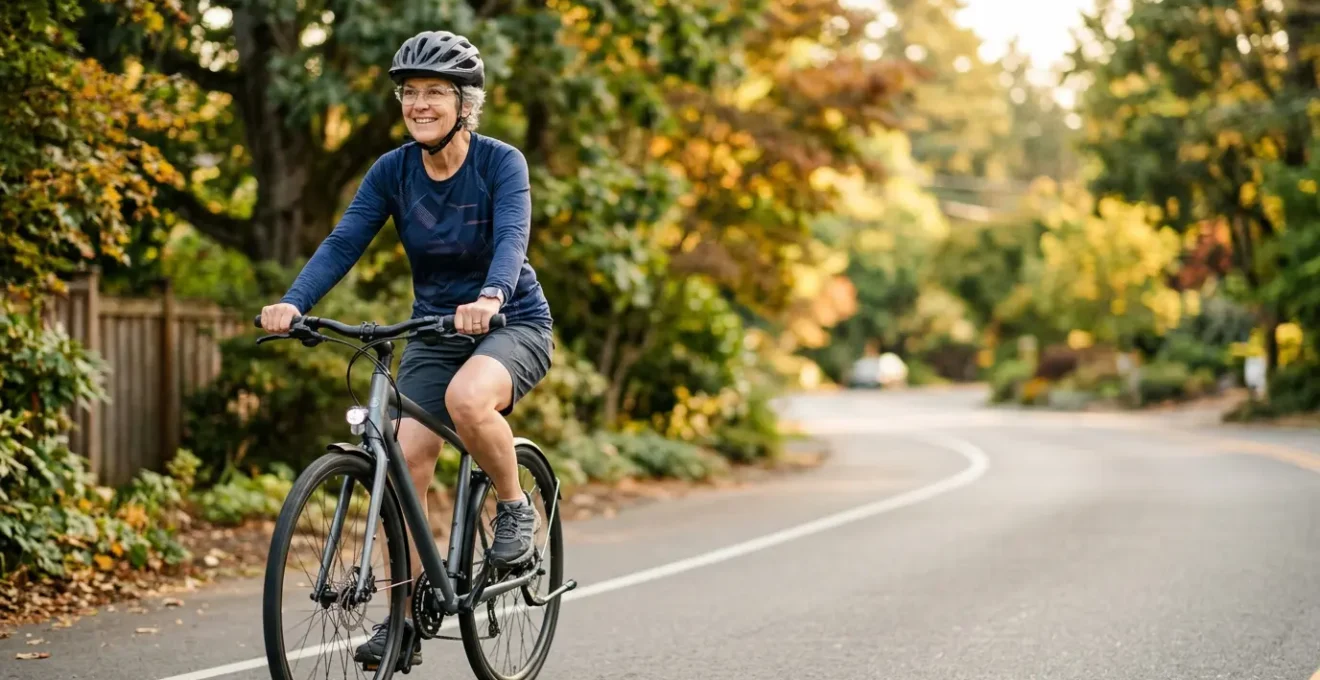
Relying solely on the NHS’s 150-minute weekly exercise target is not enough; true heart health for those over 50 depends on understanding *how* to exercise and listen to your body’s feedback.
- The key to lowering blood pressure isn’t high intensity, but consistently training in a specific low-effort “Zone 2” heart rate, which can be identified without any technology.
- Monitoring simple morning metrics like Resting Heart Rate (RHR) and Heart Rate Variability (HRV) provides a more accurate guide for your training than a rigid schedule, preventing burnout and injury.
Recommendation: Shift your focus from simply counting minutes of exercise to learning your personal heart rate zones and tracking your morning RHR to build a truly sustainable and effective cycling habit.
For anyone over 50 concerned about their heart health, the advice from the NHS is clear and consistent: aim for at least 150 minutes of moderate-intensity activity a week. This well-intentioned guidance is a cornerstone of public health, yet for an individual who has spent the last decade in a sedentary office job, it can raise more questions than it answers. What does “moderate intensity” actually feel like? Is it safe to just jump on a bike and start pedalling? And how do you measure progress beyond just feeling out of breath?
The common approach is to simply try to cycle faster or longer, often leading to burnout, injury, or frustration. Many believe that if you’re not pushing yourself to the limit, you’re not getting the full cardiovascular benefit. This all-or-nothing mindset is precisely what derails long-term fitness goals. The reality is that building a heart-healthy lifestyle through cycling is less about brute force and more about physiological intelligence. It’s about learning to interpret your body’s signals to create a practice that is not only effective but also sustainable and enjoyable for years to come.
But what if the most significant gains in heart health weren’t found in punishing high-intensity intervals, but in a gentler, more controlled approach? This guide decodes the generic NHS advice, translating it into a practical framework. We will explore how to find the specific heart rate zone that most effectively lowers blood pressure, how to start safely after a long period of inactivity, and how to use simple morning metrics as your personal guide to fitness and recovery. It’s time to move beyond the stopwatch and learn the language of your own heart.
This article provides a detailed roadmap, translating broad medical advice into actionable steps. We will cover everything from understanding your personal heart rate zones to using recovery metrics to guide your efforts, ensuring your journey into cycling is both safe and maximally effective for your long-term heart health.
Summary: A Practical Guide to Cycling for Cardiovascular Health After 50
- Fat Burning vs Cardio: Which Heart Rate Zone Lowers Blood Pressure Best?
- How to Start Cycling Safely After a Decade of Sedentary Office Work?
- Why Winter Riding Raise Your Heart Rate and How to Manage It Safely?
- Cycling or Running: Which Is Safer for Knees While Improving Heart Health?
- Resting Heart Rate: The Morning Metric That Reveals Your True Fitness Level
- Heart Rate Variability: How to Use It to Predict Illness Before It Hits?
- Beam Pattern: Why 1000 Lumens Is Useless If It Points at the Trees?
- The “Flow State”: How Solo Riding Reduces Anxiety Better Than Meditation?
Fat Burning vs Cardio: Which Heart Rate Zone Lowers Blood Pressure Best?
The term “moderate intensity” used in NHS guidelines can be frustratingly vague. For cardiovascular health, particularly lowering blood pressure, the goal isn’t necessarily to push as hard as you can. The most significant, sustainable benefits are found in what is known as Zone 2 heart rate training. This is a low-intensity state where your body becomes highly efficient at using fat for fuel and, crucially, develops a stronger, more efficient heart muscle. This zone corresponds directly to the “moderate intensity” activity that health authorities advocate for. In fact, the American Heart Association recommends 150 minutes per week of moderate-intensity exercise, which is the exact definition of Zone 2 training.
Unlike high-intensity zones that are stressful and can only be maintained for short periods, Zone 2 is your all-day pace. Training here stimulates mitochondrial growth, improves insulin sensitivity, and lowers your resting heart rate over time—all key factors in managing hypertension. The mistake many beginners make is riding too hard, entering a “Zone 3” or higher, which feels more like a “workout” but is less effective for the specific adaptations needed for blood pressure control and can’t be sustained long enough to meet the 150-minute weekly goal without significant fatigue. To truly impact heart health, consistency in Zone 2 trumps occasional, high-intensity efforts.
But how do you know if you’re in Zone 2 without a heart rate monitor? It’s simpler than you think. The “talk test” is your best guide: you should be able to hold a full conversation without gasping for air. If you can only manage short, clipped sentences, you’re working too hard. If you can sing, you’re likely going too easy. This level of perceived exertion builds the aerobic foundation essential for a healthier heart.
How to Start Cycling Safely After a Decade of Sedentary Office Work?
Returning to exercise after a long period of inactivity, especially a desk-bound career, requires more than just willpower; it requires a strategic approach to reawakening your body. Years of sitting can lead to tight hip flexors, weak glutes, and a stiff lower back—a combination that can quickly lead to discomfort or injury on a bike. Before you even think about mileage, your first priority is restoring mobility and stability. Simple, gentle pre-ride exercises are not optional; they are essential for injury prevention and long-term enjoyment.
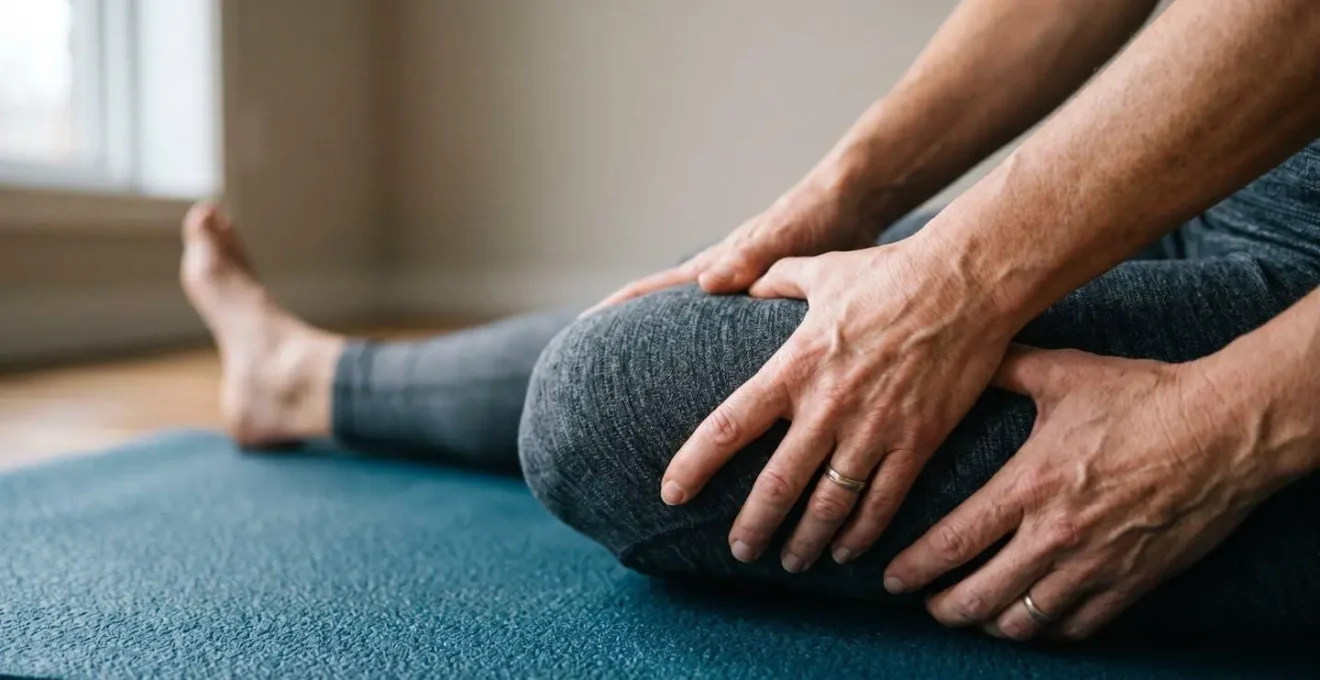
This focus on preparation is supported by robust scientific evidence. A 2023 scoping review of 123 studies confirmed that cycling significantly reduces blood pressure, cholesterol, and fat mass in older adults, even those starting from a sedentary baseline. Crucially, the research identified two key facilitators for success: the use of comfortable, upright-style bicycles (which reduce strain on the back and neck) and access to safe, separated cycling infrastructure. Starting on quiet park paths or dedicated cycleways away from traffic is vital for building confidence and allows you to focus on your form and effort, not on navigating cars. The message is clear: setting yourself up for success is as much about your environment and preparation as it is about the exercise itself.
Why Winter Riding Raise Your Heart Rate and How to Manage It Safely?
If you decide to continue your new cycling habit through the colder months, you may notice something perplexing: your heart rate seems to be higher for the same level of effort. This is not your imagination. It is a known physiological response to cold. As your body works to stay warm, it constricts peripheral blood vessels to reduce heat loss from your skin, a process called vasoconstriction. This narrowing of the blood vessels increases resistance, forcing your heart to work harder to pump blood throughout the body.
Cyclists commonly report experiencing a 5-10 bpm higher average heart rate in winter compared to summer rides at the same perceived exertion. This extra strain is compounded by other factors like heavier winter clothing and increased rolling resistance from wet or gritty roads. As one expert on cold-weather physiology explains:
your heart will be working very hard to pump the blood round your body due to this increased vascular resistance and the subsequent increase in blood pressure
– Dr. Mark Garcia, Technical feature for Velo magazine on cold weather cycling physiology
Managing this is about awareness and adjustment, not avoidance. Firstly, accept that your performance metrics will be different. Do not try to match your summer speeds or average heart rates. Instead, ride based on perceived exertion—your trusted “talk test.” Secondly, a longer, more gradual warm-up is crucial to allow your cardiovascular system to adapt to the cold. Finally, proper layering is key to thermal regulation, preventing you from getting too cold at the start or overheating once you’ve warmed up. Understanding this phenomenon allows you to train safely and consistently year-round.
Cycling or Running: Which Is Safer for Knees While Improving Heart Health?
When choosing an exercise to improve heart health, many people default to running. However, for individuals over 50, especially those who have been sedentary, the high-impact nature of running can pose a significant risk to joint health, particularly the knees. Cycling, by contrast, offers a powerful cardiovascular workout while being exceptionally kind to your joints. It is a low-impact activity that strengthens the primary muscles supporting the knee—the quadriceps and hamstrings—without the jarring force of each foot strike.
The benefits are not just anecdotal; they are backed by compelling research. According to a 2024 study published in Medicine & Science in Sports & Exercise, cyclists were 21% less likely to develop arthritis with knee pain compared to non-cyclists, highlighting the protective effect of the activity. The smooth, circular motion of pedalling promotes the production of synovial fluid, which lubricates the joints, while the lack of impact preserves cartilage. For someone concerned with both cardiovascular fitness and long-term mobility, cycling presents a superior risk-to-reward profile.
The distinction becomes even clearer when the two activities are compared directly on factors affecting knee health. Proper bike fit, especially correct saddle height, is crucial to prevent strain, but the fundamental mechanics of cycling are inherently safer for knee structures.
| Factor | Cycling | Running |
|---|---|---|
| Impact Force on Knees | Low-impact; smooth circular motion reduces joint stress | High-impact; 2-3x body weight per step |
| Muscle Groups Strengthened | Quadriceps, hamstrings, glutes (support knee stability) | Hamstrings, quads, calves (straight-line motion) |
| Risk of Knee Injuries | Lower risk if bike properly fitted; incorrect saddle height can cause pain | Higher risk: runner’s knee, IT band syndrome, patellar tendinitis |
| Joint Lubrication | Repetitive motion stimulates synovial fluid production | Impact can stress cartilage over time |
| Suitability for Arthritis | Recommended for mild-to-moderate arthritis | May worsen existing knee pain or osteoarthritis |
Resting Heart Rate: The Morning Metric That Reveals Your True Fitness Level
While the 150-minute weekly target is a good starting point, it’s an external goal. To truly understand how your body is adapting to your new cycling routine, you need to look inward. The single most powerful and accessible metric for tracking your cardiovascular fitness improvement is your Resting Heart Rate (RHR). Measured first thing in the morning, your RHR is a direct reflection of how hard your heart needs to work when you’re at complete rest. As your heart becomes stronger and more efficient through consistent aerobic exercise, it can pump more blood with each beat. Consequently, it doesn’t need to beat as often.
A downward trend in your morning RHR over weeks and months is a clear, objective sign that your heart is getting healthier. This data is far more meaningful than your speed on any given ride. Research consistently demonstrates that long-term resting heart rate decreases as the body adapts to regular Zone 2 exercise. A healthy, non-athletic adult might have an RHR between 60 and 100 bpm. As you become fitter, it’s common to see this number drop into the 50s. This simple number, tracked daily, transforms your fitness journey from guesswork into a data-driven process. To get an accurate reading, it is essential to follow a strict protocol.
Your 5-Point Plan for an Accurate Resting Heart Rate
- Wake up and stay put: Wake up naturally if possible. Remain lying in bed and avoid any sudden movements or sitting up.
- Stabilize and wait: After waking, lie still for one full minute to allow your heart rate to settle to its true resting state.
- Measure accurately: Using two fingers (not your thumb) on your wrist or neck, count your pulse for a full 60 seconds. Using a full minute is more accurate than 15 seconds multiplied by four.
- Record and track: Log the number, date, and any relevant notes (e.g., “poor sleep,” “stressful day yesterday”). This provides context to your data.
- Establish a baseline: Repeat this process every morning for 7-10 days to calculate your average RHR. From here, you can track trends and spot any significant deviations.
This simple, two-minute morning ritual provides invaluable feedback on your long-term progress and daily readiness. A sudden spike in your RHR can be an early warning sign of overtraining, stress, or impending illness, advising you to take a rest day.
Heart Rate Variability: How to Use It to Predict Illness Before It Hits?
If Resting Heart Rate (RHR) tells you about your long-term fitness trend, then Heart Rate Variability (HRV) is your daily readiness gauge. While RHR measures the number of beats per minute, HRV measures the tiny, millisecond variations in time *between* each heartbeat. Contrary to what you might think, a healthy, well-rested heart is not a perfect metronome; it shows a high degree of variability. This high variability indicates that your autonomic nervous system is balanced and adaptable, ready to handle stress—including the stress of exercise.
A low HRV, on the other hand, suggests your body is under strain. This could be from a hard workout, poor sleep, work stress, or the onset of an illness. For a cyclist over 50, whose recovery capacity is naturally diminishing, tracking HRV is like having an early warning system. It helps you answer the crucial daily question: “Should I train hard, take it easy, or rest completely today?” Pushing through a low HRV day can lead to overtraining and derail your progress, whereas honouring the signal and taking a recovery day can keep you healthy and consistent. Many modern fitness trackers and smartwatches can measure HRV, typically overnight, giving you a “readiness score” in the morning.

By learning to correlate your HRV data with your subjective feelings of energy and muscle soreness, you can move from a rigid, pre-planned training schedule to a flexible, response-based approach. This method of “aut-regulation” is the cornerstone of smart, sustainable training for a lifetime of fitness.
Beam Pattern: Why 1000 Lumens Is Useless If It Points at the Trees?
As you build consistency, you’ll inevitably find yourself riding in lower light conditions, whether it’s an early morning start or a ride that extends into the evening. At this point, bike lights become non-negotiable safety equipment. However, the market is flooded with confusing technical specs, with brands often promoting ever-higher lumen counts. But for a cyclist focused on safety on roads and paths, the raw power of a light is far less important than its beam pattern and proper setup.
A 1000-lumen light designed for mountain biking might have a narrow “spot” beam, which is great for seeing far down a dark trail but terrible for road use. It creates a small, bright patch on the ground, leaving the periphery in darkness, and is likely to dazzle oncoming drivers or cyclists. For heart-health cycling on paved surfaces, you need a light with a wide, even beam pattern that illuminates the area directly in front of you—where potholes and hazards lie—without blinding others. It’s about seeing, but also about being seen without creating a new danger.
A modest 300-500 lumen light with a good beam shape is more than sufficient and often superior. The goal is to angle it correctly: pointing downward to illuminate the path about 10-15 metres ahead. This is a crucial element of the “sustainable practice” mindset. Your fitness journey can be instantly halted by a preventable accident. A sensible lighting strategy is a core part of your risk management.
- Choose a wide-beam ‘to-see’ light (300-500 lumens) with a 3+ hour run time for your main visibility.
- Add a small flashing ‘be-seen’ light to increase your visibility to other road users.
- Angle your main light downward to illuminate 10-15 meters ahead without dazzling oncoming traffic.
- Test your light setup before your first ride to ensure the beam pattern covers potholes and path edges.
- Prioritize consistent run time over maximum brightness to avoid unexpected battery failure mid-ride.
Key Takeaways
- The NHS 150-minute guideline is a starting point; real heart health benefits come from training in the correct heart rate zone (Zone 2).
- For those over 50, low-impact cycling is significantly safer for knee joints than high-impact running, while providing excellent cardiovascular benefits.
- Tracking morning metrics like Resting Heart Rate (RHR) and Heart Rate Variability (HRV) provides objective feedback on your fitness and daily readiness, enabling a smarter, more sustainable approach to training.
The “Flow State”: How Solo Riding Reduces Anxiety Better Than Meditation?
While the physical benefits for your heart are clear, the profound impact of cycling on your mental well-being may be the most compelling reason you’ll stick with it. The rhythmic, repetitive motion of pedalling, combined with the continuous visual flow of the landscape, can induce a powerful mental state akin to mindfulness, often referred to as a “flow state.” In this state, your mind quiets down, anxieties fade, and you become fully immersed in the present moment. For many, this active form of meditation is more accessible and effective than sitting still trying to quiet the mind.
This is not just a feeling; it is a measurable neurological phenomenon. A significant study from the University of Reading and Oxford Brookes University on adults over 50 found that outdoor cycling specifically enhanced cognitive function and psychological well-being more effectively than indoor exercise. The combination of aerobic activity, which releases endorphins and reduces stress hormones, with the constant, subtle mental processing required to navigate the environment (environmental enrichment) creates a potent cocktail for mental health. It engages the mind just enough to prevent it from dwelling on worries, leading to a feeling of mental clarity and reduced anxiety that can last for hours after the ride.
Ultimately, the best exercise plan is the one you will consistently follow. The profound sense of freedom, accomplishment, and mental peace derived from a solo ride is a powerful motivator. It transforms exercise from a chore you *have* to do for your heart into a rewarding experience you *want* to do for your mind. This positive feedback loop is the true secret to building a lifelong, heart-healthy habit.
Now that you understand the principles, from heart rate zones to recovery metrics, the next logical step is to begin building your own sustainable practice. Start by consistently applying these concepts to your weekly routine.
Frequently Asked Questions about Heart Health for Cyclists
What does HRV actually measure?
Heart Rate Variability measures the variation in time intervals between consecutive heartbeats. High HRV indicates your nervous system is well-recovered and ready for training, while low HRV suggests your body is under stress and needs rest.
How can I track HRV without a wearable device?
Use a subjective morning readiness checklist: assess your sleep quality, mood, muscle soreness, and motivation level. Combine these factors into a simple 1-10 score to guide your training decisions for the day.
Why is HRV especially important for cyclists over 50?
Recovery capacity diminishes with age. HRV acts as an early warning system to prevent the overtraining-injury cycle that can derail new fitness habits, allowing you to train smarter and maintain consistency.