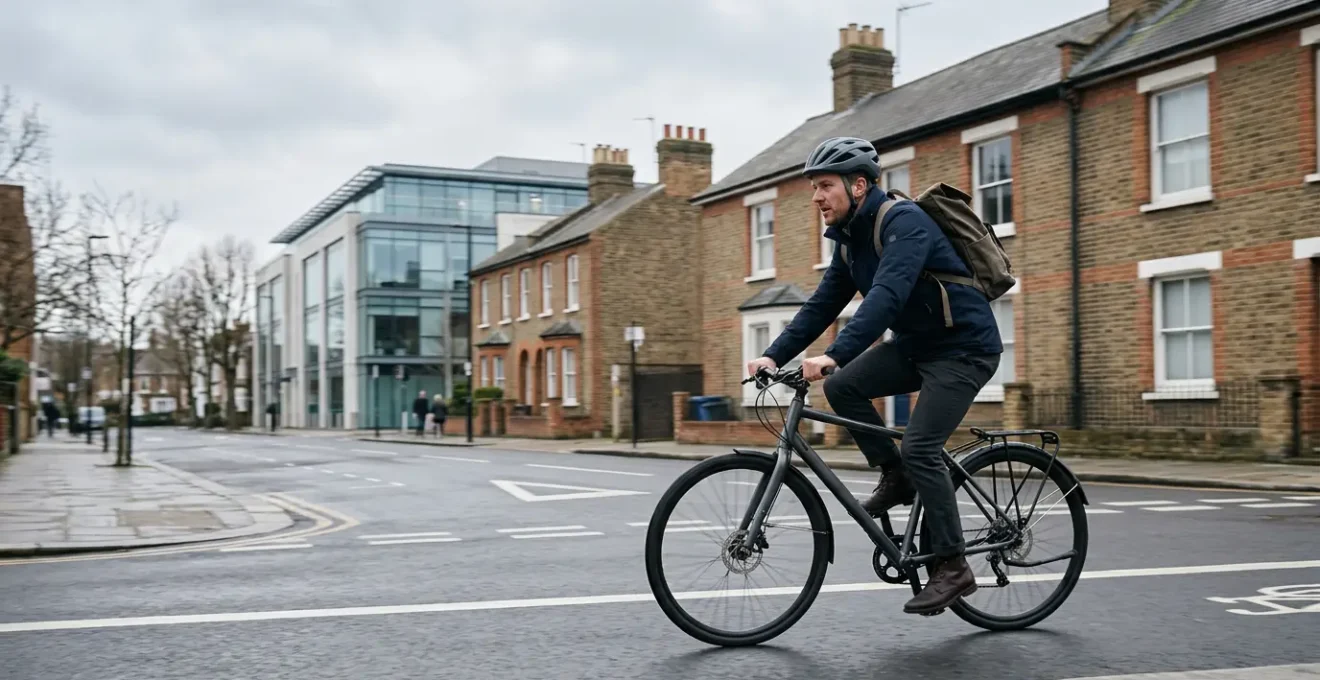
The Cycle to Work scheme is more than a discount; it’s a financial tool that offers tax savings of up to 47%, but only if you navigate its hidden complexities like ownership fees and insurance risks.
- Higher-rate taxpayers unlock significantly greater savings (42%+) compared to basic-rate payers (around 28%) due to the salary sacrifice mechanism.
- The biggest trap is the end-of-hire “ownership fee,” which can wipe out a large portion of your savings if you don’t choose your scheme provider carefully.
Recommendation: Before joining, analyse your provider’s end-of-hire terms and factor in the cost of robust insurance—treating the bike as a financial asset to be protected, not just a purchase.
Watching your monthly train fare creep up is a familiar frustration for many UK commuters. The Cycle to Work scheme presents itself as the perfect solution: get a brand-new bike, save money, and improve your health. Most guides simply state that you save money by paying for the bike from your pre-tax salary. While true, this barely scratches the surface and misses the critical details that determine whether you save a little or a lot.
The common advice is to pick a bike and sign up. But this overlooks the crucial mechanics of salary sacrifice, the impact of your tax bracket, and the often-ignored “ownership fee” that can come as a nasty surprise after 12 months. It also fails to address the practical realities of commuting in the UK: potholed roads, unpredictable weather, and the very real risk of theft at a train station.
But what if the key to truly maximising your savings wasn’t just getting the discount, but mastering the scheme’s hidden rules? The Cycle to Work scheme is best understood not as a simple voucher, but as a financial instrument. Your success with it depends on understanding its nuances—from tax efficiencies to risk management.
This article will demystify the entire process. We’ll break down how your earnings directly impact your savings, how to choose a bike that can withstand a real-world British commute, how to avoid the costly end-of-scheme traps, and how to manage the practicalities of cycling to work so you arrive prepared, not stressed and sweaty. It’s time to move beyond the marketing and learn how to make the scheme work for your wallet.
In this comprehensive guide, we’ll explore every critical decision you’ll face, from financial planning to practical day-to-day use. The following sections provide a clear roadmap to help you navigate the scheme like a pro.
Summary: Your Complete Guide to Maximising Cycle to Work Savings
- Why Do High-Rate Taxpayers Save 40% on Bikes Compared to Basic Rate Payers?
- Hybrid or Road Bike: Which Choice Suits a 10-Mile Potholed Commute Best?
- The Ownership Fee Trap: How to Avoid Paying Extra After 12 Months
- How to Commute by Bike Without Arriving at the Office Sweaty and Stressed?
- Is Your Scheme Bike Insured If Stolen from a Train Station Rack?
- The “Ugly Bike” Theory: Why a Beater Bike Is Safer to Lock Outside?
- How to Start Cycling Safely After a Decade of Sedentary Office Work?
- Hybrid or Road Bike: Which Is the Best Choice for London Commutes?
Why Do High-Rate Taxpayers Save 40% on Bikes Compared to Basic Rate Payers?
The magic of the Cycle to Work scheme lies in a simple mechanism called salary sacrifice. You don’t just get a discount; you agree to a temporary reduction in your gross salary, and your employer uses that amount to lease a bike for you. Because you’re paying from your pre-tax income, you don’t pay Income Tax or National Insurance (NI) on that portion of your earnings. This is where your tax bracket becomes the single most important factor in your savings.
A basic-rate taxpayer (paying 20% Income Tax and 8% NI) saves a total of 28% on the bike’s value. However, a higher-rate taxpayer (paying 40% Income Tax and 2% NI) saves a massive 42%. For those in the additional-rate bracket, the saving climbs to 47%. The more tax you would have otherwise paid, the more you save by sacrificing that salary. It’s a government-endorsed tax efficiency tool, and it disproportionately benefits higher earners.
This principle is clearly demonstrated in the following breakdown, which shows how savings accumulate based on tax bands. As an analysis from tax experts highlights, the financial benefit directly correlates with your marginal tax rate.
| Tax Bracket | Annual Income (England/Wales/NI) | Income Tax Rate | NI Rate | Total Savings Rate | Annual Saving on £1,000 Bike (2-year hire) |
|---|---|---|---|---|---|
| Basic Rate | £12,571 – £50,270 | 20% | 8% | 28% | £140 per year |
| Higher Rate | £50,271 – £125,140 | 40% | 2% | 42% | £210 per year |
| Additional Rate | Above £125,140 | 45% | 2% | 47% | £235 per year |
Case Study: The Finance Director’s E-Bike Purchase
Michael, a finance director earning above the higher-rate threshold, purchased a £5,000 premium e-bike plus £400 in accessories. As a higher-rate taxpayer, he saved over £2,100 on the package. At this income level, the tax efficiency was remarkable—effectively giving him a 40% discount through legitimate tax planning. This demonstrates the powerful amplification effect for high-earners, especially when combining expensive bikes with essential accessories under the scheme.
Therefore, when calculating your potential savings, looking at the sticker price of the bike is only half the story. The real calculation involves your own payslip and understanding your marginal tax rate.
Hybrid or Road Bike: Which Choice Suits a 10-Mile Potholed Commute Best?
Choosing the right bike for a 10-mile UK commute isn’t about speed; it’s about resilience and comfort. Our notoriously potholed roads and unpredictable weather demand a machine built for reality, not for the Tour de France. While a sleek road bike is tempting, its thin tyres and aggressive posture can make a journey on broken tarmac a jarring, uncomfortable experience. A hybrid bike offers a more upright position, but the true sweet spot for durability often lies with a gravel or robust commuter bike.
The key is to look at the components, not just the frame style. For a daily commute involving rough surfaces, your priorities should be shock absorption, reliable braking in the wet, and features that keep you clean. A bike equipped with wider tyres, a vibration-dampening fork, and mounts for full-length mudguards will deliver a far more pleasant and reliable ride day after day.
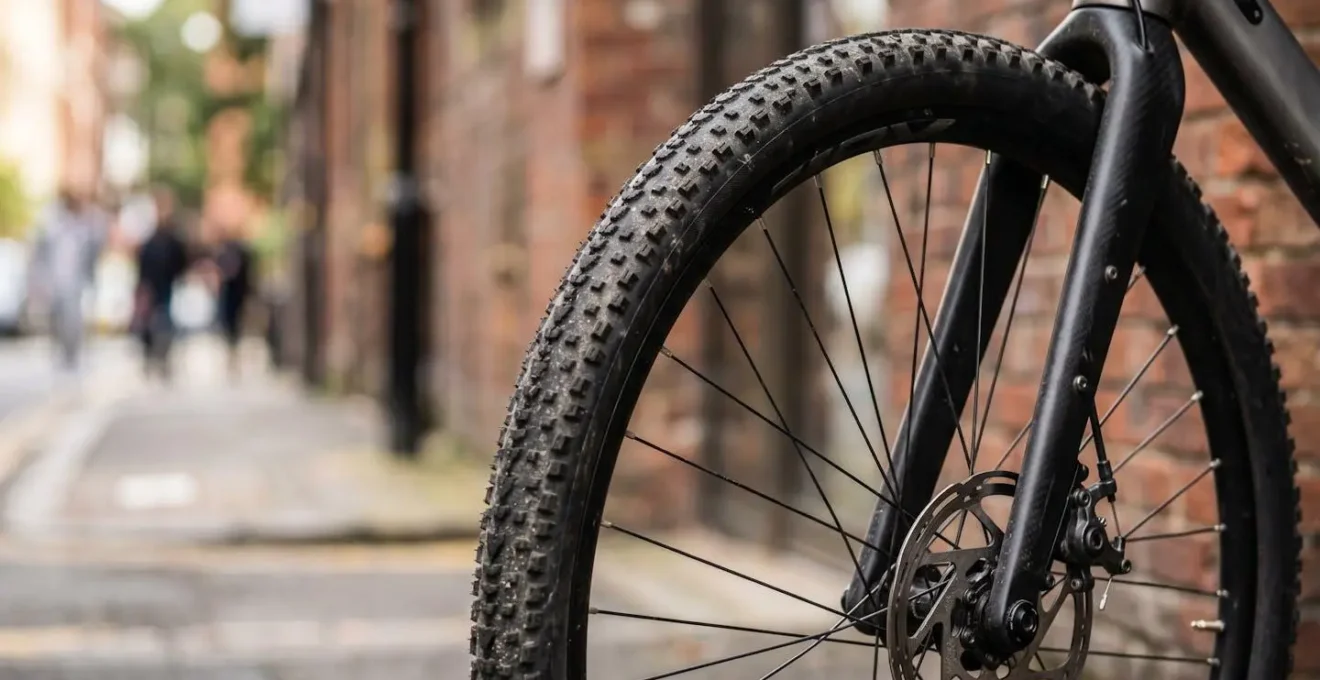
As the image above suggests, a modern commuter bike designed for durability has a distinct profile. Notice the generous space between the frame and the tyre (tyre clearance) and the presence of disc brakes. These are not just aesthetic choices; they are functional necessities for tackling the challenges of UK commuting.
Key Components for a Pothole-Proof Commuter Bike
- Tyre Clearance: The frame must accommodate tyres of 32-40mm width. Wider tyres can be run at lower pressures, acting as your first line of suspension against bumps and cracks.
- Fork Material: A carbon fork provides significantly better vibration damping than a standard aluminium one, reducing fatigue in your hands and arms on longer, rougher rides.
- Brake System: Disc brakes, especially hydraulic ones, offer consistent and powerful stopping power, which is non-negotiable in wet British weather when rim brakes can become unreliable.
- Frame Geometry: Look for a bike with a more relaxed, upright geometry (a higher ‘stack’). This reduces strain on your back and neck over a 10-mile journey.
- Mudguard Mounts: Essential fixtures on the frame that allow you to fit full-length mudguards are a must. They will protect you and your work clothes from road spray year-round.
Ultimately, choosing the right bike is an investment in your daily comfort and safety. Prioritising these robust features over pure speed will ensure your new commuting habit is sustainable and enjoyable, whatever the road throws at you.
The Ownership Fee Trap: How to Avoid Paying Extra After 12 Months
Here lies the most common and costly misunderstanding of the Cycle to Work scheme: the bike is not yours after the initial 12-month hire period. According to HMRC rules, there can be no guarantee of ownership from the start. To comply, schemes charge a “Fair Market Value” (FMV) if you want to take ownership. This is where your savings can be dramatically reduced. Some providers may charge as much as 7% of the original value for a bike over £500, which can add a surprise £70 cost to a £1,000 bike package.
This end-of-hire cost is the “Ownership Fee Trap.” Many employees, excited by the initial tax savings, overlook this crucial detail in the small print. However, savvy commuters can avoid this by choosing their scheme provider strategically. Not all schemes are created equal. Some, like the Green Commute Initiative, have structured their model to eliminate this fee almost entirely by offering a free extended loan period, after which ownership can be transferred for a nominal sum like £1.
The differences between providers can have a huge impact on your total savings, turning a great deal into a mediocre one. Before committing, it is vital to compare how the major UK providers handle the end-of-hire phase, as this comparison of end-of-hire models reveals.
| Provider | Initial Hire Period | Ownership Fee Model | Extended Hire Period | Final Ownership Cost | Total Cost Impact |
|---|---|---|---|---|---|
| Cyclescheme | 12 months | ‘Own it later’ – 3% or 7% fee | Optional extended hire | 3-7% of original value | Reduces savings from 42% to 21-39% |
| Green Commute Initiative | 3 months | No exit fee | Free 5 years 9 months loan | £1 nominal fee after 6 years | Maximum savings protected |
| Halfords Cycle2Work | 12 months | Fair Market Value or extended hire | Variable | Depends on FMV table | Variable impact on savings |
The key is to ask your employer which scheme they use and then investigate that provider’s specific “end of hire” policy. If they offer a choice, opt for one with a nominal ownership fee. If they don’t, you must factor the eventual FMV payment into your initial savings calculation to get a true picture of the total cost.
Don’t let the small print catch you out. A few minutes of research into your provider’s policy can save you a significant amount of money and ensure your Cycle to Work experience is as financially beneficial as it first appears.
How to Commute by Bike Without Arriving at the Office Sweaty and Stressed?
The financial benefits of cycling to work are clear, but they mean little if the practical reality is a stressful, sweaty arrival at the office. This is a major barrier for many would-be commuters. The solution is twofold: preparing for the “end of trip” and choosing the right technology for the journey itself. Pacing yourself, wearing appropriate layers, and planning your route are basics, but true comfort comes from having the right facilities at your destination.
Before you even buy the bike, you should audit your workplace. Does it have showers? Secure storage? A place for wet gear to dry? The availability of these facilities can make the difference between a refreshing start to the day and a flustered one. If your workplace is lacking, it’s worth speaking to HR or management; many companies are now incentivised to provide these facilities to encourage sustainable transport.
The other part of the equation is the bike itself. For hilly commutes, longer distances, or for those who simply want to reduce physical exertion, the electric bike (e-bike) is a game-changer. It’s not about “cheating”; it’s a strategic tool. As experts at Cyclescheme UK note, an e-bike allows you to maintain a consistent speed with far less effort, flattening hills and turning a sweaty slog into a gentle ride. This perspective reframes the e-bike as an enabler of a sustainable commute.
The e-bike not as ‘cheating’ but as a strategic tool for tackling hilly UK cities.
– Cyclescheme UK, How Much Can You Save with the Cycle to Work Scheme
Action Plan: Your Workplace End-of-Trip Facilities Audit
- Shower Facilities: Assess availability, cleanliness, and capacity. Are there enough for everyone arriving at 8:45 am?
- Secure Storage: Evaluate the security level. Are they basic outdoor racks, a covered compound, or a secure indoor bike room?
- Drying Rooms: Check for a dedicated (ideally heated) space to hang wet jackets and gear on rainy days.
- Changing Areas: Confirm there is adequate private space with lockers to store your work clothes and cycling gear.
- Maintenance Support: Verify if there’s a basic repair station with a pump and multi-tool, or if your company has a partnership with a local bike shop for discounts.
By combining a thorough audit of your workplace facilities with a smart choice of bike—potentially an e-bike—you can ensure your cycle to work is a positive and professional start to every day.
Is Your Scheme Bike Insured If Stolen from a Train Station Rack?
During the hire period, the bike legally belongs to your employer or the scheme provider. If it’s stolen, you are still liable for the remaining payments. This makes insurance not just a sensible precaution, but a financial necessity. This risk is amplified enormously if you plan to leave your bike at a public location like a train station. The unfortunate reality is that bike theft is rampant, and recovery rates are shockingly low.
A Freedom of Information request revealed a stark statistic: of over 4,000 bikes stolen from UK train stations, only 22 suspects were charged. That’s a charge rate of just 0.5%. You cannot rely on the police to recover your stolen bike. This shifts the responsibility squarely onto you to have a robust security and insurance plan in place from day one.
Most home insurance policies offer inadequate cover for bikes, especially for theft away from home or for high-value models. You will almost certainly need a specialist bicycle insurance policy. When getting a quote, you must be honest about where the bike will be stored. Leaving it at a train station is considered high risk and will affect your premium, but failing to declare it could invalidate your policy entirely.
The British Transport Police’s “Two-Hour Rule”
In a significant policy shift, the British Transport Police (BTP) indicated that for bikes left for more than two hours outside stations, investigations would be limited. The BTP stated they would typically only review around two hours of CCTV footage to identify a theft, as longer reviews prevent officers from responding to other incidents. This policy effectively decriminalises long-term bike parking theft, signalling to commuters that they cannot rely on police investigation for recovery. It places even greater pressure on cyclists to invest in top-tier locks and specialist insurance.
Your insurance policy will also have specific requirements for the type of lock you must use, often specifying a “Sold Secure” rating (typically Gold for high-theft areas). Failing to use the specified lock can also void your cover. The cost of a high-quality lock and a robust insurance policy should be factored into your total budget when using the scheme.
In short: your scheme bike is not automatically insured. Securing a specialist policy and investing in a top-rated lock isn’t an optional extra; it’s a fundamental part of the financial calculus of cycle commuting in the UK.
The “Ugly Bike” Theory: Why a Beater Bike Is Safer to Lock Outside?
In high-theft areas, even the best lock is merely a deterrent that buys you time. Professional thieves can defeat most locks, so the most effective security strategy is to make your bike a less attractive target in the first place. This is the essence of the “Ugly Bike” or “Beater Bike” theory: a bike that looks worn, nondescript, and has low resale value is less likely to be stolen than a shiny, new, branded machine locked right next to it.
This doesn’t mean you have to ride a genuinely bad bike. It’s about perception. You can have a high-quality, reliable bike that has been strategically “de-branded” and made to look less appealing. Thieves are often opportunistic and are looking for a quick score with a recognisable brand name (like Specialized, Trek, or Canyon) that they can sell easily. By removing those logos and making the bike look unique and less valuable, you disrupt their business model.
This strategy of strategic de-branding involves simple, reversible modifications that can significantly lower your bike’s profile to would-be thieves. The goal is to make it look like too much hassle for too little reward. If your commute involves leaving your bike locked in a public place for hours, this approach can be even more effective than an expensive lock alone.
Strategic De-Branding Tactics for High-Theft UK Areas
- Logo Concealment: Use black electrical tape or vinyl stickers to cover all prominent brand logos on the frame. This makes the bike’s make and value instantly unrecognisable.
- Component Mixing: Swap out eye-catching, branded components for generic alternatives. A plain black saddle is less attractive than a flashy, branded one. Use worn-looking handlebar tape.
- Weathering Aesthetic: Don’t be too quick to clean it. A bit of mud and a few cosmetic scratches suggest a lower resale value and a less-loved bike.
- Remove Quick-Release Levers: Replace quick-release skewers on your wheels and seat post with allen-key or security bolts. This prevents thieves from easily stealing your components.
- Matte Finish Wrap: For a more dedicated approach, consider a cheap vinyl wrap in a dull, unattractive colour like olive, grey, or brown to cover the original glossy paint job.
By making your bike look less valuable, you are actively managing your risk. It’s a counter-intuitive but highly effective layer of security that costs next to nothing.
Key Takeaways
- Your tax bracket is the biggest determinant of your savings; higher-rate payers save significantly more.
- The “ownership fee” at the end of the hire period is a major trap; choose a provider with a nominal exit fee to protect your savings.
- Bike theft is a serious financial risk; specialist insurance and a Sold Secure Gold rated lock are non-negotiable for commuters.
How to Start Cycling Safely After a Decade of Sedentary Office Work?
For many people considering the switch to cycling, the biggest hurdle isn’t financial—it’s confidence. After years of a sedentary lifestyle, the thought of navigating busy UK roads can be daunting. In fact, comprehensive research from the Department for Transport confirms this is a major barrier.
Journey length, feeling unsafe whilst cycling, and already owning a bicycle were reported as the top 3 reasons for not using the scheme.
– Department for Transport, Evaluation of the Cycle to Work Scheme
The key to overcoming this is not to jump in at the deep end, but to adopt a strategy of graduated exposure. This means building your fitness, skills, and confidence in low-stress environments before you ever attempt a rush-hour commute. It’s about making the process manageable and safe, turning anxiety into empowerment.
Start on weekend mornings in local parks or on dedicated, traffic-free cycle paths like the National Cycle Network. Focus purely on getting comfortable with the bike: balancing, braking, and changing gears. As your confidence grows, you can gradually introduce more complex environments. The goal is to build up your experience incrementally so that by the time you do your first full commute, it feels like a natural next step, not a terrifying leap.
Action Plan: 4-Week Graduated Exposure Plan for New Commuters
- Week 1: Foundational Skills. Stick to weekend rides in local parks or on dedicated cycle paths (e.g., National Cycle Network routes). Aim for 3-5 miles and focus on basic bike handling and building confidence away from traffic.
- Week 2: Quiet Roads. Progress to quiet residential streets during off-peak hours (e.g., 10am-3pm). Practise starting and stopping, signalling, and navigating simple junctions. Aim for 5-7 miles.
- Week 3: Route Reconnaissance. Cycle your actual commute route on a quiet weekend morning. This allows you to identify potential hazards, tricky junctions, and bike lane quality without the pressure of traffic. Time yourself and locate your bike parking.
- Week 4: Trial Commute. Attempt your first commute on a weekday, but outside of peak rush hour (e.g., arriving at 10am). This gives you a real-world taste of the traffic flow. Gradually build up to a full weekday commute.
For an extra confidence boost, consider a cycle training course. Organisations like Bikeability offer courses for adults (Level 3) that specifically focus on navigating complex urban junctions and busy traffic, providing you with the skills to ride assertively and safely.
By taking a structured, patient approach, you can transform from a nervous novice into a confident commuter, ready to enjoy all the benefits cycling has to offer.
Hybrid or Road Bike: Which Is the Best Choice for London Commutes?
Commuting in London presents a unique set of challenges that go beyond just potholes. The sheer density of traffic, the high risk of theft, and the common need for a multi-modal journey involving the Tube or Overground demand a very specific type of bike. While a hybrid offers a good balance, for many Londoners, the optimal solution isn’t a hybrid or a road bike, but a folding bike.
The primary driver for this is security. With over 20,000 bikes reported stolen annually in London—equating to more than 50 thefts per day—leaving any bike locked on the street is a significant gamble. A folding bike completely eliminates this risk. Its ability to be taken indoors and stored under your office desk means it is never left unattended. This single benefit can outweigh almost any other performance consideration for a London commuter.
Furthermore, a folding bike provides unparalleled flexibility for a multi-modal commute. Standard bikes are heavily restricted on many Tube and National Rail services during peak hours. A folding bike, however, can be carried as luggage at any time, allowing you to combine cycling with public transport seamlessly. You can cycle the first and last mile of your journey, avoiding the most crowded parts of the transport network, while using the train or Tube for the long-haul section.
Case Study: The Folding Bike as the Ultimate London Solution
For a commuter travelling across multiple zones (e.g., Zones 1-4), a folding bike like a Brompton represents an optimal solution. A Zone 1-4 annual Travelcard can cost upwards of £2,400. A folding bike, purchased through the Cycle to Work scheme, can pay for itself in just over a year while providing true door-to-door flexibility. Its ability to be stored securely under a desk nullifies the city’s extreme theft risk, making it a financially and practically superior choice for many office-based Londoners.
While a hybrid might be more comfortable over very long distances and a road bike faster, neither can match the unique combination of security and transport integration that a folding bike offers in the capital.
For the London commuter, the “best” bike is the one that solves London’s specific problems. A high-quality folding bike addresses both the security and transport challenges head-on, making it the smartest choice for many.