
The persistent back pain you feel on your race bike isn’t a sign of weakness; it’s a mechanical failure of the frame’s geometry to cope with the high-frequency vibrations of UK roads.
- Endurance geometry’s slacker head angles and increased mechanical trail provide crucial self-stabilising forces, reducing the muscular tension in your back needed to hold a line.
- Wider 28mm tyres are not just for comfort; they lower rolling resistance on chip-seal surfaces and, combined with carbon layup, form a system that damps road buzz before it can fatigue your core.
Recommendation: Stop fighting your bike. Instead of chasing an aggressive race position, focus on a geometry that prioritises stability and vibration damping to unlock more sustainable power and pain-free miles.
That familiar, nagging ache in your lower back after a Sunday ride on crumbling British B-roads feels like a personal failing. You’ve been told to stretch more, strengthen your core, or perhaps invest in a bike fit. While these are valid points, as a frame designer, I can tell you the primary culprit is often not your body, but the machine beneath you. A race bike is a finely tuned instrument for smooth tarmac, but on the unpredictable, coarse surfaces common across the UK, it becomes a device that transmits every single shock directly into your spine.
The common advice is to simply switch to an “endurance” bike for its more “upright” and “comfortable” position. This is a vast oversimplification. It reduces a complex engineering solution to a single marketing buzzword. The real magic isn’t just about sitting up higher; it’s about a series of subtle but profound geometric shifts designed to fundamentally alter how the bike interacts with rough surfaces and dissipates the energy that currently ends up as pain in your lumbar region.
But if the solution isn’t just a taller head tube, what is it? The true key lies in understanding the interplay between steering geometry, material science, and component choice. It’s about seeing the bicycle not as a single object, but as a complete system designed to insulate the rider. This article will deconstruct the engineering principles behind endurance geometry. We won’t just tell you it’s more comfortable; we will show you precisely *why* it works, explaining the mechanical concepts of trail, the distinct roles of carbon and tyres in damping vibration, and how these elements combine to let you ride faster, for longer, without pain.
This guide will walk you through the key geometric and component decisions that make an endurance bike the superior choice for most UK club riders. By understanding these fundamentals, you can make a truly informed decision that solves your back pain at its mechanical source.
Summary: How Endurance Bike Geometry Solves Back Pain
- Slack Head Angle vs Steep: How Does It Affect Stability on Descents?
- Carbon Layup or Tyres: What Actually Absorbs More Road Vibration?
- The Top Tube Mistake That Makes Endurance Bikes Feel Sluggish
- Why 28mm Tyres Are Now the Minimum Standard for UK Endurance Riding?
- Endurance vs Race Geometry: Which Is faster for the Average Club Rider?
- Carbon Layup or Tyres: What Actually Absorbs More Road Vibration?
- Wedges and Shims: How to Align Your Knees from the Feet Up?
- Is Buying a Cheap Carbon Frame Worth the Risk on UK Roads?
Slack Head Angle vs Steep: How Does It Affect Stability on Descents?
The first and most critical element in managing rider fatigue is steering geometry. A race bike typically uses a steep head angle (around 73°) to create sharp, agile handling. On a rough, unpredictable descent, this agility becomes nervous twitchiness, forcing you to constantly tense your shoulders, arms, and lower back to hold your line. Endurance frames counter this with a slacker head angle (often 71-72°). This small change has a dramatic effect on a crucial physics principle: mechanical trail.
Trail is the distance between the point where the steering axis hits the ground and the centre of the tyre’s contact patch. A slacker head angle increases this distance, creating a stronger self-centring effect, much like a caster wheel on a shopping trolley. This inherent stability means the bike wants to track straight, requiring far less muscular input from you to keep it online over bumps and broken tarmac. As a designer, this is our primary tool for building rider confidence and reducing the micro-corrections that lead to upper body and core fatigue. In fact, research on bike geometry demonstrates a 5-7% decrease in steering stability for every degree the head angle is steepened, quantifying the nervousness you feel on a race bike.
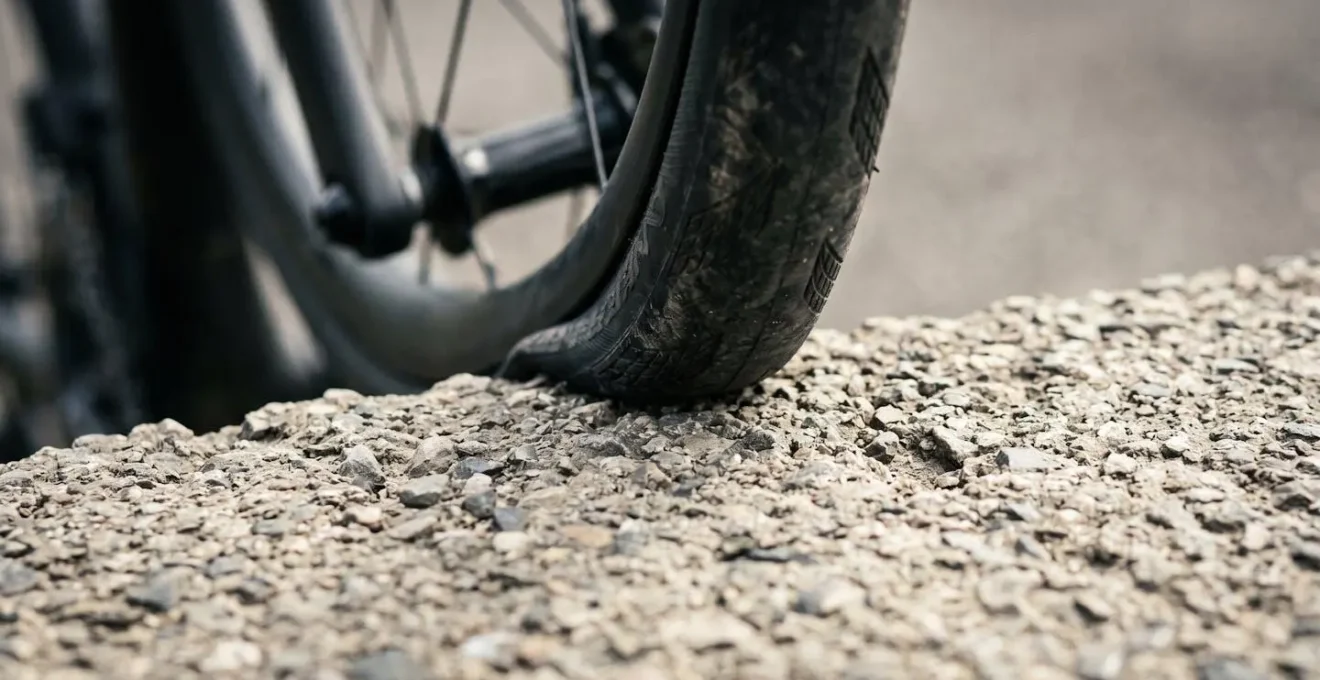
As you can see in the detail above, the relationship between the steering axis and the contact patch is what defines the bike’s desire to self-correct. On an endurance bike, we intentionally increase this trail to give the front wheel a mind of its own, freeing up your cognitive and muscular energy to focus on the road ahead, not just on keeping the bike upright. This reduction in constant, low-level tension is the first major step in alleviating back pain originating from bike handling.
Carbon Layup or Tyres: What Actually Absorbs More Road Vibration?
Once steering is stabilised, the next challenge is road buzz—the high-frequency vibrations transmitted from the chip-seal surface that cause muscle fatigue and numbness. This is where frame material, specifically carbon fibre, plays its first key role. It’s a common belief that carbon “absorbs” vibration, but the mechanism is more complex than simple absorption. It’s about targeted damping.
Unlike metals like aluminium or steel, carbon fibre is a composite material. By orienting layers of carbon (the “layup schedule”) in different directions, a designer can tune the frame to be incredibly stiff in one plane (for power transfer) but more compliant in another (for comfort). This allows us to build a bottom bracket and head tube that resist pedalling forces, while engineering the seat stays and fork blades to flex minutely, interrupting the path of high-frequency vibrations before they reach you. This isn’t a magical property; it’s a deliberate engineering choice that a metallic frame cannot offer with the same level of precision. The difference is measurable, with an optimised carbon frame providing significant damping over an equivalent alloy frame.
The engineering team at Trifox, in a study on ride comfort, highlights exactly where carbon excels. As they note:
Carbon fiber excels at material damping due to its composite nature. Higher frequency vibrations from trail chatter are most effectively absorbed—precisely what causes hand numbness and muscle fatigue.
– Trifox Carbon Engineering Team, The Science of Ride Comfort: Carbon Fiber Vibration Study
However, the frame is only one part of the system. While the carbon layup acts as a fine-tuner, filtering out the harshest frequencies, it cannot handle larger impacts. Think of it as a noise-cancelling filter. It removes the persistent “hiss” of the road, but it doesn’t mute the “bang” of hitting a pothole. That’s a job for another critical component.
The Top Tube Mistake That Makes Endurance Bikes Feel Sluggish
One of the most common errors riders make when switching to an endurance frame is attempting to replicate their old race position. Endurance bikes are designed with a shorter “reach” (the horizontal distance from the bottom bracket to the head tube). Seeing this shorter cockpit, many riders instinctively fit an overly long stem (120mm or more) to stretch themselves out again. This is a fundamental mistake that completely undermines the bike’s intended handling characteristics.
Fitting a long stem to a frame with a slack head angle creates a phenomenon known as the “tiller effect.” Because the steering axis is further back, the long stem acts like a long lever, causing the handlebars to swing in a wide, slow arc. This makes the steering feel sluggish, unresponsive, and “floppy” at low speeds. You’ve effectively taken a bike designed for stability and made it handle like a canal boat. This not only compromises performance but also increases tension in the shoulders and upper back as you fight the lazy steering.
The correct approach is to embrace the shorter reach and pair it with a proportionally shorter stem (typically 90-110mm). This combination preserves the balanced handling the frame designer intended, providing stability at speed without feeling ponderous. Your body adapts to the slightly more upright position, which in turn takes pressure off your lower back and hamstrings. Sacrificing a small amount of aerodynamic efficiency for a massive gain in handling quality and sustainable comfort is the core philosophy of endurance design.
Action Plan: Correcting Your Endurance Bike Stem Setup
- Identify your frame’s designed reach figure from the geometry chart (typically shorter on endurance bikes).
- Match stem length to frame design philosophy—endurance bikes typically pair best with 90-110mm stems, not 120mm+ race stems.
- Understand the ’tiller effect’—longer stems on slack head angles amplify sluggish steering response and increase shoulder tension.
- Test ride with the manufacturer’s recommended stem length before customizing to feel the intended balance of stability and agility.
- Avoid compensating for shorter reach with excessive stem length; this defeats the purpose of endurance geometry and creates handling compromises.
Why 28mm Tyres Are Now the Minimum Standard for UK Endurance Riding?
For years, the belief was that narrow tyres pumped to high pressures were faster. On a perfectly smooth velodrome, this is true. On a rough British B-road, it’s demonstrably false. The single biggest leap in road bike comfort and real-world speed has been the adoption of wider tyres, with 28mm now considered the baseline for endurance riding.
A narrow tyre at high pressure has a small, round contact patch. On a coarse surface, this tyre cannot deform around the aggregate (the small stones in the tarmac), causing the entire bike and rider to be lifted and dropped with every imperfection. This is called “suspension loss,” and it’s a huge drain on your momentum and a primary source of vibration. A wider 28mm tyre, run at a lower pressure, creates a shorter, wider contact patch. This allows the tyre casing to deform and absorb road imperfections instead of transmitting them to the frame. The result is not just a smoother ride, but less energy wasted lifting your body weight, which means lower rolling resistance on real-world roads. In fact, on rough surfaces, cyclists using wider 28mm tires can experience 10-15% lower rolling resistance.
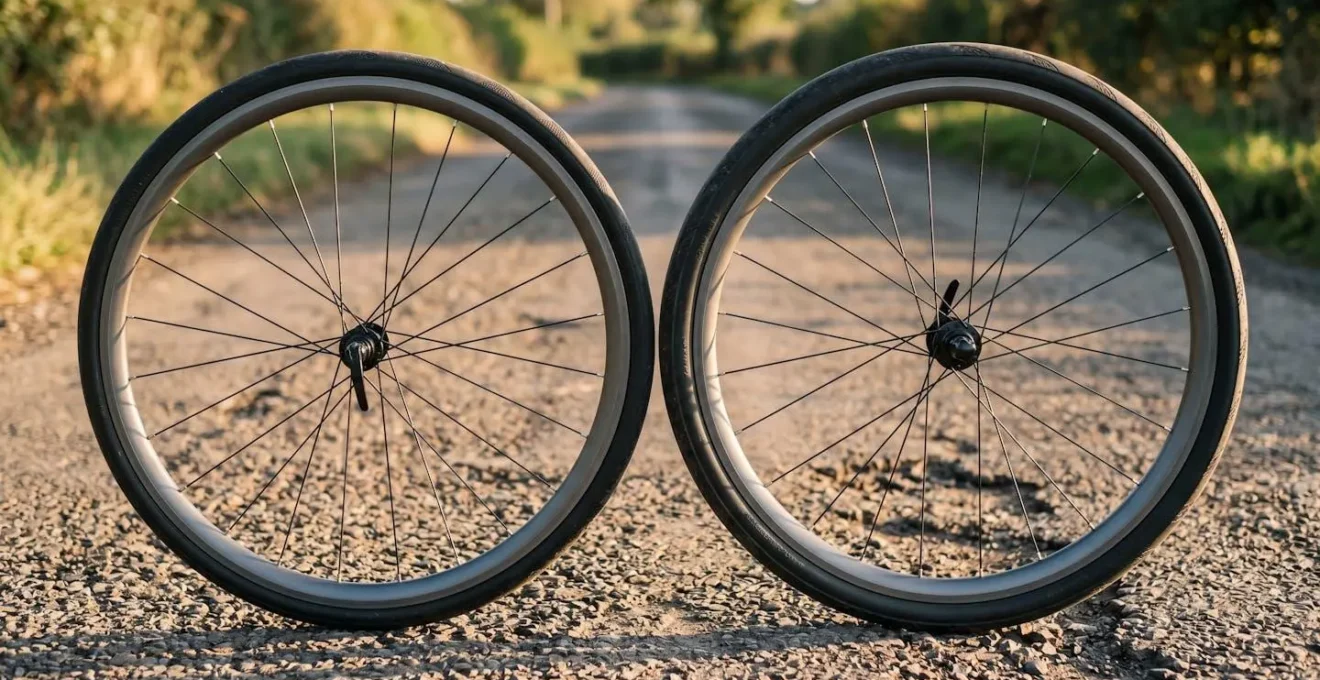
This image perfectly illustrates the concept. The wider contact patch on the right effectively “floats” over the road’s texture, while the narrow tyre on the left is forced to chatter over it. This is why the technical team at BikeRadar, a leading UK-based publication, has asserted that for most local riders, 28mm tyres represent the sweet spot for balancing comfort, grip, and speed on typically poor road surfaces. They are your first and most effective line of defence against the road buzz that fatigues your back muscles.
Endurance vs Race Geometry: Which Is faster for the Average Club Rider?
This is the ultimate question for many riders considering a switch: “Will I be slower?” The answer, for rides longer than an hour, is almost certainly no. In fact, the average club rider is very likely to be faster on an endurance bike. The reason is not aerodynamics, but sustainable power output.
A low, aggressive race position is only fast if you can hold it. For professional cyclists with elite flexibility and conditioning, this is possible. For the average rider, holding that position for several hours leads to significant discomfort, particularly in the lower back and neck. As your body fatigues from fighting the position and absorbing road vibrations, your power output inevitably drops. You start shifting around on the saddle, sitting up to stretch, and spending less time in an efficient, power-producing posture. Your aerodynamic advantage on paper is erased by your physiological reality.
An endurance geometry puts you in a position that is biomechanically more sustainable. By reducing the strain on your hamstrings and lower back, it allows you to pedal efficiently and comfortably for far longer. This means you can maintain a higher average power output throughout a 3-4 hour ride. Scientific research on durability in cycling performance shows a significant power drop-off after 2-3 hours for amateurs, largely attributed to neuromuscular fatigue and discomfort in aggressive positions. An endurance bike directly mitigates these factors. Your slightly less aero position is more than compensated for by your ability to keep producing power deep into the ride, long after your friends on harsh race bikes have started to fade.
Carbon Layup or Tyres: What Actually Absorbs More Road Vibration?
Having established the frame’s role as a high-frequency filter, we must now turn our attention back to the tyres, as they are the true heavy-lifters in the compliance system. While carbon layup shaves off the jarring “buzz,” the tyre is responsible for absorbing the larger, lower-frequency impacts that would otherwise unsettle the bike. Its effectiveness is governed by three key factors: volume, pressure, and casing construction.
We’ve discussed volume (tyre width), but pressure is the user-adjustable variable that has the most immediate effect. Running your 28mm tyres at 90 psi instead of 65 psi can completely negate the benefits of their wider size, turning them into rigid, unforgiving rings. The correct pressure allows the tyre to act as your primary suspension system. The goal is to find the lowest pressure you can run without risking pinch flats or squirmy handling in corners—a balance that provides maximum deformation over bumps.
Finally, not all tyres are created equal. The tyre’s casing, measured in Threads Per Inch (TPI), plays a massive role in its suppleness. A high TPI casing (120 TPI or more) uses finer, more numerous threads, resulting in a thinner, more flexible tyre wall that conforms better to the road surface. A low TPI tyre (e.g., 60 TPI) uses thicker, stiffer threads, making it more durable but far less compliant. For managing back pain, a supple, high-TPI tyre is a non-negotiable part of the system, working in concert with the lower pressure and wider volume to swallow road imperfections.
Wedges and Shims: How to Align Your Knees from the Feet Up?
Even with the perfect frame geometry and tyre setup, pain can persist if the rider’s own biomechanics are not properly supported. Back pain, in particular, is often linked to instability lower down the kinetic chain, especially at the knee. Many cyclists have a natural tilt in their forefoot, known as varus (tilting outward) or valgus (tilting inward). When clipped into a flat pedal and shoe system, this tilt can force the knee to deviate inwards or outwards during the pedal stroke to compensate.
This poor knee tracking—a visible wobble from side to side as you pedal—doesn’t just risk knee injury. It creates instability that travels up the leg, causing the hip to rock and requiring your lower back and core muscles to fire constantly to stabilise your pelvis. Over thousands of pedal strokes, this repetitive, inefficient movement pattern leads directly to muscle fatigue and pain in the lower back. The solution is often found at the foot/pedal interface.
Cleat wedges and shims are the tools a bike fitter uses to correct this. A cleat wedge is a small, angled plastic shim placed between your shoe’s sole and the cleat. By inserting one or more wedges, a fitter can tilt the shoe to counteract your natural foot angle, allowing your foot, knee, and hip to align in a single, stable plane. This neutralises the side-to-side knee motion, stabilises the pelvis, and stops your lower back from having to work as a stabiliser. It’s the final piece of the puzzle, ensuring that the stable platform provided by the endurance frame isn’t undermined by your own body’s mechanics.
Key Takeaways
- True endurance geometry is a system: slacker head angles for stability, engineered carbon flex for damping, and wider tyres for suspension.
- Comfort is speed: A sustainable, pain-free position allows the average rider to produce more power over a long ride than a painful, aggressive race posture.
- Setup is critical: Common mistakes like using an overly long stem on an endurance frame can completely ruin its intended handling and comfort benefits.
Is Buying a Cheap Carbon Frame Worth the Risk on UK Roads?
When considering an endurance bike, the market is flooded with direct-to-consumer carbon frames at tempting prices. While the geometry chart may look identical to a premium brand’s, the invisible differences in research, development, and testing create a significant safety and performance gap. This is especially true on the pothole-ridden roads of the UK.
All frames sold legally must pass certain baseline safety tests, such as ISO 4210. However, these are minimum requirements. They test for predictable, standardised loads but don’t always account for the kind of sudden, catastrophic impacts that a deep pothole can deliver at speed. As the engineering team at Haidelibikes explains, this standard is merely a starting point:
ISO 4210 is merely the baseline for market entry. Reputable brands conduct rigorous impact and fatigue testing to simulate catastrophic events like hitting a deep pothole at speed.
– Haidelibikes Engineering Team, Carbon Bike Frame Testing Standards Analysis
This “invisible R&D” is where the value of a premium frame lies. Reputable manufacturers invest heavily in proprietary testing that goes far beyond the baseline, ensuring their frames can withstand the worst-case scenarios typical of real-world riding. This involves not just impact strength but also fatigue life, guaranteeing the frame maintains its integrity after thousands of cycles of stress.
Case Study: Premium Carbon Frame Testing Protocols
Leading carbon frame manufacturers like those detailed in premium testing protocol analyses implement testing that exceeds ISO 4210 standards by at least 10%. Crucially, they conduct specialized vibration and fatigue tests that cheap frames skip. This includes subjecting frames to 20,000 cycles on a vibration rig with heavy loads to simulate years of use on rough roads. These tests, which are costly and time-consuming, are designed specifically to ensure the frame’s carbon layup won’t delaminate or fail after repeated impacts—the exact kind of assurance you need when navigating unpredictable UK lanes. This rigorous process is the hidden value you pay for, and it’s a critical factor in long-term safety and ride quality.
By understanding that an endurance bike is a complete system—from its core geometry and material science to its components and your specific fit—you can finally address the mechanical source of your back pain. The next logical step is to evaluate frames not just on their price or marketing claims, but on the engineering principles discussed here to find a machine that truly works for you and the roads you ride.