Blog
Cycling is far more than just pedaling from point A to point B. Whether you’re commuting through traffic, tackling solo rides in challenging weather, navigating the social dynamics of group rides, or planning your first bikepacking adventure, every cyclist encounters questions that go beyond basic bike handling. From understanding the financial implications of bike schemes to mastering the unwritten rules of cafe stops, the cycling world has its own ecosystem of knowledge that separates confident riders from those still finding their way.
This resource brings together the essential knowledge every cyclist needs across six critical areas: financial and insurance considerations, the mental aspects of riding, technical skills for varied conditions, road safety strategies, group riding culture, and practical wisdom for security and adventure. Each section addresses real-world situations you’ll encounter on two wheels, offering practical insights that transform uncertainty into confidence.
Financial Essentials: Ownership and Insurance
Understanding the financial landscape of bike ownership helps you make informed decisions and avoid costly surprises. Cycle-to-work schemes, for instance, offer tax advantages that vary significantly based on your income bracket. High-rate taxpayers can save up to 40% on a bike purchase compared to basic-rate payers who typically save around 25-32%, because the savings reflect your marginal tax rate plus National Insurance contributions.
However, many riders fall into the ownership fee trap after their initial scheme period ends. Most schemes require a final payment after 12 months if you want to own the bike outright, rather than extend the hire agreement. Reading the fine print before signing prevents unexpected costs when that anniversary arrives.
Insurance presents another layer of complexity. Standard cycle-to-work scheme insurance often excludes theft from certain locations, particularly unsecured public areas like train station racks. Similarly, modifying an e-bike by removing speed restrictions creates an insurance void that leaves you completely unprotected if you crash, as the bike no longer meets legal specifications. Always verify your coverage matches your actual usage patterns and bike configuration.
The Mental Game: Psychology of Solo and Group Riding
Physical fitness gets you onto the bike, but mental resilience keeps you riding when conditions turn challenging. Solo riders in strong headwinds often experience a mental slump around the halfway point, when the return journey promises more of the same punishment. The key is reframing the experience: headwinds build strength more effectively than tailwinds, and every pedal stroke against resistance makes you genuinely faster on calm days.
For rain riding, the 10-minute rule provides a cognitive hack that defeats procrastination. Commit to riding for just 10 minutes; if you still hate it, turn back. Most riders discover that once they’re wet and moving, the psychological barrier dissolves and the ride becomes enjoyable. Your brain’s resistance exists in anticipation, not in the actual experience.
Interestingly, many cyclists report the “shower thought” effect around mile 20 of longer rides, when solutions to unrelated problems suddenly appear. This happens because rhythmic exercise at moderate intensity shifts your brain into a relaxed, associative thinking mode. The same neural state that generates creative insights also explains why solo rides serve as valuable mental processing time.
For those attempting their first solo wild camp, fear of the dark represents the most common psychological barrier. Building confidence gradually helps: start with campsites, progress to wild camping near your vehicle, then attempt fully remote locations. Familiarity with your equipment and surroundings transforms anxiety into calm competence.
Technical Mastery: Skills for All Conditions
Proper technique separates struggling riders from smooth operators across various terrain and conditions. Understanding when to use suspension lockout illustrates this perfectly. Many riders make the climbing error of leaving suspension unlocked, wasting energy with every pedal stroke as the bike bobs. Lock out your suspension on smooth climbs and pavement; keep it active for technical terrain where traction and control matter more than pure efficiency.
The seated versus standing debate for short climbs has a nuanced answer. For 30-second climbs, standing generates more power but consumes more energy. Remain seated if you can maintain momentum; stand when you need a power burst or when gradient changes demand it. Alternating between positions on longer climbs distributes fatigue across different muscle groups.
Rim brake fade on long descents creates genuine danger. Overheated rims can lead to tire blowouts or complete brake failure. The solution involves:
- Pumping brakes rather than dragging them continuously
- Using your body as a brake by sitting upright to increase wind resistance
- Choosing a lower gear to use leg resistance for speed control
- Planning brief stops on very long descents to allow cooling
For group riding, echelon formation on windy days lets riders share the workload diagonally rather than in single file. Position yourself slightly behind and to the sheltered side of the rider in front, creating a diagonal pace line that rotates burden while maintaining safety margins.
Safety First: Visibility and Road Positioning
The most dangerous moment in cycling occurs during the SMIDSY phenomenon (“Sorry Mate, I Didn’t See You”). Drivers look but don’t see cyclists because their brains filter out objects not matching expected patterns or speeds. Combat this by:
- Positioning yourself in the driver’s expected sight line
- Using lights even during daylight to trigger motion detection
- Making eye contact before assuming you’ve been seen
- Increasing your size profile by riding away from the curb
This connects directly to why riding in primary position (center of your lane) proves safer than hugging the curb. Taking the lane prevents dangerous overtaking on narrow roads, makes you more visible, and gives you space to maneuver around obstacles. Move left when safe passing is possible, but claim your space when it’s not.
Black ice detection requires understanding where freezing occurs first: shaded areas, bridges, and anywhere water accumulates. Look for a wet sheen that lacks spray from other vehicles, or roads that appear darker than surrounding surfaces. When in doubt, test traction gently with gradual brake pressure before committing to corners or descents.
Contributory negligence in insurance claims can reduce your payout if you wore dark clothing during a collision. While you shouldn’t be blamed for a driver’s failure to observe, insurance companies assess whether your choices contributed to the incident. High-visibility clothing and lights strengthen your legal and insurance position significantly.
Group Riding and Cycling Culture
Group dynamics follow unwritten rules that maintain safety and social cohesion. Overlapping wheels is considered dangerous and rude globally because any movement from the front rider causes the following rider to crash. Maintain at least a half-wheel gap between your front wheel and the rear wheel ahead.
Smart mode on flashing lights prevents annoying riders drafting behind you (“wheel suckers”) with strobing in their field of vision. Solid rear lights for group rides, flashing for solo riding in traffic provides the best balance of visibility and courtesy.
Club leaderboards generate healthy competition for some riders but create unhealthy obsession for others. The difference lies in whether they encourage personal improvement or comparison-based anxiety. The healthiest clubs celebrate diverse achievements rather than just speed.
Cafe culture has its own etiquette. The “heap” (stacking bikes outside) works safely when bikes are layered carefully: heavier bikes on the bottom, valuable bikes on top, and someone designated to watch them. Inside, ordering for a group requires a system: one person compiles orders and pays, avoiding the chaos of individual queue jumping.
Carrying cash remains mandatory in rural cafes that lack card machines or internet connectivity. A tenner in your jersey pocket ensures you’re never the rider who can’t pay. The post-ride “post-mortem” discussion of sprint finishes and challenging moments bonds groups through shared storytelling and mutual acknowledgment of effort.
Beyond the Road: Security and Adventure
Bike security requires realistic assessment of risk. The “ugly bike” theory suggests that a cosmetically rough but mechanically sound beater bike gets stolen less often when locked outside. Thieves target resale value and visual appeal, making strategic ugliness a deterrent. This works for commuters and utility riding but obviously not for performance cycling.
For bikepacking adventures, learning proper cat hole digging (6-8 inches deep, 200 feet from water) and dismantling fire rings after use prevents conflicts with landowners and preserves access for future riders. Leave no trace principles aren’t just environmental ethics; they’re practical strategies for maintaining the privilege of wild camping.
The stuff sack method for compressing clothes involves rolling garments tightly, placing them in the sack, then sitting on it while closing to extract all air. This seemingly simple technique can reduce packed volume by 40% compared to casual folding, making the difference between gear that fits and gear that doesn’t.
Whether you’re optimizing your tax savings on a new bike, perfecting your echelon technique, or preparing for your first solo adventure, cycling knowledge extends far beyond basic riding ability. Each ride offers opportunities to apply these insights, transforming theoretical understanding into practical confidence on two wheels.
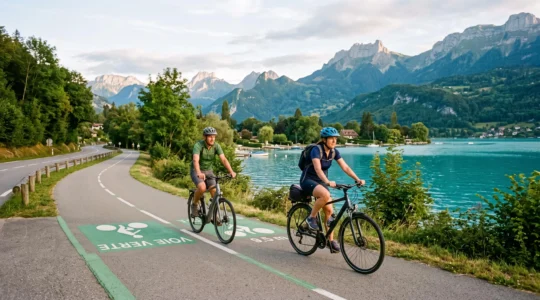
Discover the greenway of the Annecy Lake tour via the bike path
The 42-kilometre circuit around Lake Annecy holds a reputation as one of Europe’s most accessible Alpine cycling experiences. Yet contradictory online descriptions leave many would-be riders uncertain whether the famous…
Read more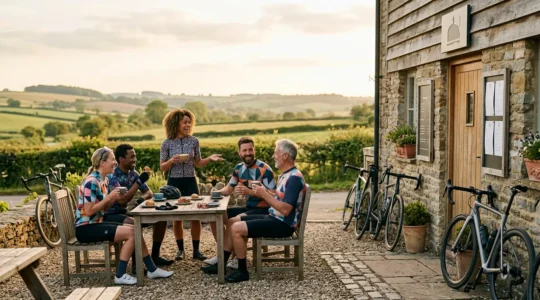
The Cake Stop: Why Social Nutrition Is Vital for Club Cohesion?
The cafe stop isn’t lost training time; it’s the most critical training session of the week for building a high-performance team. It forges trust and establishes the unwritten rules of…
Read more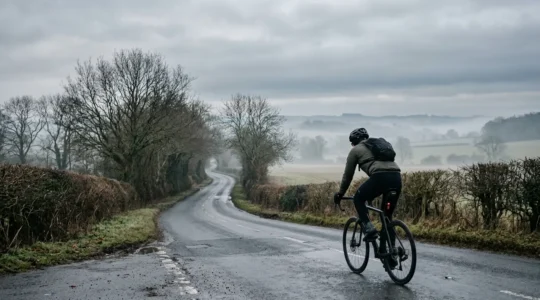
How to Keep Riding Through a British Winter Without Misery?
The secret to year-round UK cycling isn’t enduring misery; it’s mastering the active management of your gear and the environment. Overheating is a bigger enemy than the cold. Proactive venting…
Read more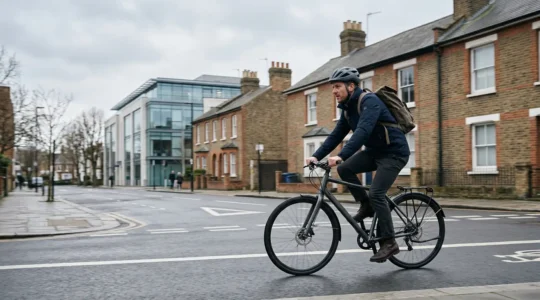
How Does the Cycle to Work Scheme Save You Over £300 on Your First Commuter Bike?
The Cycle to Work scheme is more than a discount; it’s a financial tool that offers tax savings of up to 47%, but only if you navigate its hidden complexities…
Read more