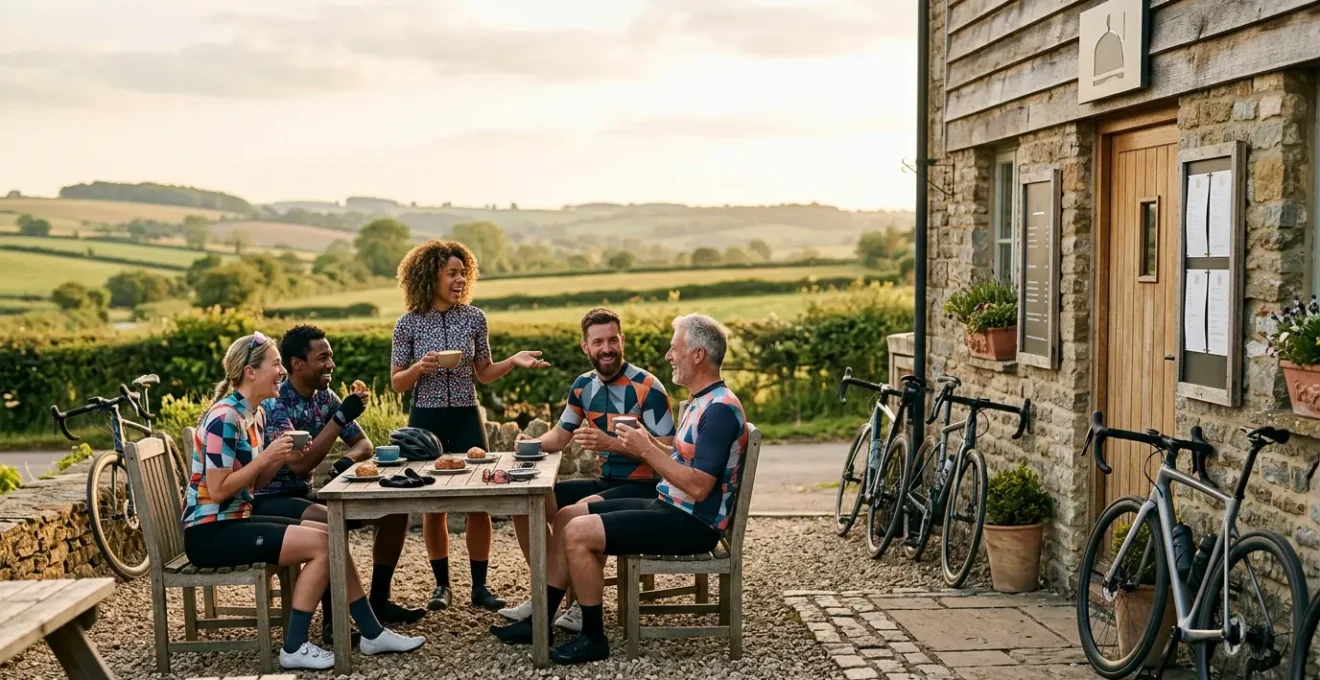
The cafe stop isn’t lost training time; it’s the most critical training session of the week for building a high-performance team.
- It forges trust and establishes the unwritten rules of the group’s micro-culture.
- It serves as a vital social ritual that transforms individual riders into a cohesive unit.
- It completes the neurochemical reward loop of the ride, reinforcing positive group association.
Recommendation: View the next coffee break not as a liability, but as a strategic investment in your club’s performance and longevity.
For the performance-focused club cyclist, the mid-ride cafe stop can feel like an anachronism, a frustrating pause that lets the legs cool and the heart rate drop. The prevailing wisdom for improvement is often to keep the pedals turning, to maximise time in the training zone. Any stop is seen as a compromise, a concession to the less serious members of the group. This perspective views the ride as a purely physical transaction, where every minute not spent accumulating TSS (Training Stress Score) is a minute wasted.
But what if this view is fundamentally wrong? What if the key to a stronger, faster, and more resilient cycling club isn’t found in uninterrupted chain-gang sessions, but in the seemingly unproductive moments spent sipping a flat white? From an anthropological perspective, the cafe stop is not an interruption of the ride; it is the ride’s vital, beating heart. It is a structured social ritual where the invisible work of building a team happens. It’s the “third space” between the road and home where group identity is forged, hierarchies are subtly negotiated, and the social contract of the bunch is written and reinforced.
This article will deconstruct the cafe stop, examining its unwritten rules and hidden functions through the lens of a social anthropologist. We will explore how timing, shared vulnerability, and post-sprint debriefs are not trivial details but essential components of “social nutrition.” We will argue that these moments of community are the invisible engine that powers the group on the road, turning a loose collection of riders into a truly cohesive unit.
To understand the profound importance of this cycling tradition, this guide breaks down the essential rituals and unwritten rules of the cafe stop. Each section explores a different facet of this micro-culture, revealing how it contributes to the strength and spirit of the group.
Summary: The Cake Stop: Why Social Nutrition Is Vital for Club Cohesion?
- The Coffee Window: How Long Can You Stop Before Your Legs Seize Up?
- The “Heap”: Is Stacking Bikes Outside a Cafe Safe or Stupid?
- Cash or Card: Why Carrying a Tenner Is Still Mandatory in Rural Cafes?
- The “Queue Jumper”: How to Order for a Group Without Chaos?
- The “Post-Mortem”: Why Discussing the Sprint finish Bonds the Group?
- Endorphins vs Dopamine: Understanding the “Cyclist’s High”?
- Pacing Etiquette: Why Overlapping Wheels Is Considered Rude Globally?
- Mallorca vs Tenerife: Which Winter Destination Offers the Best Group Etiquette?
The Coffee Window: How Long Can You Stop Before Your Legs Seize Up?
The primary concern for the skeptic is physiological: the fear that a prolonged stop will lead to stiff, unresponsive legs. While it’s true that stopping completely for too long can cool the muscles down, the “coffee window” is a nuanced affair. A stop of 20-30 minutes is often the sweet spot, providing enough time for social interaction and metabolic reset without significant physical detriment. This period allows the body to begin processing caffeine, which can buffer the perception of effort, but also interact with stress hormones. For example, research demonstrates that caffeine stimulation of cortisol secretion is a real effect, though it is often reduced in regular consumers.
This insight comes from a study by Lovallo et al. in Psychosomatic Medicine, which notes:
Cortisol responses to caffeine are reduced, but not eliminated, in healthy young men and women who consume caffeine on a daily basis.
– Lovallo et al., Psychosomatic Medicine
Therefore, the stop is a carefully balanced ritual. It’s a moment to let the initial fatigue subside, take on board sugar and caffeine for the ride home, and engage in the social bonding that is the stop’s primary purpose. The fear of “seizing up” often overlooks the psychological and chemical boost that a well-timed break provides, which can more than compensate for any minor muscle cooling. The window is less about the clock and more about the completion of the social ritual.
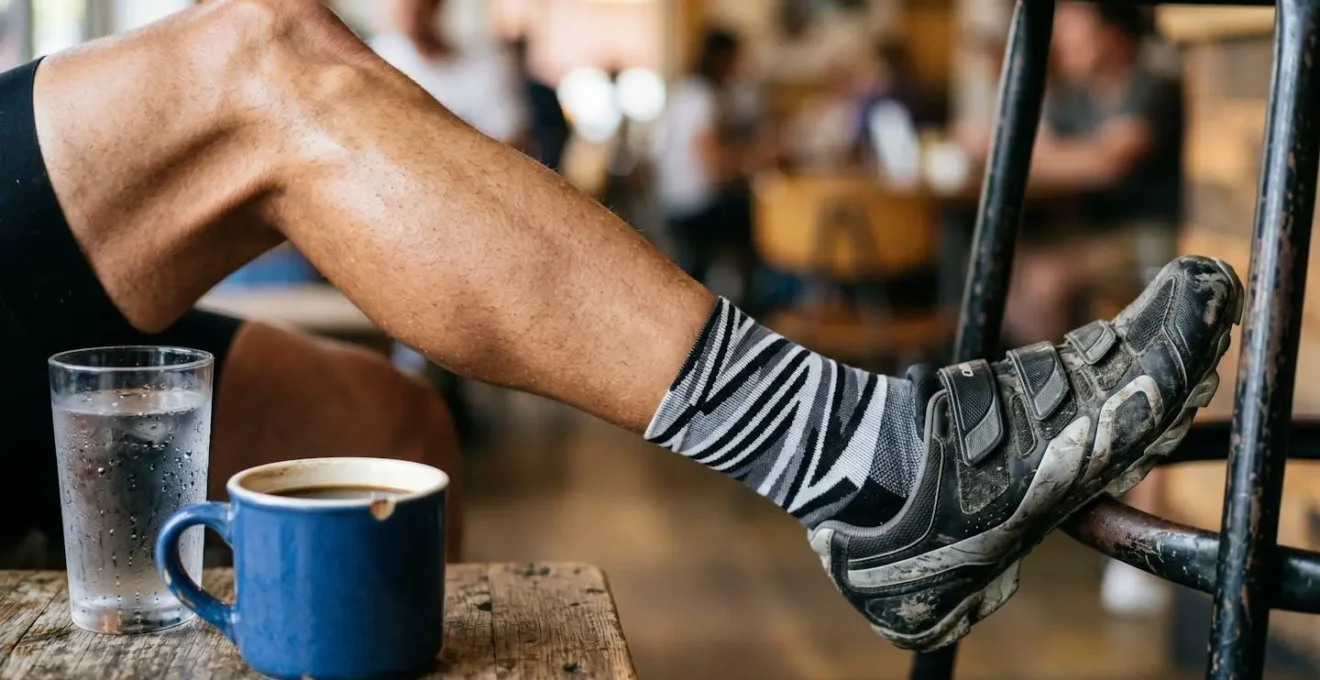
As this image suggests, the stop is a moment of both physical and mental recovery. The key is not to avoid the stop, but to understand its function and duration. It’s a managed pause, a strategic reset that refuels the body and, more importantly, the collective spirit of the group for the kilometers ahead.
The “Heap”: Is Stacking Bikes Outside a Cafe Safe or Stupid?
To an outsider, the sight of a dozen high-end carbon bikes leaning precariously against each other in a “heap” outside a cafe looks like madness. Given the risk of theft, it appears to be an act of collective foolishness. Bike theft is a real and growing problem; for instance, some data reveals that 26% of stolen bikes are taken from the street, a category that would include a cafe front. So why do seasoned cyclists engage in this seemingly reckless behaviour?
The answer lies in social anthropology. The bike heap is not a failure of security; it is a symbol of collective trust. It is a physical manifestation of the group’s social contract. By adding your bike to the pile, you are implicitly stating, “I trust you to watch my bike, as I will watch yours.” It’s an act of shared vulnerability that reinforces the “we’re in this together” mentality. The security of the bikes is not in a lock, but in the constant, informal surveillance of the group members sitting just feet away.
Furthermore, the heap is practical. It’s faster than having ten people individually find a spot and lock their bike up. It creates a single, observable point of focus. An attempt to steal a bike from the middle of a tangled heap is far more conspicuous than snipping a lock on an isolated bike. It is, in its own chaotic way, a security system based on social cohesion. The risk is acknowledged, but it is outweighed by the powerful statement of unity and mutual reliance it represents. It’s a calculated risk that pays dividends in group solidarity.
Cash or Card: Why Carrying a Tenner Is Still Mandatory in Rural Cafes?
In an increasingly cashless society, the insistence among veteran cyclists on carrying physical money can seem quaint. Yet, the “cash is king” rule, especially in rural outposts, is another unwritten law of cycling culture rooted in respect and economic empathy. The small, often family-run cafes that dot classic cycling routes operate on razor-thin margins. For them, credit card processing fees are not a trivial cost of doing business; they are a significant drain on profitability.
Small businesses often have to absorb these costs. For example, industry data shows that small businesses pay between 1.5% and 3.5% per transaction in credit card fees. For a £3 coffee and a £4 slice of cake, this adds up. When a group of ten cyclists all pay individually by card, the cumulative fees can wipe out the profit from that entire visit. It also slows down service, creating friction for the staff and other customers.
Carrying a ten-pound note (or a “tenner”) is therefore more than a payment method; it is a gesture of solidarity and awareness. It acknowledges that the club is a guest in this establishment and has a responsibility to be a good one. It shows respect for the business owner’s livelihood and helps preserve the very cafes that make these rides possible. It’s a small act of economic support for the cycling ecosystem. Paying with cash is a quiet signal to the proprietor: “We understand, and we appreciate you.” It’s a core tenet of being a good cycling ambassador, not just a customer.
The “Queue Jumper”: How to Order for a Group Without Chaos?
The arrival of a large cycling group can be a barista’s nightmare: a dozen people, all talking at once, unsure of what they want. This is where the social structure of a well-functioning group becomes visible. Rather than a chaotic free-for-all, cohesive clubs employ an efficient, unwritten system to manage the ordering process, often appointing an informal leader for the task. This person, the ‘Quartermaster’, turns a potentially stressful interaction into a smooth transaction, demonstrating the group’s collective intelligence.
This process is a micro-lesson in group organisation and respect, both for the cafe staff and for the club’s own time. It prevents the group from being perceived as an invasive horde and instead presents them as a considerate and organised unit. The efficiency of the order is a direct reflection of the group’s off-bike discipline. The goal is to minimise disruption and maximise time for the more important social aspects of the stop. This seemingly simple task is, in fact, a performance of the group’s internal cohesion.
Mastering this small but crucial part of the cafe stop ritual is essential for any club cyclist. It demonstrates an understanding of group dynamics and a respect for the establishments that welcome us.
Action Plan: Efficient Group Ordering
- Designate a single ‘Quartermaster’: Assign one person to collect all orders and handle the payment. This reduces decision fatigue and streamlines the process for everyone.
- Conduct a pre-emptive poll: Before even entering the cafe, quickly survey what everyone wants. This shows respect for the staff’s time and gets the order ready to go.
- Implement ‘One Bill, Settle Later’: Have the Quartermaster pay for everything on one bill. Group members can easily pay them back digitally later, a method built on mutual trust and efficiency.
- Communicate clearly: Ensure the designated orderer has the correct preferences for every rider, including any specific dietary needs or milk choices, written down if necessary.
- Position strategically: While the Quartermaster handles the transaction, the rest of the group should secure a table, creating space at the counter and getting the social part of the stop started.
The “Post-Mortem”: Why Discussing the Sprint finish Bonds the Group?
The ride to the cafe is often marked by moments of friendly competition, culminating in the traditional “sprint for the town sign.” To the skeptic, this is just ego. But the real value isn’t in the sprint itself, but in the “post-mortem” that happens over coffee afterward. This debrief is a crucial bonding ritual where on-road aggression is transformed into off-road camaraderie. It’s where the story of the ride is told, tactics are analysed, and heroic efforts are celebrated.
This is not just idle chatter; it’s a form of collective sense-making. Riders recount their moves, explain their decisions, and often, share a laugh about their failures. The rider who won the sprint might explain the tactic they used, effectively coaching the others. The rider who blew up spectacularly becomes the hero of a tragicomic tale. This process strips the raw competition of its edge and reframes it as a shared experience. It reinforces that the competition is internal and friendly, solidifying the group’s identity against the outside world.
Case Study: The Power of the Post-Ride Debrief
In his research on cycling group dynamics, organizational psychologist TommyP found that the post-ride analysis is a vital transformation ritual. A study published in Velo Magazine shows that groups with strong “post-mortem” traditions exhibit significantly higher levels of trust and camaraderie. According to the research, this informal debrief serves as a critical knowledge-sharing session, where tactics and efforts from the ride are analysed without judgment, effectively turning on-road competition into a tool for social bonding and collective improvement. This is one of the many reasons group dynamics in cycling are so fascinating.
As TommyP himself notes, this bonding helps define the group. “Once groups form an identity we start thinking of ‘them-vs-us’. This can become quite extreme. This is easily observable on in any local club’s weekly World Criterium Championships.” The post-mortem is where the “us” is built, story by story, sprint by sprint.
Endorphins vs Dopamine: Understanding the “Cyclist’s High”?
The “cyclist’s high” is often attributed solely to endorphins, the body’s natural opiates released during strenuous exercise. This explains the feeling of euphoria and reduced pain perception during a hard ride. However, this is only half the story. The full, satisfying richness of the cyclist’s high is completed at the cafe stop, where another powerful neurotransmitter takes center stage: dopamine.
Dopamine is the neurotransmitter of reward, motivation, and pleasure. While endorphins provide the “high” from the effort, dopamine is released in anticipation of, and in response to, rewarding experiences. The cafe stop is a trifecta of dopamine triggers: the social reward of camaraderie and acceptance, the satisfaction of reaching a destination, and the chemical reward of sugar and caffeine. Neuroscience research confirms that repeated caffeine doses increased cortisol levels, contributing to alertness and a sense of reward, creating a powerful feedback loop.

The cafe stop, therefore, doesn’t interrupt the high; it completes the neurochemical cocktail. It ties the physical effort of the ride (endorphins) to a powerful social and chemical reward (dopamine). This process forges a strong positive association in the brain between the hard work of cycling and the pleasure of social connection. It’s what makes you want to get out and do it all over again next week. The stop isn’t a break from the reward; it is an integral part of the reward mechanism itself.
Pacing Etiquette: Why Overlapping Wheels Is Considered Rude Globally?
Of all the unwritten rules in cycling, perhaps none is more sacred or universally understood than the prohibition against “overlapping wheels.” For the uninitiated, it might seem like a minor point of positioning. In reality, it is the cardinal sin of group riding, a breach of the social contract that underpins the entire group’s safety and function. Riding in a paceline is an exercise in absolute trust, and overlapping wheels shatters that trust instantly.
When your front wheel overlaps the rear wheel of the rider in front, you have removed all of your options. If they swerve unexpectedly to avoid a pothole, your front wheel will be knocked out from under you, and you will go down hard. Worse, you will almost certainly take down every rider behind you. It is a moment of individual carelessness that creates catastrophic risk for the entire collective. It signals a lack of experience, a lack of spatial awareness, and fundamentally, a lack of respect for the safety of others.
Interestingly, as noted in a systematic review of group cycling safety behaviours, these critical rules are often part of an oral tradition rather than formal training. Researchers Johnson et al. observed that, “There has been little investigation of safe or risky behaviours of group cyclists with current research of group cycling sometimes mentioning, but not investigating these behaviours.” This reinforces the idea that paceline etiquette is a cultural norm, passed down from experienced riders to novices. The cafe stop is often where these lessons are explained and reinforced in a safe, static environment, solidifying the group’s shared knowledge base.
Key Takeaways
- The cafe stop is not lost time; it is a critical social ritual that builds group cohesion and trust.
- Unwritten rules, from how bikes are stacked to how orders are placed, are expressions of the group’s micro-culture and respect.
- The stop completes the neurochemical reward of a ride, linking physical effort (endorphins) with social satisfaction (dopamine).
Mallorca vs Tenerife: Which Winter Destination Offers the Best Group Etiquette?
Cyclists endlessly debate the merits of winter training destinations. Is Mallorca’s smoother tarmac and cycling-centric culture superior? Or does Tenerife’s epic climbing and dramatic scenery provide a better experience? We analyse everything from road quality to average temperature, but we often forget the most important variable: the people we ride with. The question should not be which location is best, but how to be the best group in any location.
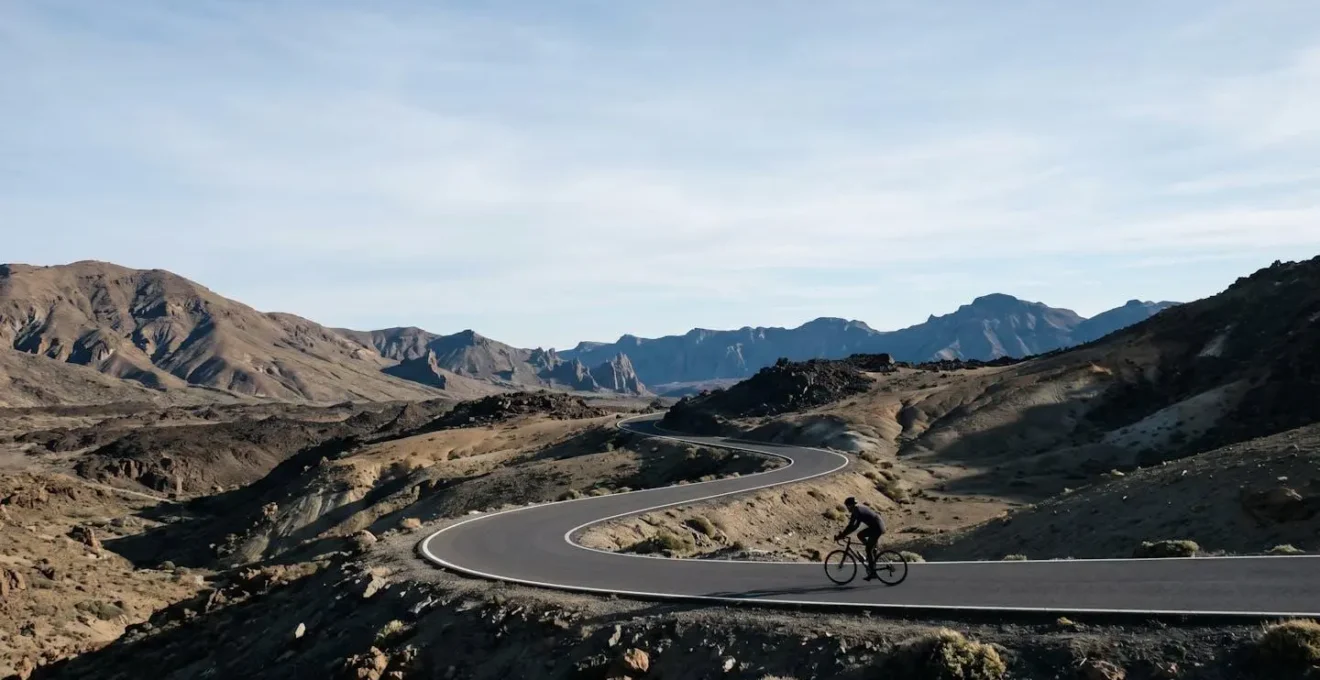
A group with poor etiquette, weak social bonds, and no respect for the unwritten rules will have a miserable time, even on the perfect roads of Mallorca. They will argue, ride dangerously, and fail to support each other. Conversely, a cohesive group that has invested in its social nutrition—a group that understands the value of the post-sprint debrief, the symbolism of the bike heap, and the courtesy of carrying cash—will have a fantastic and productive trip, even on the rougher roads of a less-heralded destination.
Ultimately, good group etiquette is portable. It is not determined by geography but by culture. It is built week after week, in the local lanes and at the usual cafe. The rituals and trust forged during a hundred mundane club runs are what ensure a successful training camp abroad. The destination is merely the backdrop; the quality of the experience is determined by the strength of the social fabric you bring with you. The true mark of a great cycling club is not where it goes, but how it behaves, together.
Therefore, the next time you unclip at the cafe, see it not as a break in your training, but as the most essential part of it. Invest in your social nutrition. The watts will follow.