
The core debate isn’t about speed, but about failure predictability: mechanical systems degrade predictably, while electronic systems fail catastrophically but far less often.
- Mechanical failure (cable stretch) is gradual and often field-serviceable, but requires constant tuning.
- Electronic failure (dead battery) is an abrupt, total shutdown, but modern systems offer extensive warning and incredible reliability between charges.
Recommendation: For riders who prioritize “set and forget” performance and can manage a simple charging routine, electronic shifting offers a more reliable long-term experience despite the different failure mode.
The debate between mechanical and electronic shifting often revolves around speed and cost. For the cyclist contemplating an upgrade, however, the real anxiety lies elsewhere: reliability. What happens when it fails? The familiar ghost of a frayed gear cable, while annoying, is a known quantity. The fear of a silent, dead battery stranding you miles from home is a more modern, and for many, a more terrifying prospect. This isn’t just a choice between analogue and digital; it’s a fundamental decision between two different failure philosophies.
Most discussions list pros and cons, but this approach misses the critical point for a rider concerned with dependability. We must analyze this like a reliability engineer, focusing on “failure modes,” “mean time between failures,” and the “ease of recovery.” A mechanical groupset operates on a model of predictable degradation. Cables stretch, housing gets contaminated, and performance slowly worsens, giving you ample warning. An electronic system, by contrast, operates closer to a binary state: it works perfectly, or it doesn’t work at all. The failure is abrupt, but is it frequent?
This article moves beyond the surface-level discussion. We will deconstruct the failure modes of each system, from the slow, nagging death of a mechanical setup to the sudden-but-rare stop of a wireless one. We will analyze the real-world scenarios—a frozen button on a winter ride, a packed bike box, a long-distance tour—to determine which system’s potential failure is truly easier to manage. The question isn’t “which is better?” but rather, “which failure mode are you more prepared to live with?” By understanding the ‘how’ and ‘why’ of potential breakdowns, you can make an informed decision based on engineering reality, not just marketing hype.
This guide provides a structured, comparative analysis to help you navigate this critical component choice. We’ll examine the specific scenarios and failure modes that matter most to a rider who values reliability above all else, allowing you to weigh the trade-offs with clarity.
Summary: A Reliability Engineer’s Analysis of Shifting Failure Modes
- Internal Routing: Why Mechanics Charge Less to Build Wireless Bikes?
- Milliseconds Matter: Is Wireless Actually Faster Than a Good Cable?
- Frozen Buttons: Do Electronic Shifters Work With Thick Winter Gloves?
- Removing Derailleurs: Why Wireless Is Safer for Bike Boxes?
- Custom Buttons: How to Program Shifters to Control Your Computer?
- Chain Scrubbers vs Toothbrush: Is the Gadget Worth the Faff?
- Charging Anxiety: How Often Do You Really Need to Plug Your Bike In?
- Electronic Shifting: Is It Worth the £800 Premium for Weekend Club Riders?
Internal Routing: Why Mechanics Charge Less to Build Wireless Bikes?
From a reliability engineering perspective, complexity is the enemy of dependability. Every bend, every point of friction, and every interface in a system is a potential point of failure. This is where wireless electronic shifting presents its first major advantage, particularly on modern aero frames with complex internal routing. A mechanical cable is a physical component that must be threaded through tight, often convoluted, pathways inside a frame. This process is not only time-consuming for mechanics but also introduces inherent performance risks.
The friction generated as a cable navigates these tight bends directly degrades shift quality. It creates resistance that the derailleur spring must overcome, leading to slower, less precise shifts and requiring more force at the lever. Over time, this friction increases as the cable liner wears and collects debris. For certain frame designs, achieving smooth mechanical shifting is a significant challenge from day one. As Nick Legan, a Road Brand Manager for Shimano, highlights, this is a key area where electronic systems excel:
Where Di2 really shines is on triathlon or time trial bikes, or aero bikes with complicated internal routing. The cable routing on those bikes is notoriously difficult to deal with. In order to get it tucked away and really aerodynamic, it can be really difficult to get smooth mechanical shifting on those types of bikes.
– Nick Legan, Road Brand Manager for Shimano North America
A wireless system entirely eliminates this failure mode. There are no cables to stretch, no housing to compress, and no friction from routing to overcome. This drastically simplifies the build process, which is why mechanics often charge less for labour on a wireless bike build. More importantly for the rider, it removes a significant variable that degrades performance over the lifespan of the bike. The system’s reliability is no longer dependent on the quality of the cable installation or the geometric compromises of the frame design. It’s a simpler, more robust system from an installation standpoint.
Milliseconds Matter: Is Wireless Actually Faster Than a Good Cable?
While the raw speed of a derailleur moving from one cog to another is often debated, the true performance gain of electronic shifting lies not in mechanical milliseconds, but in cognitive ease and actuation consistency. A perfectly tuned mechanical system can be incredibly fast. However, its performance is entirely dependent on the operator’s technique and the system’s current state of tune. Electronic shifting removes these variables, delivering the same perfect shift command every single time with a minimal physical and mental load.
The physical action of throwing a mechanical lever requires a specific amount of force and a precise lever sweep. Under duress—climbing a steep gradient or sprinting—this action can become fumbled, resulting in a mis-shift or a delayed one. An electronic system reduces this to a simple button press. The cognitive load is lower, and the physical effort is negligible. This is not about laziness; it is about conserving physical and mental energy for the primary task of pedalling the bike. JP McCarthy, SRAM’s Road Product Manager, captures this feeling perfectly:
The biggest advantage is just how easy it is to shift. It doesn’t sound like much effort to throw a lever, but one of my first impressions, and the first impression I hear from a lot of my peers, is that it feels like cheating. It really is that much easier to shift.
– JP McCarthy, SRAM Road Product Manager
This “cheating” feeling is the tangible result of reduced effort. The actuation is instantaneous and identical whether your hands are numb from cold, your arms are aching, or you’re breathing at your absolute limit. The button press itself is a much shorter, more distinct action than a lever throw, which can be critical when shifting multiple times in rapid succession. This consistency is the true speed advantage. It’s not that the derailleur moves faster, but that the command to move it is sent more reliably and with less effort, eliminating a key source of human error from the system.

As you can see, the tactile interaction is minimal. This reduction in required force and movement is what translates into faster, more reliable shifting under pressure, as it frees up both physical and mental bandwidth. The system becomes an extension of thought rather than a physical task to be executed.
Frozen Buttons: Do Electronic Shifters Work With Thick Winter Gloves?
A common concern for riders in colder climates is the performance of electronic systems in freezing conditions. This worry has two components: the mechanical function of the button itself and the battery’s ability to deliver power. While a mechanical shifter’s large lever is easy to operate with bulky gloves, the small buttons of an electronic system can seem less practical. However, the tactile feedback of a button ‘click’ is often more discernible through thick material than the subtle indexing clicks of a mechanical lever.
The more significant engineering concern is battery performance. It’s a known principle that lithium-ion batteries lose efficiency as temperatures drop. The chemical reactions that generate electricity slow down, reducing the battery’s effective capacity and power output. For instance, data shows that a lithium battery providing 100% capacity at room temperature may deliver only 50% at 0°F (-18°C). This is a real physical limitation. However, the power draw for a single gear shift is minuscule. Even with a 50% reduction in capacity, a fully charged derailleur battery contains thousands of shifts.
The failure mode here is not a sudden death but a drastically shortened charge interval. A battery that lasts for 1,000 km in the summer might only last for a few hundred in the freezing cold. This is not a catastrophic, no-warning failure. Modern systems provide battery level indicators (often via an LED on the component or a display on a head unit) that become critical in cold weather. The risk is manageable through process: simply charge your batteries more frequently during the winter months. A mechanical system, conversely, can suffer from frozen water inside the cable housing, which can completely seize the system without warning—a failure mode that is far more difficult to fix roadside than a dead battery you were warned about.
Removing Derailleurs: Why Wireless Is Safer for Bike Boxes?
Traveling with a bicycle introduces a host of potential failure modes, many of which are caused by baggage handlers. The rear derailleur and its hanger are among the most vulnerable parts of a bike when packed. With a mechanical system, removing the derailleur for travel is a hassle. You are left with a dangling cable and a derailleur that needs to be carefully wrapped and secured to prevent damage. Re-installing it upon arrival often requires at least a minor barrel adjustment to re-index the gears, adding another step before you can ride.
A wireless electronic derailleur transforms this process. Removing it is as simple as undoing a single 5mm bolt. The derailleur comes off cleanly, with no wires or cables to manage. It can be safely stored in a padded pouch in your luggage. Upon arrival, re-installation is equally simple: bolt it back on, and you’re ready to ride. Because the indexing is electronic and stored within the component, it requires no adjustment. This removes multiple points of potential failure: damage to the derailleur in transit, damage to the frame from a dangling derailleur, and incorrect re-installation or tuning.
However, this convenience introduces a new regulatory failure mode: battery transport. When you remove a wireless derailleur, you are left with a component containing a lithium-ion battery. Aviation regulations are extremely strict about this. According to the Federal Aviation Administration (FAA), spare (uninstalled) lithium-ion batteries are prohibited in checked baggage. They must be carried in your carry-on luggage. This means you cannot simply leave the detached derailleur in your bike box if it’s being checked. You must remove the small, self-contained battery from the derailleur body and carry it with you in the cabin. While this is a simple step, forgetting it could lead to your luggage being opened, inspected, and the item confiscated—a catastrophic failure for your trip. So, while wireless is physically safer for the bike, it introduces a procedural risk that requires user diligence.
Custom Buttons: How to Program Shifters to Control Your Computer?
One of the most significant, yet often overlooked, reliability benefits of electronic shifting is its extensibility. A mechanical system is a closed loop; the lever pulls a cable that moves a derailleur. Its function is fixed. An electronic system is a network of programmable inputs (buttons) and outputs (derailleurs). This opens up a world of customization that can directly enhance control and reduce cognitive load, which in turn reduces the likelihood of user error.
The most obvious example is the use of satellite shifters. As noted by The Pro’s Closet, component brands have different names for them, but the function is the same: “Shimano refers to them as ‘sprint shifters’ or ‘climbing switch shifters’ and SRAM calls them ‘blips.’ These small buttons allow you to place shifters in different locations on the handlebars like the drops and tops.” This means you can shift gears without ever changing your hand position. When climbing on the tops or sprinting in the drops, you have a shift button right under your thumb. This eliminates the small, but crucial, delay and instability caused by moving a hand to reach the main shift lever. It keeps the rider more stable and focused, which is a direct safety and performance benefit.
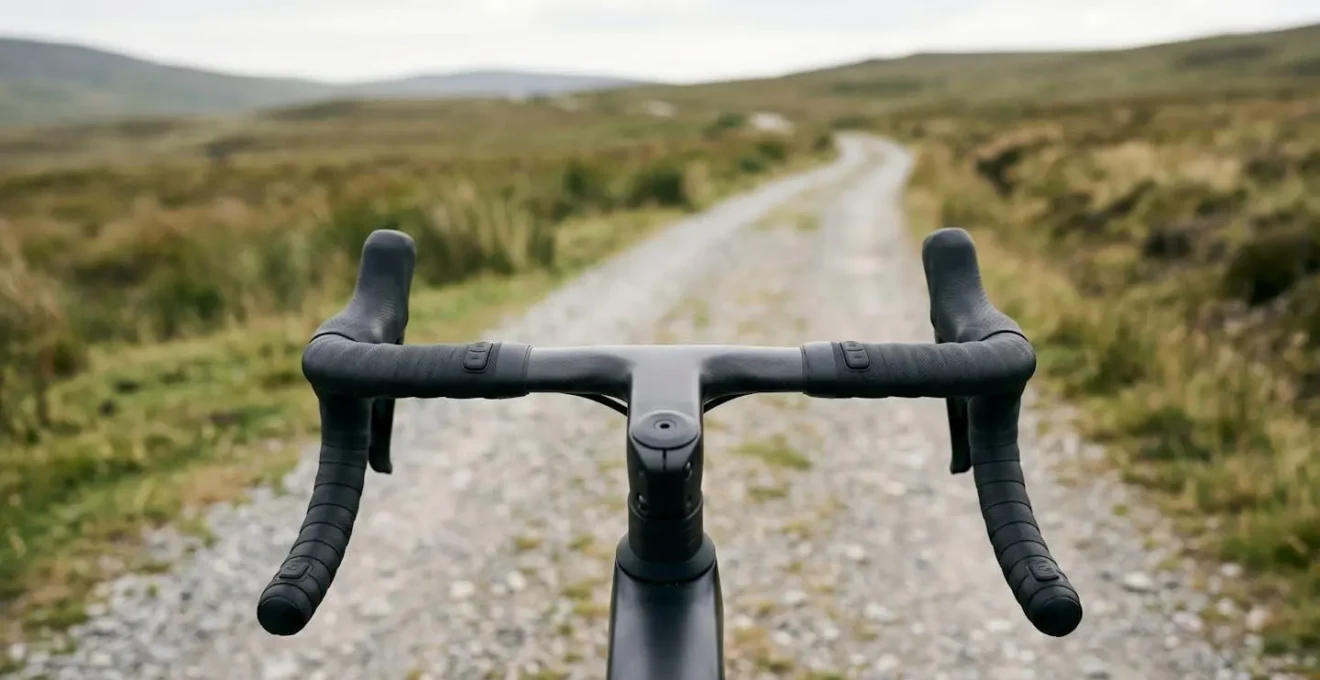
This programmability extends beyond just shifting. On many modern systems, unused shifter buttons can be programmed to perform other functions via the ANT+ or Bluetooth connection. For example, a long press on a button could be configured to change the data screen on your Garmin or Wahoo bike computer. This allows you to scroll through your metrics without ever taking your hands off the bars—a significant increase in safety and convenience, especially in a race or on rough terrain. You can maintain full control of the bike while interacting with your data. This integration turns the shifting system from a simple gear-changing mechanism into a central cockpit control unit, reducing distraction and improving your focus on the road.
Chain Scrubbers vs Toothbrush: Is the Gadget Worth the Faff?
This question, seemingly about cleaning tools, is fundamentally about addressing the primary failure mode of a mechanical drivetrain: contamination. A mechanical system’s reliability is inversely proportional to the amount of grit and grime in its cables and on its components. A simple toothbrush represents a manual, targeted approach to cleaning, while a chain scrubber gadget represents an automated, systemic one. In this analogy, electronic shifting is the ultimate “gadget”—it doesn’t just clean the system, it eliminates the parts most susceptible to contamination in the first place.
As noted in technical comparisons, mechanical shifting systems experience performance degradation due to cable stretch and the accumulation of dirt. Every ride in wet or dusty conditions introduces contaminants into the cable housing. This grit acts like sandpaper, increasing friction and slowly sawing away at the cable and liner. The result is sluggish, imprecise shifting that requires more and more frequent barrel adjustments to compensate. As Canyon Bicycles’ analysis states, “A system of exposed cables and springs, a mechanical system can also be liable to contamination from wet, mud and grit too.” This degradation is slow and insidious.
An electronic system is fundamentally more resilient to this type of failure. By replacing the physical cable with a sealed wire or a wireless signal, it removes the primary pathway for contamination to affect shift actuation. The derailleur motor will execute a perfect shift regardless of whether the bike is caked in mud or sparkling clean. While you still need to clean your chain and cassette for efficiency and longevity, the core shifting performance is isolated from environmental conditions. The “faff” of a chain scrubber or a toothbrush is still necessary for drivetrain health, but with an electronic system, it’s no longer a prerequisite for reliable gear changes. The gadget—in this case, the electronic system itself—is worth it because it eradicates the most persistent and frustrating failure mode of its mechanical counterpart.
Action Plan: Mechanical Shifting Reliability Audit
- Cable Inspection: Check the full length of gear cables for any signs of fraying, especially at the shifter and derailleur anchor points. Replace if any single strand is broken.
- Housing Check: Inspect the cable housing for kinks, cracks, or compressed sections. Ensure ferrules (end caps) are seated properly and not split.
- Friction Test: Shift to the largest cog/chainring, then, without pedaling, click the shifter to the smallest. Gently push the derailleur by hand; it should move freely. Any significant resistance indicates friction in the system.
- Limit Screw Validation: Shift to the highest and lowest gears. Check that the limit screws prevent the chain from over-shifting off the cassette or chainrings. This prevents catastrophic chain drop.
- Barrel Adjuster Reset: If shifting is poor, turn the barrel adjuster all the way in, then back it out two full turns. Re-clamp the cable at the derailleur and fine-tune from this baseline.
Charging Anxiety: How Often Do You Really Need to Plug Your Bike In?
“Charging anxiety” is the single biggest psychological barrier for riders considering electronic shifting. The fear is rooted in the unfamiliarity of the failure mode: a battery dying is perceived as a sudden, unrecoverable event compared to the slow degradation of a mechanical cable. However, an engineering analysis of modern electronic systems reveals this fear to be largely unfounded, provided a minimum level of user discipline is applied.
The battery life of contemporary systems is substantial. For instance, a Shimano Di2 system using a rechargeable lithium-ion battery can last roughly 1,000 km per charge. For a weekend rider doing 100 km per week, that translates to more than two months between charges. SRAM AXS systems, which use separate batteries for each derailleur, have a shorter duration per component but still offer extensive range. This is not a device you need to plug in after every ride like a phone or GPS unit. The failure is not sudden; the system gives you plenty of warning. Both Shimano and SRAM systems have clear LED indicators that change color (e.g., from green to red, or from solid to flashing) to signal low battery, often with hundreds of shifts remaining.
SRAM AXS Battery Performance in Real-World Bikepacking
To test the real-world limits, long-term testing by bikepacking specialists demonstrated that SRAM AXS systems typically deliver 1,050 to 1,290 kilometers (650-800 miles) per battery charge during extended touring use. This is a crucial data point for anyone fearing they’d be stranded on a multi-day trip. The test team further validated this reliability by cycling approximately 1,500 additional kilometers on the rugged Baja Divide route, confirming consistent performance in remote conditions where a mechanical failure would be extremely difficult to resolve. This proves that with basic battery management, electronic systems are robust enough for even the most demanding adventures.
The key is to integrate battery checks into your routine, just as you would check your tire pressure. A quick glance at the LED before a ride is all it takes. The anxiety comes from a lack of process. A mechanical cable can also snap without much warning if it’s frayed internally, a failure that is far harder to fix on the road than swapping in a spare, pre-charged battery that fits in your pocket. The charging routine is a new discipline, but it is a far less frequent and demanding one than the constant cleaning and tuning required to keep a mechanical system at peak performance.
Key takeaways
- Mechanical failure is predictable degradation; electronic failure is an infrequent but abrupt stop.
- Electronic systems eliminate cable friction and contamination, the main sources of mechanical unreliability.
- Modern battery life is extensive (1,000+ km), and systems provide ample low-battery warnings.
- The true benefit of electronic shifting is consistent, low-effort actuation that reduces user error, especially under physical stress.
Electronic Shifting: Is It Worth the £800 Premium for Weekend Club Riders?
For the weekend club rider, the question of value is paramount. Is a flawless shift every time worth a significant cost premium, especially when a well-maintained mechanical groupset works exceptionally well? From a pure performance-per-pound perspective, the answer can be difficult. However, when viewed through the lens of long-term reliability and total cost of ownership, the picture becomes clearer. The initial premium buys you out of the most common and persistent failure mode of a bicycle drivetrain: cable-related degradation.
A mechanical system requires regular maintenance to perform optimally. Cables stretch and need adjustment. Housing becomes contaminated and requires replacement. These are not difficult jobs, but they take time and, if you’re not doing it yourself, money. A £30-£50 tune-up once or twice a year adds up over the life of a bike. Electronic shifting virtually eliminates this service interval. Beyond charging the battery, it is a “set and forget” system. This is why in professional racing, where reliability is non-negotiable, today it is rare to see mechanical groupsets at top-level events. Pros cannot afford a mis-shift caused by a stretched cable.
For the amateur rider, this translates to more time riding and less time fettling. The shift you make at the end of a 5-hour ride in the rain will be as crisp and perfect as the first one you made that day. There is a tangible value in that confidence. It’s the knowledge that the system will perform identically every single time you press the button, regardless of conditions or fatigue. The table below outlines a cost-benefit analysis beyond just the initial purchase price.
| Factor | Electronic Shifting | Mechanical Shifting |
|---|---|---|
| Initial Cost | £800-£3,000 premium | Entry to mid-range pricing |
| Maintenance Frequency | Minimal (battery charging only) | Regular cable replacement and adjustment |
| Shift Consistency | Perfect execution every time | Dependent on cable condition and tuning |
| Cognitive Load | Simple button press | Requires precise lever throw technique |
| Resale Value | Higher retention, easier to sell | Standard depreciation |
| Future Compatibility | Access to latest integrated components | Limited as brands phase out high-end mechanical |
Ultimately, the premium pays for peace of mind and consistency. It’s an investment in removing a variable. For a rider who dreads the thought of their gears going out of index halfway through a sportive, or who simply wants their bike to work perfectly with minimal intervention, the £800 premium can be one of the best value upgrades they can make. It’s not just buying better shifts; it’s buying a more reliable machine.
To put these principles into practice, the next logical step is to assess your own tolerance for different types of maintenance and failure risk against the clear benefits of consistency and reduced cognitive load offered by electronic systems.