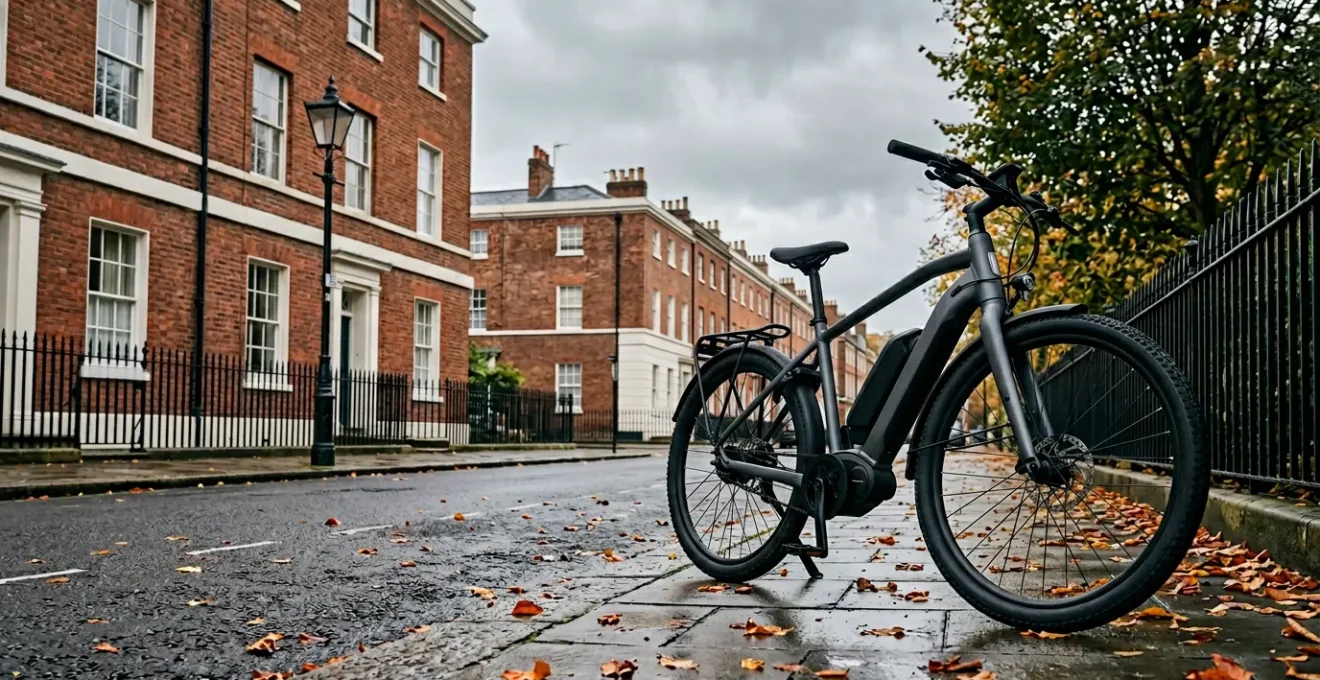
Modifying your e-bike is not a minor tweak; it legally transforms it into an uninsured moped, exposing you to severe motor vehicle penalties.
- Any motor with a continuous power output over 250W or providing assistance beyond 15.5mph (25 km/h) invalidates its legal status as an ‘EAPC’ (Electrically Assisted Pedal Cycle).
- In a crash, your insurance will be void, making you personally liable for all damages and injuries, which can be financially catastrophic.
Recommendation: Before considering any modification, understand that you are opting out of bicycle law and into motor vehicle law, with all its responsibilities and severe penalties.
The 15.5mph (25 km/h) speed limit on UK electric bikes can feel frustrating. On a flat, open road, a fit cyclist can easily exceed this, leaving you to wonder why your expensive e-bike suddenly feels like it’s dragging an anchor. This frustration gives rise to a tempting, widely advertised ‘solution’: chipping, tuning, or fitting a dongle to derestrict your bike. The promise of unlocking speeds of 30mph or more seems like a simple fix. Sellers of these kits often downplay the risks, framing it as a grey area or a matter of personal choice.
However, this perspective is dangerously misleading. From a legal standpoint, there is no grey area. The moment your e-bike can provide motor assistance beyond 15.5mph, it ceases to be a bicycle in the eyes of the law. This isn’t just about breaking a minor rule; it’s an act of legal reclassification. Your bicycle instantly becomes a motor vehicle—specifically, an unregistered and uninsured moped. The consequences of this shift extend far beyond a potential fine, entering the realm of criminal charges, driving license penalty points, and life-altering civil liability. With a 60% increase in monthly UK searches for ‘e bike’ since 2019, it’s crucial for new riders to understand this reality.
This article will not just state the rules. As a legal expert in this field, my role is to clarify the stark reality of what happens when you cross that 15.5mph line. We will dissect the technical jargon, examine the catastrophic insurance implications of a crash, and explore the real-world legal precedents that should give any rider pause. This is not about fear-mongering; it’s about providing the critical information you need to avoid turning a joyful hobby into a legal and financial nightmare.
To navigate this complex legal and technical landscape, this guide breaks down the critical issues you must understand before you ride. We will explore the nuances of power ratings, real-world range, throttle legality, and the devastating consequences of using a modified e-bike.
Summary: Your Guide to UK E-Bike Regulations and Modification Risks
- 250W vs Peak Power: What Is Actually Legal on British Roads?
- Wh vs Range: How to Calculate Real Mileage for a Hilly Commute?
- Twist and Go: Are Throttle E-Bikes Legal Without a License in 2024?
- The Insurance Void: What Happens If You Crash a Chipped E-Bike?
- Front vs Rear Hub Kits: Which Is Safer for DIY E-Bike Conversions?
- Nm Explained: Why 85Nm Is Essential for Heavy Riders on Steep Climbs?
- Anti-Lock Brakes on Bikes: Is It a Gimmick or a Lifesaver in Rain?
- Hub vs Mid-Drive Motors: Which Conquers Steep British Hills Better?
250W vs Peak Power: What Is Actually Legal on British Roads?
One of the most misunderstood aspects of UK e-bike law is the 250-watt (W) motor limit. Many potential buyers see this number and worry it’s insufficient for steep hills or heavy loads, pushing them toward illegal, more powerful options. However, the law is more nuanced than it appears. The legislation refers to 250W of *continuous rated power*. This is a crucial distinction that separates legal e-bikes (EAPCs) from illegal mopeds.
Continuous power is the maximum power the motor can sustain over a prolonged period without overheating. It does not, however, preclude the motor from delivering a higher *peak power* for short bursts. This is a perfectly legal and common feature designed to assist with acceleration from a standstill or provide a momentary boost on a sharp incline. As experts clarify, the two figures serve different purposes. As noted by the specialists at Boost Bike UK:
A motor with a continuous power rating of 250w may have a peak power of 500w. This means it is able to output 500w of power in a short burst (perhaps to help the rider from a standing start), but once you are riding, the sustained and continuous power will be at 250w.
– Boost Bike UK, Electric bikes and the law: the UK legal situation
Therefore, a bike advertised with a “500W motor” is almost certainly illegal for UK roads, as this likely refers to its continuous output. A legal bike may well have a peak output of 500W or more, but it will be sold and legally defined by its 250W continuous rating. Understanding this difference is the first step in making a smart, legal purchase and avoiding the trap of illegal modifications.
Wh vs Range: How to Calculate Real Mileage for a Hilly Commute?
After power, the most scrutinized specification on an e-bike is its range. Manufacturers often quote optimistic figures based on ideal, flat conditions with a lightweight rider. For anyone planning a hilly commute in the UK, these numbers are practically useless. The key to estimating real-world mileage lies not in the marketing, but in the battery’s capacity, measured in Watt-hours (Wh). A higher Wh rating means more energy stored, and therefore, a potentially longer range.
To calculate a realistic range, you must factor in variables that drain the battery faster: steep inclines, rider and cargo weight, stop-start city riding, and even tyre pressure. A simple rule of thumb for a mixed commute is to assume an average consumption of 10-20 Wh per mile. A 500Wh battery might therefore deliver 25-50 miles of *real* assistance. However, another significant factor often overlooked is ambient temperature. Cold weather dramatically reduces a lithium-ion battery’s efficiency and, consequently, its range.
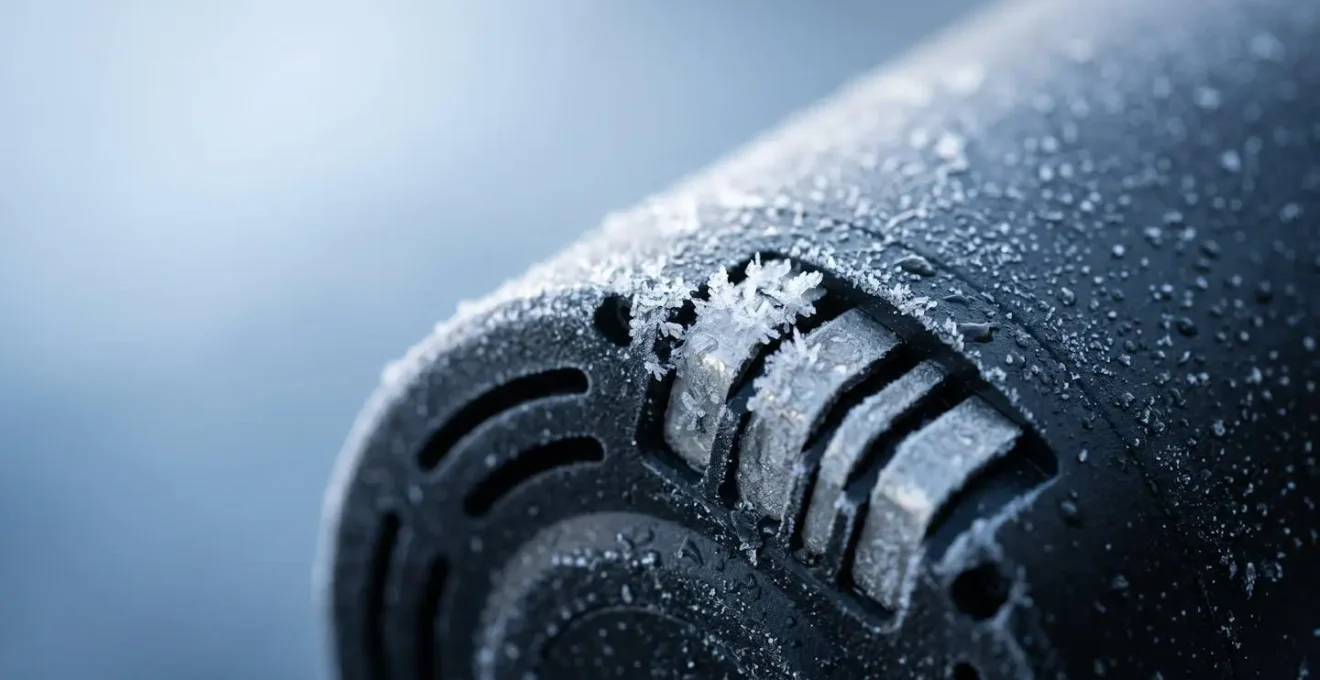
Riding in winter can have a startling effect. As studies have shown, you could see a significant drop in performance when the temperature falls. Some research shows a 30-40% reduction in e-bike range at freezing temperatures. This means your 40-mile summer range could plummet to just 24 miles on a frosty morning, a critical consideration for anyone relying on their e-bike for a daily commute. Ignoring this can leave you with a very heavy, unassisted bicycle miles from home.
Twist and Go: Are Throttle E-Bikes Legal Without a License in 2024?
The allure of a “twist and go” throttle, allowing you to move without pedalling, is strong. It offers a moped-like experience that’s great for hill starts or when you’re simply tired. This has led to immense confusion about their legality. The answer is yes, some throttles are legal on UK EAPCs, but they are severely restricted. A throttle is only permitted to provide assistance without the rider pedalling up to a walking pace.
Specifically, since January 2016, UK regulations specify a 3.7 mph (6 km/h) maximum legal throttle speed without pedalling. This is known as “start-up assist.” Any bike with a throttle that can propel the rider faster than this without pedalling, or up to the full 15.5 mph, does not qualify as an EAPC. It is legally classified as a motor vehicle, requiring type approval, registration, tax, and insurance. The marketing of these non-compliant bikes is also heavily policed, as it can be seen as encouraging illegal use.
Case Study: The Advertising Standards Authority (ASA) vs. Cyrusher
In a significant ruling in February 2023, the ASA took action against the e-bike brand Cyrusher. The company’s advertisements depicted powerful 750W, throttle-controlled e-bikes being used in public spaces in the UK, including for commuting. The ASA found that simple warnings about the bikes’ legality were insufficient, given the context of the ads clearly showed them being used in ways that would be illegal on public roads. This case, highlighted by reporting from Electroheads, demonstrates that authorities are actively enforcing regulations against both the sale and promotion of e-bikes that fall outside the EAPC classification, sending a clear warning to both sellers and potential buyers.
This precedent confirms that ignorance is no defence. Purchasing a bike with a powerful, non-compliant throttle, even if the seller claims it’s for “off-road use only,” puts the entire legal burden on the rider the moment a wheel touches a public road or path.
The Insurance Void: What Happens If You Crash a Chipped E-Bike?
This is the most critical and least understood consequence of e-bike modification. If you are involved in an accident on a derestricted e-bike, the legal and financial fallout can be catastrophic. By modifying your bike to exceed the 250W/15.5mph limits, you have created an unregistered moped. All standard cyclist and e-bike insurance policies will be immediately void, as you are no longer riding the vehicle they agreed to cover. You are now personally and solely liable.
This means you are responsible for every penny of damage, including your own injuries, damage to other vehicles, and—most terrifyingly—the cost of any injuries sustained by a third party. This could include their medical bills, loss of earnings, and long-term care, which can easily run into hundreds of thousands or even millions of pounds. You will face prosecution for riding without insurance, which carries a hefty fine and penalty points on your driving license (or a future one). The legal gap is already a source of immense concern even for legal e-bikes.
Case Study: The Crash Highlighting the UK’s E-Bike Insurance Gap
The case of Mohamed Ressum is a stark warning. The 44-year-old builder was hit by a rider on a hired ‘Forest’ E-bike, requiring emergency brain surgery. He was horrified to discover that the hire company was not legally required to have public liability insurance to cover injuries to pedestrians. As a result, Mr. Ressum was unable to claim compensation for his life-changing injuries and loss of earnings. This case exposes a critical flaw in current UK law regarding e-bikes, and if this is the reality for a *legal* e-bike, imagine the complete lack of recourse if the bike involved had been illegally modified.
This dire situation prompted a stark comment from Laura Swaine, a Partner at Osbornes Law who handled the case, perfectly summarising the danger:
It is completely inconceivable that companies that hire out heavy E-bikes that move at speed do not have to take out public liability insurance but that is the unfortunate reality.
– Laura Swaine, Partner at Osbornes Law, Forest E-Bike Crash Prompts Calls for E-Bike Insurance Reform
If you crash a chipped bike, you are the company. You are the one with no insurance. The financial ruin is yours alone.
Front vs Rear Hub Kits: Which Is Safer for DIY E-Bike Conversions?
For those tempted by the cost savings of a DIY conversion kit, the legal risks multiply. The UK market is flooded with kits promising outputs of 500W, 1000W, or more. The government’s position on this is unequivocal. In January 2024, after a period of consultation, the Department for Transport confirmed that a proposal to increase the motor limit to 500W was rejected, cementing the 250W continuous power limit for EAPCs.
This means any kit sold with a motor rated higher than 250W is illegal for road use. The legal trap is even more subtle, as outlined in official government guidance. A kit is deemed non-compliant if it is *capable* of operating outside the legal limits, even if sold in a restricted mode. As the Department for Transport (DfT) explicitly stated:
Bikes sold in a power-restricting set-up, but the maximum motor power of which exceeded 250W or the powered maximum speed exceeded 15.5mph in another mode of use, were not compliant EAPCs and would therefore be treated as motor vehicles.
– UK Department for Transport, DfT guidance on e-bike conversion kits
From a safety perspective, the choice of kit also has implications. Front hub motors are generally easier to install but can create unnatural handling characteristics, as the front wheel is being pulled. Under high power on a wet or loose surface, this can lead to wheelspin and a loss of steering control. Rear hub motors provide a more natural ‘pushing’ sensation, similar to a standard bike, and are generally considered safer and more stable, especially when dealing with the torque of an electric motor. However, safety must always begin with legality.
Your Pre-Conversion Legal & Safety Audit
- Verify the Motor Plate: Check the motor itself. Does it have a plate stamped with a continuous power rating of “250W” or less? If it’s higher, or has no rating, stop.
- Confirm the Seller’s Claims: Is the kit explicitly sold as “road legal” and “EAPC compliant for the UK”? Be wary of vague terms like “off-road mode”.
- Inspect the Brakes: Can your existing bicycle’s rim or mechanical disc brakes handle the extra speed and weight (20-25kg) of an e-bike system? An upgrade to hydraulic disc brakes is strongly recommended.
- Check Frame & Fork Integrity: Is your donor bike’s frame, and especially the front fork dropouts, strong enough to handle the rotational forces of a hub motor? Steel forks are safer than aluminium for front hub conversions.
- Plan for Battery Safety: Source your battery from a reputable UK supplier that guarantees certification. Never use an uncertified battery or charger, as the fire risk is significant.
Nm Explained: Why 85Nm Is Essential for Heavy Riders on Steep Climbs?
While the law focuses on Watts (W) for power output, the number that truly defines an e-bike’s climbing ability is its torque, measured in Newton-metres (Nm). Torque is the rotational force the motor applies to the wheels. It’s what gets you moving from a standstill and what keeps you going up a steep hill without grinding to a halt. For heavier riders or those living in particularly hilly areas like Sheffield or Bristol, a high torque figure is not a luxury; it’s a necessity for a usable and enjoyable ride.
A basic city or commuter e-bike might offer 40-50Nm of torque, which is adequate for moderate inclines. However, when faced with a 15% gradient, this can feel underpowered, forcing you to strain and drain the battery rapidly. This is where high-torque motors, often found in electric mountain bikes (eMTBs), show their value. Motors from brands like Bosch and Shimano often provide 75Nm, 85Nm, or even 90Nm of torque. This level of force can make even the steepest climbs feel manageable, allowing the rider to maintain a steady cadence and speed.
Crucially, high torque is perfectly legal within the 250W/15.5mph framework. It demonstrates that you don’t need to break the law to get exceptional performance. Instead of chasing illegal top speeds through chipping, a savvy buyer focuses on finding a legal EAPC with the highest possible torque figure. This provides the performance you actually need—effortless climbing—without the immense legal and financial risks of modification. Choosing a bike with 85Nm is a smart, legal way to conquer hills, not an illegal hack.
Anti-Lock Brakes on Bikes: Is It a Gimmick or a Lifesaver in Rain?
As e-bikes have become heavier and capable of maintaining higher average speeds, braking technology has had to evolve. The introduction of Anti-lock Braking Systems (ABS) for bicycles, once seen as an unnecessary gimmick, is now being recognised as a critical safety feature. The physics are simple: a heavier object moving at speed has more momentum and requires more force to stop. This is particularly true for e-bikes in a typical British downpour.
The greatest danger when braking hard on a bicycle, especially in the wet, is locking the front wheel. This almost invariably results in a complete loss of control and a heavy fall. An e-bike’s increased mass exacerbates this risk significantly. As one technical analysis puts it, the danger is inherent to the design of a modern e-bike. According to BikeRadar’s experts:
An e-bike’s higher mass (20-25kg) and sustained speed (15.5 mph) create much greater momentum, making front-wheel lock-up far more likely and dangerous, especially in the wet.
– BikeRadar Technical Analysis, Electric bikes & the law: UK, EU, USA & Australian regulations explained
E-bike ABS, pioneered by companies like Bosch, works similarly to a car’s system. Sensors monitor the speed of the wheels, and if a lock-up is detected during hard braking, the system rapidly modulates the brake pressure. This prevents the front wheel from skidding, allowing the rider to maintain steering control and stop safely, often in a much shorter distance. For a commuter who will inevitably ride in the rain, or anyone considering a more powerful (but legal) Speed-Pedelec, ABS is not a gimmick. It is a genuine lifesaver that directly addresses one of the biggest dangers of riding a heavier, faster electric bike.
Key Takeaways
- Legal Status is Absolute: A bike assisted beyond 15.5mph or with a motor over 250W continuous power is a moped, not a bicycle. There is no grey area.
- Insurance is Void: In an accident with a modified bike, all insurance is invalid. You become personally liable for all costs, which can be financially ruinous.
- Performance is in Torque (Nm): For superior climbing ability, focus on finding a legal bike with high torque (e.g., 85Nm), not on illegal speed modifications.
Hub vs Mid-Drive Motors: Which Conquers Steep British Hills Better?
For the prospective e-bike owner in the UK, the final piece of the puzzle is choosing the right motor type to legally get the performance they need. The two dominant technologies are hub motors (in the centre of the front or rear wheel) and mid-drive motors (located at the pedals). For conquering the steep, rolling hills characteristic of Britain, a mid-drive motor is almost always the superior choice, as it leverages the bike’s own gears.
A hub motor provides power directly to the wheel, independent of the gears. This is simple and effective on the flat, but on a steep hill, as the wheel slows down, the motor is forced to operate outside its efficient speed range, causing it to labour and overheat. A mid-drive motor, by contrast, applies power to the crank. This means the motor’s power is channelled through the bike’s drivetrain. By shifting to a lower gear, you allow the motor to spin at its optimal, powerful speed, even while the bike is moving slowly up a hill. This is analogous to a car changing down a gear to climb a steep incline. It’s more efficient, provides more effective climbing torque, and gives a more natural riding feel.
While rear hub motors are generally better than front hub motors for traction, neither can match the climbing prowess of a mid-drive system that can multiply its torque through the cassette. For a rider in a hilly region, choosing a bike with a quality mid-drive motor (like those from Bosch, Shimano, or Brose) is the most effective legal strategy to ensure their 250W motor performs like a champion. It proves, once again, that smart, legal choices can deliver the performance that makes illegal modifications entirely unnecessary.
Your journey with an e-bike should be about freedom and enjoyment, not a constant worry about legal repercussions. By choosing a compliant EAPC that fits your needs—focusing on high torque for hills and quality components for safety—you invest in peace of mind. Resisting the cheap promise of illegal modifications is not a compromise; it is the only sensible choice for anyone who values their safety, their finances, and their freedom to ride.