The burning sensation of “hot foot” is not a random gear failure; it’s a predictable biomechanical collapse that standard cycling shoes and simple tweaks cannot fix.
- The root cause is often neurovascular compression in the forefoot, exacerbated by improper support and alignment.
- Solving it requires a systematic approach, correcting cleat position, shoe volume, and, crucially, stabilising the foot’s arch.
Recommendation: Stop chasing isolated solutions. The cure lies in creating a stable, supportive platform for your foot, starting with a quality insole and building the fit from there.
That searing, burning pain that starts as a dull ache in the ball of your foot and blossoms into an inferno around mile 30 is a grimly familiar experience for many endurance cyclists. Known clinically as metatarsalgia and colloquially as “hot foot,” this condition can turn a promising sportive into an exercise in agony. Many riders immediately blame their shoes or socks, embarking on an expensive and frustrating cycle of equipment changes. They might try sizing up, switching brands, or even resorting to thinner socks, all to no avail.
As a podiatrist specializing in sports biomechanics, I see this narrative constantly. The common advice often misses the mark because it treats the symptom—pain—rather than the underlying cause. The truth is, hot foot is rarely an isolated equipment problem. It is the end result of a biomechanical cascade failure, a chain reaction of instability, pressure, and compression that begins with the very foundation of your pedal stroke: the arch of your foot. A shoe can only contain the foot; it cannot intrinsically support its dynamic motion under load.
But what if the key wasn’t finding the “perfect” shoe, but rather creating the perfect interface between your foot and the shoe? This article moves beyond superficial fixes to offer a clinical perspective. We will deconstruct the problem from the sole upwards, treating your foot as the complex engine it is. We will explore the anatomical reasons why common errors lead to pain and how a systematic approach to support, alignment, and volume management is the only true cure for hot foot on those long, demanding rides.
This guide will provide a structured, clinical framework for diagnosing and resolving your foot pain. We’ll examine each critical component, from the cleat-pedal interface to the very structure of your shoe’s sole, to build a comprehensive understanding of how to achieve a pain-free ride.
Summary: A Podiatrist’s Framework for Curing Cycling Foot Pain
- Cleats Too Far Forward: How This Error Causes Numb Toes?
- Wide Fit Options: Why Sizing Up Doesn’t Fix Narrow Shoe Pain?
- BOA vs Laces: Which Allows Better Micro-Adjustment for Swollen Feet?
- Wedges and Shims: How to Align Your Knees from the Feet Up?
- Heel Cups: How to Stop Blisters Without Tightening the Straps?
- Neoprene Overshoes: Do They Actually Keep Feet Dry or Just Warm?
- Road Buzz: Do Stiff Soles Cause Fatigue on Rough British Tarmac?
- Carbon Soles: Are They Too Stiff for 100-Mile Charity Rides?
Cleats Too Far Forward: How This Error Causes Numb Toes?
The single most common biomechanical error I observe in cyclists suffering from forefoot pain is a cleat positioned too far forward. The conventional wisdom to place the cleat directly under the “ball of the foot” (the first metatarsal head) creates a direct pressure point over a critical anatomical structure. This setup effectively turns your shoe into a vise, concentrating the entire force of the pedal stroke onto the narrow, sensitive area where the metatarsal bones meet the toes. This is a recipe for neurovascular compression.
Your forefoot contains a delicate network of nerves and blood vessels, known as the interdigital nerves and arteries. When your cleat is too far forward, every downstroke compresses this bundle against the rigid sole of the shoe. Initially, this may feel like a vague “hot spot.” As the ride progresses and your feet naturally swell, the compression intensifies, leading to ischemia (reduced blood flow) and nerve impingement. The result is the classic progression from burning pain to numbness and tingling in the toes. As physiotherapist and bike fitter Nicole Oh states, “Placing the cleat slightly behind the ball of the foot often decreases compression of nerves and blood vessels under the metatarsal heads, minimising the chances of foot and toe numbness.”

The solution is to move the cleat rearward. By shifting the cleat back by just a few millimeters, you distribute the pedalling pressure over a larger, more robust area of the foot, away from the vulnerable metatarsal heads. This simple adjustment can have a profound impact, with one 2024 clinical study on cleat positioning showing a significant reduction in metatarsal pain after repositioning. It effectively moves the pivot point to a stronger part of your foot’s architecture, reducing peak pressure and allowing the neurovascular bundle to function without being crushed.
Wide Fit Options: Why Sizing Up Doesn’t Fix Narrow Shoe Pain?
When faced with forefoot pain, a cyclist’s first instinct is often to buy a larger shoe size. This is a logical fallacy. Sizing up increases the length of the shoe, but it does little to address the primary problem for many riders: inadequate width and volume. A longer shoe that is still too narrow simply allows your foot to slide forward, potentially exacerbating pressure on the toes during the pedal stroke and creating new problems like heel lift and instability. The pain isn’t caused by your foot being too long; it’s caused by it being constricted laterally.
True “wide fit” shoes are not simply stretched versions of their standard counterparts. They are constructed on a different last—the three-dimensional mould a shoe is built around. As Shimano explains, their “DYNALAST Wide models are not just standard shoes that have been stretched horizontally. Instead, wide sizes feature a larger circumference (about 9 to 10 mm compared to standard sizing) around the ball of the foot.” This increased girth provides the necessary space for the metatarsals to splay naturally under load, preventing the lateral compression that leads to pain and numbness.
Case Study: Brands Offering True Width and Volume Solutions
Brands like Bont Cycling and Lake Cycling have built their reputations on catering to different foot shapes. Bont, for instance, offers multiple width options based on precise measurements, explicitly advising riders with pain to consider a wide fit even if their numbers fall on the borderline. Lake provides a comprehensive fit matrix that accounts for length, width, and overall foot volume, acknowledging that a high-instep or high-volume foot needs more than just extra width. These companies understand that a proper fit is about matching the three-dimensional shape of the foot, not just its length.
Choosing a shoe with the correct volume is essential for foot health and performance. It allows for natural foot swelling on long rides without creating pressure points. A properly-sized wide shoe secures the heel and midfoot while giving the forefoot room to breathe and function. It’s the difference between forcing your foot into a pre-defined shape and allowing it to rest on a supportive, correctly-dimensioned platform.
BOA vs Laces: Which Allows Better Micro-Adjustment for Swollen Feet?
As you ride, your feet naturally swell. This physiological response, known as exercise-induced edema, can increase your foot’s volume significantly over the course of a 50-mile ride. A shoe that felt perfectly snug at the start can become an instrument of torture by the end. The closure system of your shoe plays a critical role in managing this dynamic change, and this is where modern dial systems often outperform traditional laces.
Traditional laces offer multiple anchor points, which can be effective for creating zone-specific tightness. However, they are notoriously difficult to adjust on the move. Loosening them requires stopping, and re-tightening to the perfect, even tension is nearly impossible. This lack of “on-the-fly” adjustability is their primary drawback for endurance riding. You are often forced to choose between a shoe that’s too loose at the start or too tight at the end.
Modern dial systems, particularly those like the BOA Li2 platform, are engineered specifically to solve this problem. Their key advantage is the ability to make minute, incremental adjustments in both directions—tightening and loosening—while riding. A simple twist of the dial can release pressure across the instep in seconds, accommodating foot swell as it happens. This bidirectional micro-adjustment allows a rider to maintain a secure, consistent fit throughout the entire ride, preventing pressure points before they can develop into “hot spots.” This secure fit isn’t just for comfort; it enhances power transfer by preventing the foot from moving within the shoe during hard efforts, like climbs and sprints.
While some purists prefer the classic look and feel of laces, for any cyclist battling foot pain and swelling on long rides, the practical functionality of a high-quality dial system is undeniable. It provides a level of dynamic fit management that laces simply cannot match, ensuring your shoe adapts to your foot, not the other way around.
Wedges and Shims: How to Align Your Knees from the Feet Up?
Foot pain is often just one symptom in a larger pattern of biomechanical misalignment. The kinetic chain in cycling is a direct link from your foot, through your ankle, to your knee, and up to your hip. Any instability or improper tilt at the foundation—the foot—will inevitably manifest as stress or mal-tracking further up the chain, most commonly at the knee. Many cyclists who experience knee pain are surprised to learn that the root of the problem lies in their feet. This is where cleat wedges and shims become essential clinical tools.
Most people have a natural degree of forefoot tilt, either varus (tilted inwards, the most common) or valgus (tilted outwards). When clipped into a flat pedal, a foot with a varus tilt will tend to collapse inwards (pronate) on the downstroke to make full contact. This pronation forces the lower leg to rotate internally, causing the knee to track inwards and creating shearing forces on the joint. Cleat wedges are thin, angled inserts placed between your shoe’s sole and the cleat. By adding a wedge (or wedges) with the thick side facing inwards, you effectively “fill the gap,” allowing the foot to rest in its natural, slightly tilted position. This stabilizes the foot, prevents the arch from collapsing, and promotes a straight, efficient tracking of the knee.
As Dr. Alex Ritza, a certified bike fitter, explains, “By fostering proper foot alignment, wedges contribute to a biomechanically efficient pedal stroke, potentially reducing stress on the knees and minimizing the risk of injuries.” Shims, on the other hand, are flat spacers used to correct leg-length discrepancies, another common source of imbalance that can cause rocking in the hips and asymmetrical pressure on the feet. Correcting these fundamental imbalances is non-negotiable for long-term comfort and injury prevention.
Action Plan: Your Foot-to-Knee Alignment Self-Audit
- Assess Foot Tilt: Sit with your legs dangling. Let your foot hang naturally. Does the outside edge of your forefoot hang lower than the inside (varus)? Or the opposite (valgus)? This gives a clue to your natural tilt.
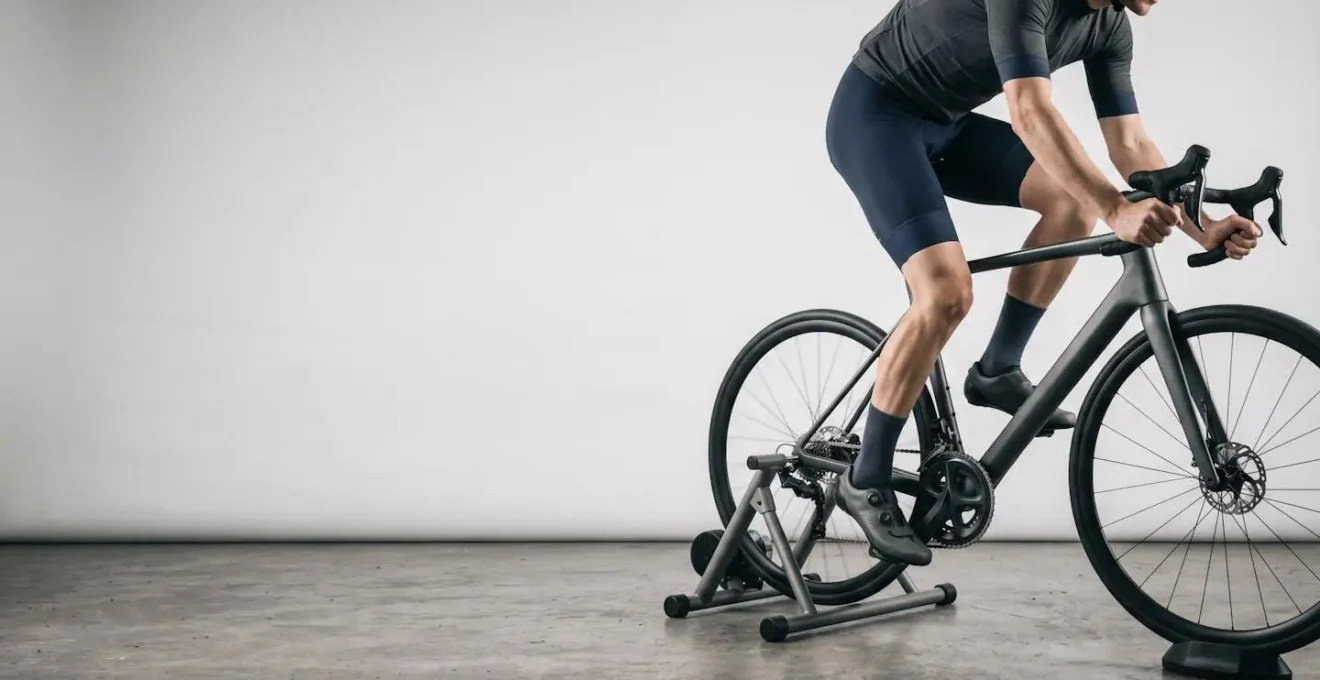
- Observe Knee Tracking: Ride on an indoor trainer and have someone film your knees from the front. Do they move straight up and down, or do they dive inwards towards the top tube on the downstroke? Inward tracking is a classic sign that varus wedging may be needed.
- Check for Heel Rock: From behind, observe your heels as you pedal. Do they stay relatively stable, or do they wobble from side to side? Excessive wobbling can indicate a need for better heel support or wedging.
- Identify Pressure Points: Look at the wear patterns on your current insoles. Is pressure concentrated on the inside or outside edge? This can confirm where your foot is trying to find stability.
- Implement Incrementally: If you suspect a varus tilt, start with a single in-shoe wedge or one cleat wedge. Test it on a short ride. Change only one thing at a time and assess the effect on your knee tracking and foot comfort.
Heel Cups: How to Stop Blisters Without Tightening the Straps?
While much of the focus on cycling foot pain is on the forefoot, instability at the rear of the foot is a significant, and often overlooked, contributor to discomfort and inefficiency. A common complaint alongside “hot foot” is heel rubbing and blistering. The instinctive reaction is to crank down the shoe’s straps or dial to lock the heel in place. However, this approach often backfires, creating excessive pressure over the instep and potentially worsening the very forefoot compression you are trying to avoid.
The problem is not necessarily a loose shoe, but rather a lack of structural support around the heel bone (calcaneus). During the upstroke phase of pedalling, an unsupported heel can lift slightly away from the shoe’s sole. This micro-movement, repeated thousands of times per ride, creates friction and shear forces that lead to blisters. It also represents a loss of energy, as your foot is not securely connected to the pedal through the entire 360-degree rotation.
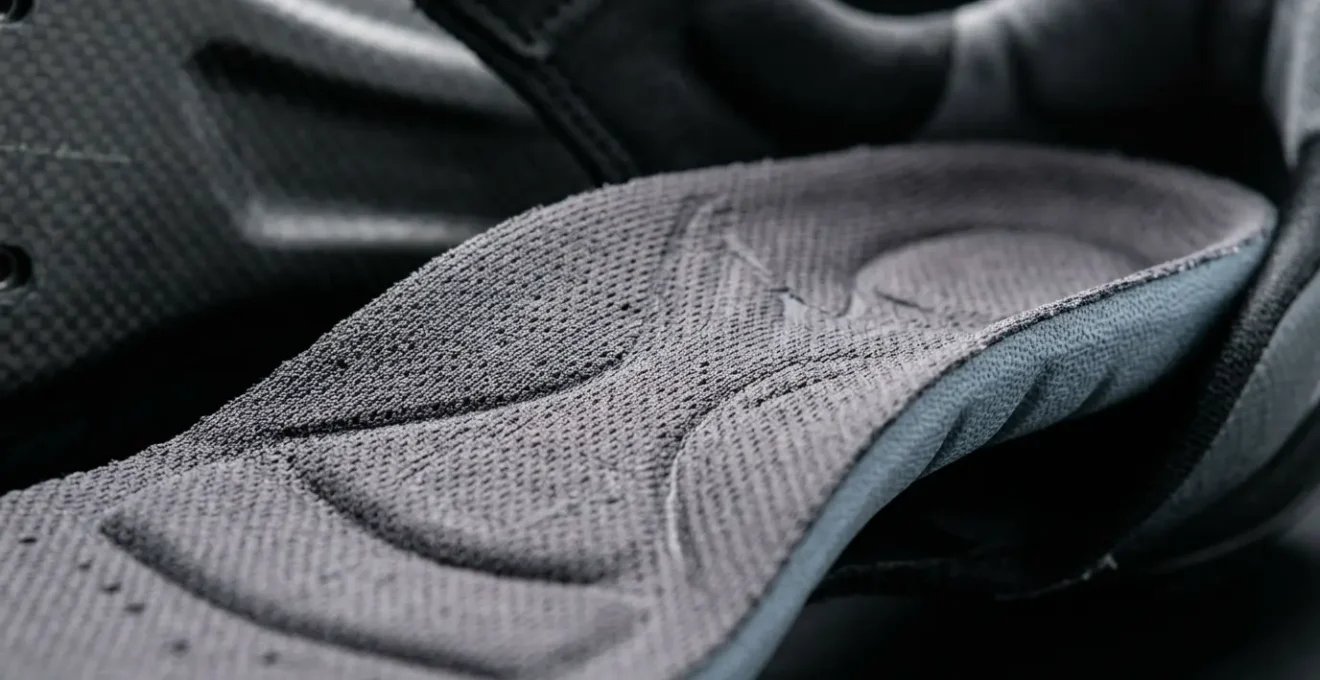
A well-designed insole with a deep, structured heel cup is the anatomical solution. Unlike the flat, flimsy sock liner that comes with most cycling shoes, a performance insole is designed to cradle the soft tissue pad under your heel. As SOLE Footbeds note, “The deep heel cup cradles your heel in place to prevent excess movement within the shoe.” This provides mechanical stability, locking the calcaneus in a neutral position and preventing it from slipping during the upstroke. By securing the foot from below, you eliminate the need to over-tighten from above.
This rearfoot stability has benefits that extend to the forefoot as well. A stabilized heel helps to guide the entire foot through a more controlled motion, reducing unwanted twisting and shearing forces that can contribute to metatarsal pain. It is another critical element in creating a stable platform, ensuring your entire foot is working as a cohesive unit with the shoe and pedal.
Neoprene Overshoes: Do They Actually Keep Feet Dry or Just Warm?
When conditions turn cold and wet, the conversation about foot comfort shifts from internal pressure to external elements. Neoprene overshoes are a ubiquitous piece of winter cycling kit, often marketed with the promise of keeping your feet warm and dry. However, from a materials science perspective, it is crucial to understand that their primary function is insulation, not waterproofing. This distinction is key to managing expectations and comfort on miserable days.
Neoprene works on the same principle as a wetsuit. It is a closed-cell foam rubber that is not inherently breathable. While it will resist a light shower or road spray for a time, in prolonged or heavy rain, water will inevitably find its way in, typically through the cleat opening at the bottom or by wicking down your leg from the top. Once inside, that water is trapped. This sounds like a disadvantage, but it is the core of how neoprene insulates.
The material traps a thin layer of water between the overshoe and your shoe. Your body heat then warms this layer of water, creating a thermal barrier against the cold outside air. Your feet will be wet, but they will be warm and wet. This is a far more comfortable and physiologically safer state than being cold and wet, which can quickly lead to debilitating numbness and even non-freezing cold injury. The mistake many cyclists make is believing neoprene is meant to keep them bone dry. When their feet get wet, they think the product has failed, when in fact, it is functioning exactly as designed.
For true waterproofing, you would need to look at different materials, often with taped seams and a less forgiving fit, which might offer dryness at the expense of insulation or breathability. For the cold, damp conditions typical of a long winter ride, neoprene’s ability to maintain warmth, even when wet, makes it the superior choice for thermal protection.
Road Buzz: Do Stiff Soles Cause Fatigue on Rough British Tarmac?
The arms race for ever-stiffer carbon soles is driven by a simple premise: maximum power transfer. A rigid sole prevents the shoe from flexing under load, ensuring that every watt generated by your legs is delivered directly to the pedals. For sprinters and racers on smooth circuits, this is an undeniable advantage. However, for the endurance cyclist tackling long distances on variable road surfaces—like the notoriously coarse chip-seal common on many British B-roads—that same stiffness can become a liability.
An ultra-stiff sole is an incredibly efficient conductor of vibration. Every imperfection in the road surface, from minor cracks to rough aggregate, is transmitted directly through the cleat and into your foot. This high-frequency “road buzz” forces the small, intrinsic muscles within your feet to work constantly to dampen these vibrations. Over the course of several hours, this leads to neuromuscular fatigue, manifesting as a deep, aching sensation and a general feeling of soreness in the arches and throughout the foot.
This is not just a subjective feeling. Research has demonstrated that stiffer soles concentrate pressure. Biomechanical analysis shows that, compared to more flexible plastic soles, rigid carbon soles can result in 18% higher peak plantar pressures under the metatarsal heads. While this peak pressure is ideal for a short, powerful burst, it can contribute significantly to both fatigue and the “hot foot” sensation on a multi-hour ride. The very feature designed for peak performance can actively work against endurance comfort.
This presents a paradox: you need stiffness for efficiency, but too much of it on rough roads can cause debilitating fatigue. The solution is not to abandon stiff soles, but to introduce a damping layer between the rigid sole and the foot. A high-quality, supportive insole acts as this crucial interface, helping to dissipate high-frequency vibrations and distribute pressure more evenly across the entire foot, mitigating the harshness of the stiff sole without sacrificing its power-transfer benefits.
Key Takeaways
- “Hot foot” is a biomechanical issue of neurovascular compression, not simply a shoe fit problem.
- Systematic correction involves adjusting cleat position, ensuring correct shoe volume (not just length), and managing dynamic swelling.
- The entire kinetic chain matters; foot stability via wedges and heel cups directly impacts knee alignment and overall efficiency.
Carbon Soles: Are They Too Stiff for 100-Mile Charity Rides?
We arrive at the central question: are ultra-stiff carbon soles, the hallmark of high-performance cycling shoes, appropriate for the everyday endurance rider? The answer is a clinical and emphatic “yes, but only with proper support.” A stiff carbon sole is an exceptional tool for power transfer, but it is also an unforgiving platform. It assumes the foot providing the power is perfectly stable. For the vast majority of the population, this is not the case.
An unsupported foot on a rigid carbon plate is like an engine with loose mounts bolted to a stiff chassis; the power is there, but the delivery is inefficient, rattly, and ultimately destructive. As your arch naturally tries to pronate (collapse) under load, the stiff sole prevents this motion. The force has to go somewhere, leading to strain on the plantar fascia, increased pressure on the metatarsal heads, and torsional stress on the knee. The sole’s stiffness magnifies every small instability in your foot. This is why a rider can feel *more* pain after “upgrading” to an expensive pair of carbon shoes.
The solution that bridges this gap is the aftermarket cycling insole. As explained by experts Nathan White (Podiatrist) and Martin Choo (Cycling Performance Engineer), “cycling insoles support the foot, increase stability and improve knee alignment by providing a stable platform through the pedal stroke.” They prevent the arch from collapsing, creating a solid foundation that can effectively leverage the stiffness of the carbon sole. According to veteran bike fitter Steve Hogg, the need is nearly universal, suggesting that 97 to 98% of cyclists can benefit from aftermarket insoles. A good insole transforms the carbon sole from a source of harsh pressure into a stable lever for efficient power transfer.
To truly resolve your foot pain for good, the next logical step is to invest in a high-quality, semi-rigid orthotic insole that provides the arch support and stability your foot needs to perform on the unforgiving platform of a modern cycling shoe.