
Contrary to popular belief, solo cycling isn’t just “moving meditation”; it’s a targeted neurological process that can be more effective at reducing anxiety.
- The simple, repetitive act of pedalling triggers a calming mechanism in the brain similar to therapies used for trauma and stress.
- Riding without data screens liberates cognitive resources, allowing your brain to enter a creative, problem-solving state.
Recommendation: Approach your next solo ride not as a workout, but as a structured mental health session by focusing on rhythm and intentionally leaving your GPS computer at home.
For the stressed professional, the modern world offers a relentless barrage of notifications, deadlines, and pressures. The common prescription for this chronic state of anxiety often involves stillness: meditation apps, yoga mats, and deep breathing exercises. While valuable, these practices can sometimes feel like another task on an endless to-do list, a forced quietude that the racing mind resists. We’re told to sit still and “clear our heads,” but for many, the noise only gets louder in the silence.
What if the most effective antidote to mental clutter isn’t found in stillness, but in rhythmic motion? This is where solo cycling emerges, not merely as a form of physical exercise, but as a powerful, self-directed form of neuro-therapy. It’s a practice that moves beyond the generic advice of “getting some fresh air” and into the realm of applied psychology. Many cyclists intuitively feel its benefits, but few understand the precise mechanisms at play that make it so profoundly effective at untangling the knots of anxiety.
This article will deconstruct that feeling. We will move past the platitudes and explore the science. We’ll examine how the simple act of pedalling can regulate the nervous system, why leaving your data behind is a revolutionary act of self-care, and how the brain uses the rhythm of the ride to solve problems you couldn’t crack at your desk. This is not about being the fastest; it’s about reclaiming your mental space, one pedal stroke at a time.
To understand how this unique form of therapy works, we will explore the specific psychological and neurological processes that are activated during a solo ride. The following sections break down each component, from the mechanical rhythm of your cadence to the vital importance of a post-ride ritual.
Summary: The Science of Mental Clarity on Two Wheels
- Cadence Mediation: How Repetitive Pedalling Calms the Nervous System?
- No-Data Rides: Why Leaving the Computer at Home Boosts Happiness?
- Green Exercise: Why Riding in Woods lowers Cortisol More Than Roads?
- The “Shower Thought” Effect: Why Solutions Appear at Mile 20?
- Endorphins vs Dopamine: Understanding the “Cyclist’s High”?
- Fear of the Dark: How to Overcome the Anxiety of Your First Solo Wild Camp?
- Green Exercise: Why Riding in Woods lowers Cortisol More Than Roads?
- The Cake Stop: Why Social Nutrition Is Vital for Club Cohesion?
Cadence Mediation: How Repetitive Pedalling Calms the Nervous System?
The most fundamental element of cycling—the steady, rhythmic push and pull of the pedals—is also its most therapeutic. This consistent motion is a form of bilateral alternating stimulation (BLS), a core component of powerful psychotherapies like EMDR (Eye Movement Desensitization and Reprocessing), used to treat anxiety and PTSD. As one leg pushes down, the other rises, engaging the left and right sides of the body, and by extension, both hemispheres of the brain in a continuous, predictable pattern.
This rhythmic input has a profoundly calming effect on the amygdala, the brain’s threat-detection center. Instead of being on high alert, the nervous system receives a signal of safety and predictability, allowing it to down-regulate. The science backs this up powerfully; a 2018 study found that bilateral stimulation can lead to a 62.26% reduction in emotional stress and a 50.5% reduction in bodily distress in as little as 30 seconds. This process fosters a state of integration, as explained by experts in the field.
Bilateral stimulation engages both hemispheres of the brain, fostering a dialogue between them, much like a skilled conductor ensures seamless communication between different sections of an orchestra.
– Bay Area CBT Center Research Team, How Bilateral Stimulation Works to Reduce Anxiety
Unlike forced meditation, where the mind can wander into anxious loops, the physical requirement of maintaining cadence gives the brain a simple, non-taxing focus. The world narrows to the rhythm of your breath and the circular motion of your feet. This is not about emptying the mind, but about giving it a stable, grounding anchor, allowing the physiological symptoms of anxiety to naturally dissipate.
No-Data Rides: Why Leaving the Computer at Home Boosts Happiness?
In a world obsessed with metrics, cycling has become a data-rich sport. GPS computers track speed, power, heart rate, and elevation, turning every ride into a performance evaluation. While useful for training, this constant feedback loop can transform a mentally restorative activity into another source of pressure. The practice of “no-data” rides—intentionally leaving the computer at home—is a powerful act of cognitive unloading that directly boosts intrinsic happiness.
The constant stream of data gamifies the experience, tapping into extrinsic motivation (the desire for points, badges, and rankings) rather than intrinsic motivation (the pure enjoyment of the activity). While gamification can be engaging initially, it can ultimately undermine the very pleasure it seeks to enhance. This is not just a theory; it’s a documented psychological phenomenon.
Case Study: The Hidden Cost of Gamification
A systematic review of 40 studies on gamification published by the National Center for Biotechnology Information revealed a counter-intuitive trend. While gamified elements like points and rankings cause high initial engagement, a longitudinal research analysis showed that students’ intrinsic motivation can decrease over time. The novelty wears off, and the external rewards begin to overshadow the inherent pleasure of the activity itself, leading to a decline in genuine, self-driven interest.
By riding without data, you shift your focus from “Am I performing well?” to “How do I feel?”. You reconnect with the physical sensations of the ride: the wind on your skin, the burn in your muscles, the subtle changes in the landscape. This frees up significant mental bandwidth, allowing you to be present in the moment. It transforms the ride from a test to be passed into an experience to be savored, restoring the intrinsic joy that is fundamental to long-term mental well-being.
Green Exercise: Why Riding in Woods lowers Cortisol More Than Roads?
While any cycling is beneficial, where you ride matters immensely. The concept of “green exercise”—physical activity performed in natural environments—has been shown to have a significantly greater positive impact on mental health than the same activity in an urban setting. For a cyclist, this means choosing a winding forest trail or a quiet country lane over a busy city street can dramatically amplify the anxiety-reducing effects of the ride.
The primary mechanism behind this is the reduction of cortisol, the body’s main stress hormone. Natural environments are less stimulating and threatening to our primal nervous systems. The sounds of birds, the sight of rustling leaves, and the fractal patterns of trees are inherently calming. In contrast, urban environments are filled with stimuli that the brain interprets as potential threats: loud noises, fast-moving traffic, and hard-edged architecture, all of which keep cortisol levels elevated.
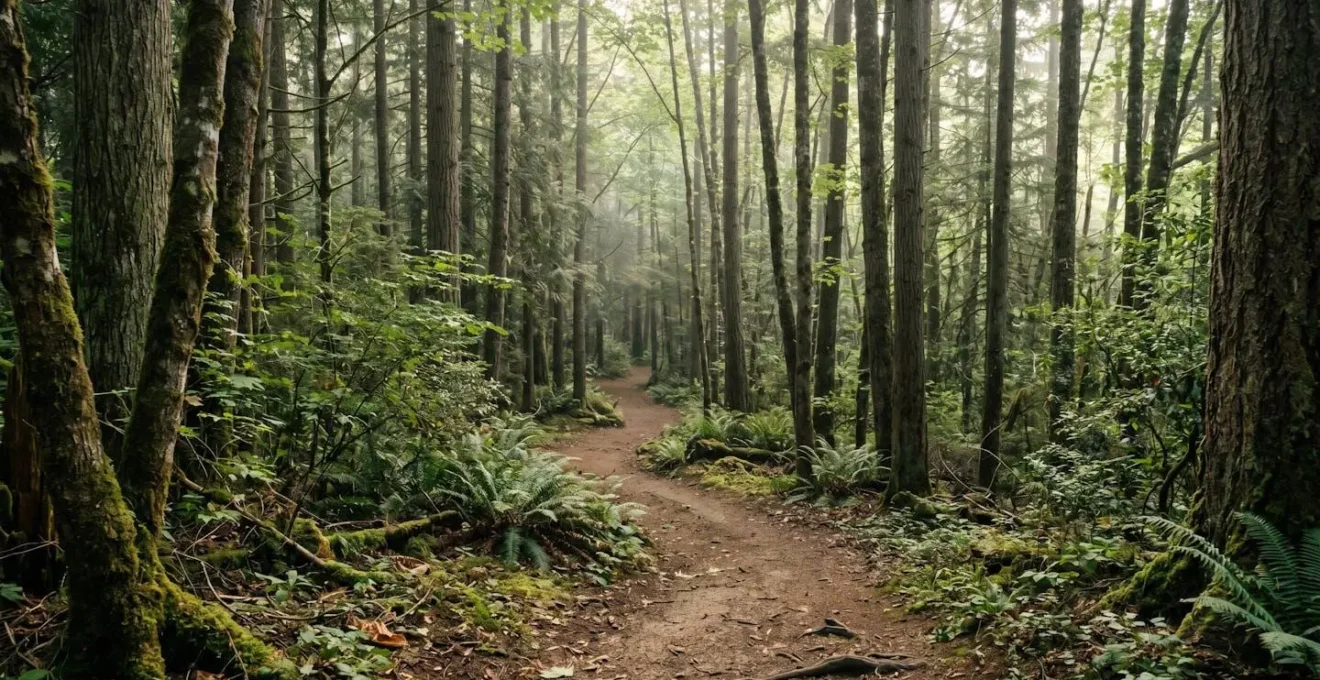
Scientific research clearly quantifies this difference. A study on young adults compared the physiological effects of walking in a forest versus an urban area. The results were stark: forest walking decreased mean cortisol from 9.70 to 8.37 nmol/L, a significant drop. Meanwhile, urban walking barely made a difference, with cortisol levels remaining high. This shows that the environment itself is an active ingredient in stress reduction.
By choosing to ride in nature, you are not just getting a change of scenery; you are actively lowering your body’s stress response. You are immersing yourself in a sensory environment that is evolutionarily programmed to signal safety and calm to your brain, making the ride a far more potent tool for mental restoration.
The “Shower Thought” Effect: Why Solutions Appear at Mile 20?
Every cyclist knows the feeling: you’re miles into a ride, your mind is wandering, and suddenly, the solution to a problem you’ve been wrestling with for days appears with perfect clarity. This is often called the “shower thought” effect, and it’s a direct result of activating a specific brain network: the Default Mode Network (DMN). The DMN is our brain’s “daydreaming” or “mind-wandering” state, and solo cycling creates the perfect conditions for it to work its magic.
When we are intensely focused on a task, our brain’s prefrontal cortex is in charge. During a low-cognitive-load, repetitive activity like solo cycling, the prefrontal cortex relaxes. This allows the DMN to take over, making novel connections between seemingly unrelated memories and ideas. As leading researchers in the field note, this is the very foundation of creative, internally directed thought.
The default mode network is a widely distributed, intrinsic brain network thought to play a crucial role in internally directed cognition. During a low-cognitive load, repetitive task like solo cycling, the task-focused prefrontal cortex relaxes, allowing the DMN to activate and form novel connections between existing ideas.
– Dr. Ben Shofty, Default mode network electrophysiological dynamics and causal role in creative thinking
This state of gentle, unfocused attention is the sweet spot for insight. A fascinating 2024 study published in the journal *Brain* showed that artificially stimulating the DMN actually *decreased* creative originality. This confirms that the DMN works best when it’s not forced, but allowed to wander freely, as it does during a long ride. The rhythmic, semi-automatic nature of cycling occupies the body just enough to let the mind off its leash, fostering the perfect environment for spontaneous problem-solving and creative breakthroughs.
Endorphins vs Dopamine: Understanding the “Cyclist’s High”?
The term “cyclist’s high” is often used to describe the feeling of euphoria that can accompany a long or intense ride. While commonly attributed solely to endorphins, the reality is a more nuanced and interesting neurochemical cocktail, primarily involving two key players: endorphins and dopamine. Understanding their distinct roles is key to appreciating the full spectrum of cycling’s mental benefits.
Endorphins are the body’s natural opioids. They are released primarily in response to prolonged physical stress or pain, such as during a grueling climb or a high-intensity interval. Their role is to act as an analgesic (a painkiller) and to produce a feeling of euphoria or bliss. This is the classic “high” that allows you to push through physical discomfort and feel a sense of elation afterward. It’s a powerful, but often temporary, state tied to intense effort.
Dopamine, on the other hand, is the neurotransmitter of motivation, reward, and pleasure. Unlike endorphins, dopamine is not just about enduring pain; it’s about the anticipation and reinforcement of a rewarding activity. The simple act of deciding to go for a ride, the feeling of freedom on an open road, and the sense of accomplishment afterward all trigger dopamine release. Crucially, research indicates that regular exercise generates new dopamine receptors in the brain. This creates a positive feedback loop: the more you ride and feel good, the greater your brain’s capacity becomes to feel good from riding. This fosters a sustainable, long-term sense of well-being and motivation, which is far more critical for managing chronic anxiety than the fleeting high of endorphins.
Fear of the Dark: How to Overcome the Anxiety of Your First Solo Wild Camp?
For the bikepacker or adventurous solo rider, the day’s journey is only half the story. The prospect of a first solo wild camp can be daunting, with the fear of the dark triggering a primal anxiety. Every snap of a twig or gust of wind can be magnified by the imagination into a potential threat. This heightened state of alert is driven by the amygdala, but it can be managed with a conscious technique of auditory calibration.
The goal is not to ignore the sounds of the night, but to actively listen, identify, and categorize them. This simple cognitive exercise shifts your brain from a passive, fearful state to an active, analytical one. By naming the source of a sound (“that’s the tent fabric rustling,” “that’s a branch creaking”), you transform it from an unknown threat into a known, mundane phenomenon. This process provides the prefrontal cortex with data, which in turn sends calming signals to the amygdala, telling it that the environment is safe.
This technique is a practical, in-the-moment tool for managing acute anxiety in an unfamiliar setting. It puts you back in control of your perception, allowing you to settle your nervous system and find peace in the solitude of the night. The following plan outlines the exact steps to practice this technique.
Action Plan: Auditory Calibration for Night Anxiety
- Shift Focus: Sit silently in your tent and consciously shift your focus from straining to see in the dark to actively listening to your surroundings.
- Identify and Inventory: Listen for each individual sound. Make a mental list: wind against the fabric, a distant animal call, the creak of a tree, your own breathing.
- Name and Categorize: For each sound you identify, name it either internally or in a soft whisper. “That is the wind.” “That is a branch.” “That is my sleeping bag rustling.”
- Transform Unknowns: Recognize that this act of naming transforms a potentially threatening unknown into an explained, non-threatening event. This is the key to calming the amygdala’s threat response.
- Practice and Settle: Continue this process for 10-15 minutes. You will feel your nervous system gradually shift as it begins to recognize the environment as neutral and safe, rather than hostile.
Green Exercise: Why Riding in Woods lowers Cortisol More Than Roads?
While we’ve established that natural environments reduce cortisol more effectively than urban ones, the depth of this benefit is linked to intentionality and duration. Moving beyond a casual ride in the park and into the realm of “forest therapy” or *Shinrin-yoku* involves a more mindful and prolonged immersion in nature, which yields even greater psychological rewards.
The sustained exposure to a natural environment allows for a deeper level of sensory calibration. Your eyes adjust to the complex fractal patterns of leaves and branches, which have a naturally soothing effect on the brain. Your ears tune into the nuanced soundscape, and your sense of smell registers the earthy phytoncides released by trees, which have been linked to improved immune function. This is a holistic experience that engages the entire nervous system in a restorative process.
The duration of this immersion is critical. While a short ride is good, longer periods in nature appear to have a more profound and lasting impact on stress physiology. As a comprehensive review of forest therapy programs highlights, time is a key factor in achieving deep stress reduction.
A systematic review in the journal *Forests* concluded that programs lasting two to six days seem to be physiologically more effective than interventions of less than a day in terms of reducing salivary cortisol. While a multi-day bikepacking trip may not be feasible for everyone, this finding underscores a key principle: the longer you can dedicate to your “green exercise,” the more substantial the mental health benefits will be. It encourages planning for a three-hour ride on a Saturday morning, not just a quick 30-minute loop, to truly maximize the therapeutic effect.
Key Takeaways
- The rhythmic, bilateral motion of pedalling directly calms the brain’s threat center, acting as a form of self-administered stress therapy.
- Ditching data screens (cognitive unloading) is crucial for shifting from performance anxiety to intrinsic joy, allowing the mind to wander and de-stress.
- Riding in natural environments (“green exercise”) is scientifically proven to lower the stress hormone cortisol far more effectively than riding in urban settings.
The Cake Stop: Sealing the Session with a Terminal Reward
The ride itself provides profound mental benefits, but the moments immediately following it are just as crucial for cementing those gains. The classic “cake stop” or post-ride coffee is often seen as a simple indulgence, but from a psychological perspective, it functions as a powerful terminal reward. This concept, drawn from behavioral psychology and operant conditioning, is the final step in sealing the entire experience as deeply positive.
A terminal reward is a positive reinforcement delivered at the completion of an activity. It creates a strong psychological association, linking the effort of the ride to a moment of pleasure and rest. This act effectively “stamps” the entire memory of the ride in your brain as a rewarding one, significantly increasing the dopamine-driven motivation to repeat the behavior in the future. It’s the brain’s way of saying, “That was worthwhile; let’s do it again.”
This ritual transforms the end of a ride from a simple stop into a conscious act of psychological reinforcement. It’s not about the calories; it’s about the conditioning. By mindfully enjoying a coffee, a pastry, or even just a few moments of quiet reflection after you dismount, you are actively training your brain to seek out the therapeutic benefits of cycling. This makes it far more likely that you’ll turn to your bike the next time you feel the grip of anxiety, because your brain has learned that the full cycle—effort and reward—leads to a state of well-being.
Therefore, the next time you plan a solo ride, intentionally plan your post-ride ritual as well. Make it a non-negotiable part of the session. This simple addition is the key to transforming a single good ride into a sustainable, long-term mental health practice.