
To conquer the UK’s brutal, short climbs, your FTP is not the primary weapon; your finite anaerobic battery (W’) is.
- Explosive power is built by focusing on high-torque, force-based intervals, not just high-cadence spinning.
- True progress is measured by your ability to repeat maximal efforts, a metric captured by Critical Power (CP) and W’, not a 20-minute FTP test.
Recommendation: Shift your training focus from sustaining threshold to systematically depleting and expanding your anaerobic capacity with specific, high-intensity intervals and targeted strength work.
You know the feeling. The road ahead vanishes, replaced by a wall of tarmac kicking up at a savage 15-20% gradient. Your computer flashes numbers that seem impossible as your legs turn to cement. This is the signature of British cycling: the punchy, leg-breaking climb that lasts 30 to 90 seconds but feels like an eternity. For years, the prevailing wisdom has been to chase a higher power-to-weight ratio by focusing on Functional Threshold Power (FTP). But you’ve raised your FTP, and you still get dropped on these vicious ramps.
The reason is simple: these efforts aren’t about aerobic endurance. They are purely anaerobic battles. Your ability to survive and attack these climbs isn’t dictated by the power you can hold for an hour, but by the explosive energy you can detonate in under a minute. This capacity is governed by a different physiological system, often referred to as W’ (pronounced ‘W prime’), your finite tank of anaerobic energy. While others train for the long haul, you are preparing for a series of all-out sprints separated by moments of recovery.
The truth that most coaches won’t tell you is that mastering these climbs requires a radical shift in training philosophy. It’s not about being a diesel engine; it’s about being a dragster. It demands a surgical focus on high-torque efforts, a deep understanding of your anaerobic battery, and a testing methodology that reflects the real-world demands of a one-minute wall. This isn’t about raising your cruising speed; it’s about increasing your knockout power.
This guide deconstructs the physiological demands of punchy climbs and provides a clear, power-based framework to rebuild your engine for explosive force. We will dissect the specific intervals, strength work, and performance metrics that directly translate into power on the steepest gradients, turning your greatest weakness into a formidable weapon.
Contents: HIIT Cycling Workouts for Steep Climb Dominance
- Cadence Drills: High RPM vs Grinding for Sprint Power?
- W’ (W Prime) Depletion: How Many Sprints Can You Do Before You Blow Up?
- Squats vs Lunges: Which Gym Exercise Translates Best to Pedal Power?
- Seated vs Standing: Which Is More Efficient for 30-Second Climbs?
- Creatine for Cyclists: Does It Help with Repeated Sprint Ability?
- VAM Explained: How Vertical Ascent Speed Helps You Pace a 1-Hour Climb?
- The “T-Rex” Physic: Why Cyclists Need Core and Arm Workouts?
- FTP Testing at Home: How to Measure Progress Without a Lab?
Cadence Drills: High RPM vs Grinding for Sprint Power?
Power is a simple equation: Force x Velocity. For a cyclist, that’s how hard you push on the pedals (torque) multiplied by how fast you turn them (cadence). To generate explosive power for steep ramps, you must master both sides of this equation. While many riders chase high cadence, true climbing power comes from the ability to generate massive neuromuscular force at lower cadences, a skill that must be specifically trained.
High-cadence “spin-up” drills are excellent for improving pedaling efficiency and the speed of muscle contraction. Firing your muscles in a coordinated sequence at a high rate is a skill, and research often points to a range of 100-120 RPM for optimal sprint power generation when resistance is manageable. However, on a 20% gradient, you won’t be spinning at 110 RPM. You’ll be grinding at 60-70 RPM, where pure force production is paramount.
Therefore, your training must include high-torque, low-cadence work. These “grinders” train your brain to recruit a maximum number of muscle fibers and your body to produce force from a near-standstill. They build the raw strength needed to overcome the initial inertia and steep resistance of a wall-like climb. A complete rider develops both: the ability to stomp on the pedals with immense force and the speed to spin it up over the crest.
Integrate these drills into your training to build a complete power profile:
- Force-Stomps: From a near-stop in a very hard gear, stand up and pedal as hard as you can for 10-15 seconds. Your cadence will start low (30 RPM) and accelerate to 80-90 RPM. This builds pure starting strength.
- Spin-Ups: In a lighter gear, begin at 100 RPM for 10 seconds, accelerate to 110 RPM for 10 seconds, then hold your fastest possible cadence (>120 RPM) for a final 10 seconds. This fine-tunes muscle coordination at high speeds.
- Gradient-Adaptive Practice: On a rolling route, approach a short climb spinning at 90-95 RPM. As the gradient bites, shift to a harder gear and transition to a powerful, standing grind at 60-70 RPM on the steepest pitch. As you go over the top, shift down and spin up the cadence again.
W’ (W Prime) Depletion: How Many Sprints Can You Do Before You Blow Up?
Every time you launch an attack or surge up a steep, short climb, you are drawing from a finite, rechargeable battery of anaerobic energy. This is your W’, or ‘work prime’. Think of it as a jar of matches. Your sustainable aerobic power (Critical Power or FTP) is the candle that can burn for hours. Your W’ is the pile of matches you can strike for intense, short-lived flames. Once the matches are gone, you’ve “blown up,” and you need time to get more.
This concept is the absolute key to understanding performance on punchy British climbs. A 60-second, all-out effort on a 15% gradient will almost completely deplete your W’. Your ability to perform another hard effort moments later on the next ramp depends entirely on how much of that W’ you have managed to regenerate. This is why riders with a huge FTP can be dropped by a rider with a smaller aerobic engine but a larger, faster-recharging W’ battery. They simply have more matches to burn.
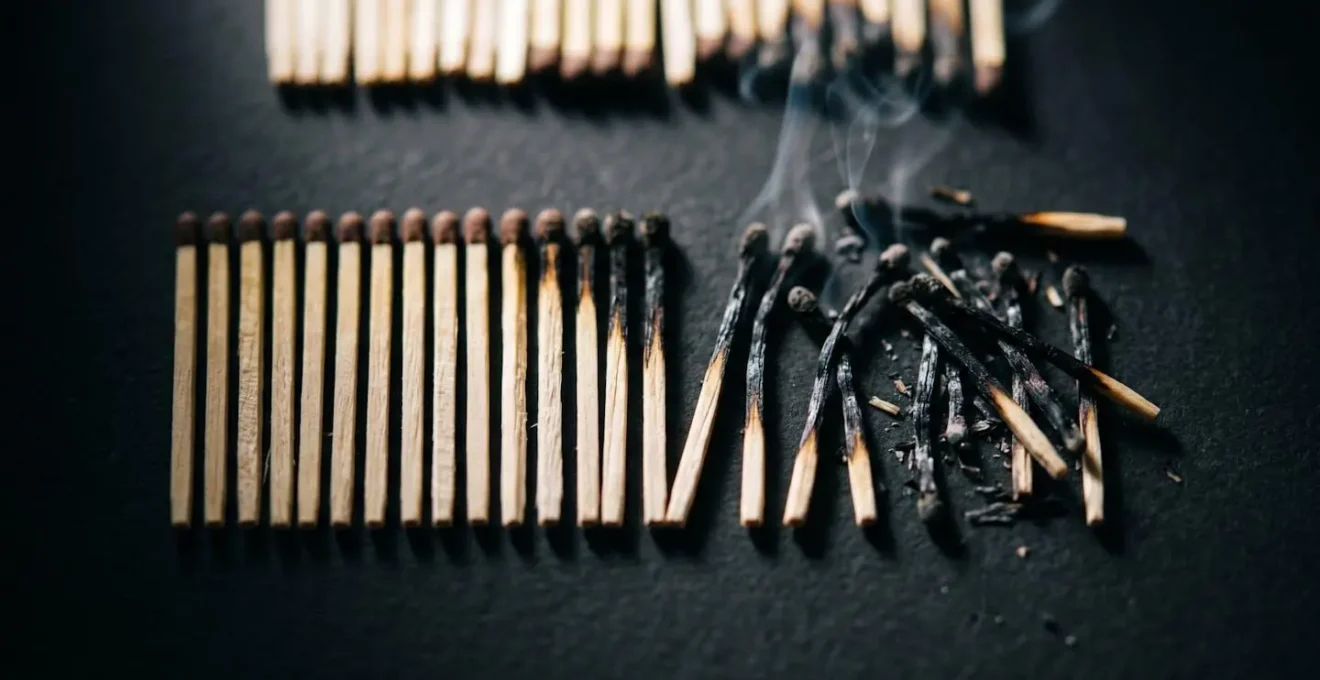
The recovery of this anaerobic capacity is not instantaneous. In fact, it’s painfully slow. According to one analysis, a 30-second all-out sprint took an average of 333 seconds (over 5.5 minutes) of very low-power riding to fully recover. This highlights the critical importance of interval training structures that allow for near-complete recovery between maximal efforts if the goal is to improve the quality of those efforts. A training protocol used by coaches for cyclocross and crit riders, who face similar repeated explosive demands, involves sets of 1-minute max efforts designed to repeatedly drain and partially recover the W’ tank. This type of training over time can actually increase the size of your W’ battery, giving you more matches to burn on race day.
Squats vs Lunges: Which Gym Exercise Translates Best to Pedal Power?
While riding is the most specific training, building raw, foundational strength in the gym is a potent catalyst for boosting your peak power. Stronger legs can produce more force, directly impacting the ‘Force’ side of the power equation. Research backs this up; one study of track sprint cyclists found a 26.5W average increase in crank power at 135 RPM after a period of strength training. But not all exercises are created equal. The debate between bilateral movements like squats and unilateral ones like lunges is crucial for cyclists.
Bilateral exercises, such as the back squat or trap bar deadlift, allow you to lift the heaviest absolute load. This is unparalleled for building maximal systemic strength and a rock-solid core, which forms the platform for your power. They are the bedrock of an off-season strength program.
However, cycling is fundamentally a unilateral activity—one leg pushes while the other pulls. This is where exercises like lunges and Bulgarian split squats shine. They mimic the single-leg nature of the pedal stroke, help correct muscle imbalances between your left and right sides, and heavily engage the stabilizer muscles in your hips and core that are vital for controlling the bike during a violent, out-of-the-saddle effort. An inability to control lateral sway is a massive power leak.
A smart strength program uses a combination of both, tailored to the time of year and the specific adaptation you’re targeting. The following table breaks down the biomechanical specificity of key exercises for cyclists.
| Exercise Type | Primary Muscle Activation | Cycling-Specific Benefit | Best Application |
|---|---|---|---|
| Back Squats (Bilateral) | Quads, Glutes, Core (both legs simultaneously) | Strong seated pedaling, overall leg strength, core stability | Off-season heavy lifting (3-5 reps, high load) |
| Bulgarian Split Squats (Unilateral) | Quads, Glutes per leg, Core for balance | Pedaling efficiency, unilateral strength, out-of-saddle stability | Build/competitive season (8-12 reps per leg) |
| Lunges (Unilateral) | Quads, Glutes, Inner thigh, Gluteus medius | Lateral force control, muscle imbalance correction, bike control during standing efforts | Year-round maintenance (10-15 reps per leg) |
| Trap Bar Deadlifts | Glutes, Hamstrings, Back (hip-hinge pattern) | Explosive power generation, mimics seated power stroke biomechanics | Transition phase (6-8 reps, moderate-heavy load) |
Seated vs Standing: Which Is More Efficient for 30-Second Climbs?
The choice to get out of the saddle is one of the most visible yet misunderstood aspects of climbing. For a short, maximal effort, this is not a question of comfort—it’s a calculated decision about power generation versus physiological cost. For efforts under 60-90 seconds, where raw power is the only thing that matters, standing is almost always the superior choice.
The physics are undeniable. By standing, you can leverage your full body weight to drive down on the pedals, dramatically increasing torque. This allows you to recruit additional muscle groups in your upper body, back, and core, turning the bike and your body into a single power-generating machine. The data is clear: research on high-intensity cycling found 26% higher power in standing (803W) vs seated (635W) during 30-second maximal efforts. This is a colossal difference that can be the deciding factor on a steep pitch.
However, this extra power comes at a significant physiological cost. Standing is less metabolically efficient. A detailed study on an 8% gradient found that when standing, heart rate and oxygen consumption (VO2) increased significantly, while muscle activation in the quads (Rectus Femoris and Vastus Medialis) shot up by 38% and 58% respectively. You are burning more matches, faster. This is why standing is unsustainable for long periods. But for the 30-second wall typical of a British B-road, efficiency is irrelevant. You need to produce the highest possible power to get over the climb, and standing is the most effective way to do it.
The key is to use this tool surgically. Stay seated to conserve energy on lower gradients, but as the road rears up and your power needs to surge above your threshold, get out of the saddle and unleash your maximum force. This is not just a change in position; it is a tactical shift from an efficiency-based mindset to a power-based one.
Creatine for Cyclists: Does It Help with Repeated Sprint Ability?
In the quest for explosive power, cyclists often overlook one of the most well-researched and effective supplements available: creatine monohydrate. While commonly associated with bodybuilders, its primary function is to enhance the body’s ability to produce energy during short, high-intensity efforts. This directly translates to the demands of repeated, punchy climbs.
Creatine works by increasing your body’s stores of phosphocreatine, a high-energy compound that fuels the first 5-10 seconds of a maximal sprint. This is the energy system you rely on to initiate an attack or power over the steepest part of a climb. By having larger phosphocreatine stores, you can sustain a higher power output for longer and recover more quickly between efforts. For a cyclist facing multiple steep ramps in quick succession, this means a greater capacity to “go again” with high power, essentially improving the quality of your HIIT sessions and accelerating your training adaptations.
Many cyclists fear creatine due to a potential 1-2kg weight gain from water retention. For a rider focused on long Alpine climbs, this is a valid concern. But for our specific goal—conquering 1-minute walls—the benefit of increased raw power and repeatability far outweighs the minor penalty in power-to-weight ratio. The extra power will get you over the climb faster than the small weight increase will slow you down. For optimal results, most supplementation protocols recommend a simple 3-5g per day maintenance dose, skipping the initial “loading phase” to minimize rapid water gain.
Implementing creatine requires a strategic approach, not just random consumption. It’s a tool to amplify the results of your hard training.
Action Plan: Creatine Implementation for HIIT
- Start with low-dose maintenance: Begin with 3-5g of creatine monohydrate daily. This avoids the rapid water retention associated with a loading phase.
- Time intake post-workout: Consume your daily dose with a carbohydrate and protein shake after your HIIT sessions to enhance muscle uptake and support glycogen replenishment.
- Monitor power metrics: Over a 4-6 week block, closely track your power data. Specifically, look for improvements in your 1-minute power and your ability to hold power across repeated intervals.
- Accept the water weight: Expect a 1-2kg increase in body weight. Frame this as a positive investment in the raw wattage needed for short, explosive efforts where absolute power is key.
- Leverage HIIT synergy: Use creatine as a tool to enable higher quality repetitions during your VO2 max and anaerobic capacity intervals, which in turn drives faster and more significant training adaptations.
VAM Explained: Why Traditional Metrics Fail on British Climbs
For decades, elite climbers have used VAM (Velocità Ascensionale Media, or average ascent speed) as a key performance indicator. Measured in vertical meters per hour (m/h), it’s a great way to gauge performance on long, steady Alpine-style climbs. However, applying this metric to the short, violent undulations of the British countryside is like using a yardstick to measure a molecule. It’s the wrong tool for the job.
Traditional VAM is an endurance metric. It tells you about your sustainable, aerobic climbing pace over an extended period. A 90-second maximal effort on a 20% gradient is an anaerobic event, not an aerobic one. Your VAM over that short duration will be astronomically high, but it’s not a repeatable or sustainable figure. It doesn’t tell you anything about your explosive power or your ability to recover and attack the next climb.

Instead of VAM, you should focus on a more relevant concept: Peak VAM or Burst VAM. This is your vertical ascent speed measured over a very short, maximal effort, typically between 60 and 120 seconds. This metric is a direct reflection of your anaerobic power output and is far more indicative of your performance on punchy terrain. The best way to track this is not with complex calculations, but through real-world application.
A highly effective method is to use a specific Strava segment as a benchmark. Find a local, steep 1-2 minute climb (the kind you dread) and treat it as your personal testing ground. By tracking your time on this segment, you are effectively tracking your Peak VAM. A case study on this method highlights its relevance: a rider improving their time on a 600m, 15% gradient segment from 2:15 to 1:58 has tangibly increased their explosive climbing power and anaerobic capacity. This is a far more meaningful measure of progress for a UK-based rider than any abstract, steady-state VAM number derived from a one-hour effort.
The “T-Rex” Physic: Why Cyclists Need Core and Arm Workouts
There’s a common stereotype of cyclists having massively powerful legs but underdeveloped upper bodies—the so-called “T-Rex” physique. While humorous, it points to a critical misunderstanding of cycling biomechanics. During a maximal, out-of-the-saddle effort, your arms and core are not just along for the ride; they are an integral part of the power transfer system. A weak upper body is a massive power leak.
When you stand up to sprint or climb, you pull hard on the handlebars. This action creates an opposing force that stabilizes your body, allowing your legs to drive down with maximum power. A strong back, shoulders, and arms create a rigid platform for this explosive effort. As cycling physiotherapist Bianca Broadbent notes in an analysis for Alpecin Cycling:
The arms aren’t just for steering; they actively pull on the bars to create a counter-force for each pedal stroke, effectively increasing the power you can generate.
– Bianca Broadbent, Strength Training for Cyclists – Alpecin Cycling
Similarly, your core—the entire complex of muscles around your midsection—is the crucial link between your arms pulling and your legs pushing. A weak core will flex and twist, wasting precious energy that should be going into the pedals. A strong, stable core ensures that every watt you generate is transferred efficiently to the drivetrain. This is especially true during a standing climb, where your bike is rocking from side to side.
To combat this, your training must include dynamic exercises that challenge your core’s ability to resist rotation and transfer force. Static planks are a start, but they don’t replicate the violent, dynamic nature of a sprint. The following exercises are far more specific to the demands of a standing climb:
- Renegade Rows: In a plank position holding dumbbells, perform alternating rows. This directly simulates the pull/stabilize motion of standing climbs.
- Wood Chops: Using a cable machine or resistance band, perform diagonal “chopping” motions. This builds the rotational stability needed to control bike sway.
- Hollow Body Holds: Lying on your back with arms and legs extended and raised, engage your core to flatten your lower back to the floor. This mimics the core tension of an aggressive aero position.
- Pallof Press: Using a cable or band from your side, press your hands straight out from your chest and resist the rotational pull. This is a pure anti-rotation exercise, critical for preventing energy-wasting upper body rock.
Key Takeaways
- Your anaerobic battery (W’) and ability to generate high torque are more critical than FTP for short, steep climbs.
- Training must include both high-force, low-cadence “grinds” and high-speed “spin-ups” to build a complete power profile.
- Measure what matters: Use Peak Power Profiles, Critical Power tests, or a real-world “Nemesis Hill” instead of relying solely on a 20-minute FTP test.
FTP Testing at Home: How to Measure Progress Beyond the Lab
You can’t improve what you don’t measure. But for the specific goal of conquering short, steep climbs, the traditional 20-minute FTP test is a blunt and often misleading instrument. It measures your aerobic endurance, your diesel engine. It tells you very little about your anaerobic capacity, your nitrous tank. To truly gauge your progress, you need a testing protocol that directly measures your explosive power and repeatability.
Focusing on FTP encourages a training style that may not translate to the explosive demands of a 20% ramp. A rider can increase their FTP significantly yet see no improvement in their 1-minute power. A more effective approach is to adopt testing methods that capture the metrics that actually matter for this discipline: your maximal power across short durations and your ability to resist fatigue during repeated efforts.
There are several superior alternatives to the standard FTP test that can be performed at home with a power meter. These tests provide a much richer, more actionable picture of your specific strengths and weaknesses as a rider targeting punchy climbs. The Critical Power (CP) test, for example, yields not only your maximal sustainable power (CP, which is functionally similar to FTP) but also the size of your anaerobic battery (W’). A Peak Power Profile test directly measures your absolute best for 5 seconds, 1 minute, and 5 minutes—numbers that are far more relevant to a British hill climb specialist. The table below compares the relevance of these protocols.
| Test Protocol | What It Measures | Relevance for Short Steep Climbs | Test Duration |
|---|---|---|---|
| 20-Minute FTP Test | Sustainable aerobic power (threshold) | Low – measures endurance, not explosive anaerobic power needed for 1-5 min climbs | 20 minutes (after warm-up) |
| Critical Power (CP) Test | Maximal sustainable power + W’ (anaerobic capacity) | High – captures both aerobic base and anaerobic battery size | 3-min + 12-min max efforts (separate days) |
| Peak Power Profile | Max power across multiple durations (5s, 1min, 5min) | Very High – directly measures explosive power relevant to steep gradients | Three maximal efforts (separate days) |
| Fatigue Resistance Test | Power degradation across repeated efforts | Very High – mimics demands of repeated short British climbs | 5 x 2-min max intervals with 2-min recovery |
Perhaps the most potent testing method is the most practical: the ‘Nemesis Hill’ test. Choose a local 1-4 minute climb that you consistently struggle on. Perform a monthly timed, all-out ascent under consistent conditions. Track your time, average heart rate, and perceived exertion. This real-world benchmark is the ultimate validation that your training is translating to the specific terrain you want to conquer. A faster time or a lower RPE at the same speed is a far more motivating and meaningful sign of progress than an abstract 5-watt increase in your FTP.
Stop training like a Tour de France contender and start training like a Classics specialist. Identify your Nemesis Hill, apply these principles with surgical precision, and turn those leg-breaking walls into your new launchpad.