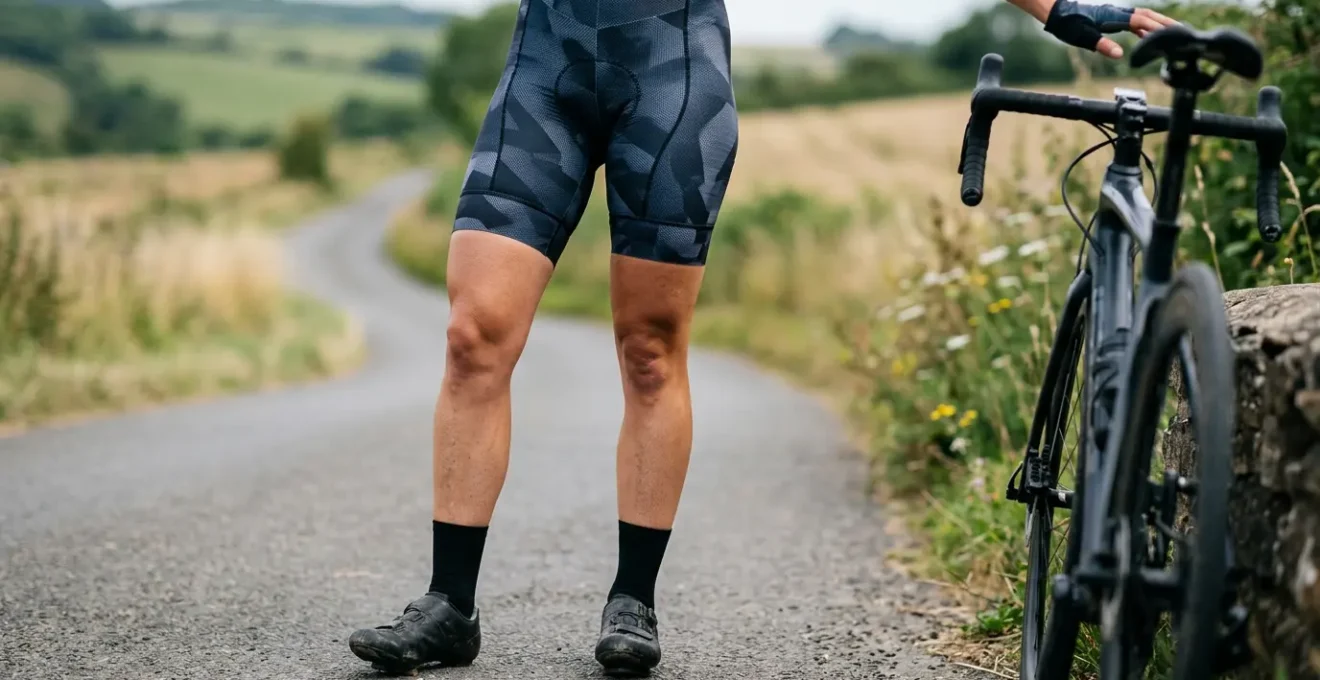
The fear of getting “bulky” legs from cycling stems from a major misunderstanding of how muscle is built and sculpted.
- True aesthetic change comes from how you ride (technique & zones) and what you do off the bike, not just that you’re pedaling.
- Focusing on glute engagement, core stability, and specific heart rate zones allows you to take control of your body composition.
Recommendation: Prioritize posterior chain engagement and Zone 2 training to sculpt lean muscle and enhance fat burning for a proportional, athletic physique.
It’s the classic concern for anyone new to cycling: “Will this make my legs huge?” You start riding for fitness, for freedom, for the simple joy of it, but a nagging worry creeps in every time you feel the burn in your quads. Will your jeans stop fitting? Will you develop the physique of a track sprinter when all you wanted was to feel a bit more toned?
The common advice is often too simple. You’ll hear that endurance riding makes you lean while sprinting makes you bulky, or that it’s all just about calories in versus calories out. While there’s a grain of truth to these ideas, they miss the most important part of the equation: you have far more control over the aesthetic outcome of cycling than you think. It’s not a genetic lottery you’re forced to play.
But what if the key wasn’t just about riding more or eating less? What if the secret to achieving a lean, strong, and proportional cyclist’s physique lies in the specifics? The real answer is found not in avoiding the bike, but in mastering it as a sculpting tool. It’s about understanding the interplay between on-bike technique, targeted nutrition, off-bike strength work, and the metabolic effects of different training intensities.
This guide will deconstruct the myths and provide a clear, science-backed roadmap. We will explore how to manage post-ride nutrition, how to shift muscle engagement from your quads to your glutes, why a strong core is your secret weapon for a balanced look, and how manipulating your training zones can turn your body into a more efficient fat-burning machine. Prepare to look at your bike not as a risk to your wardrobe, but as your partner in building the physique you want.
This article provides a detailed breakdown of the key factors that determine the aesthetic impact of cycling on your body. Explore the sections below to master each component, from nutrition to specific workouts, to achieve your desired physique.
Summary: A Guide to Sculpting a Lean Cyclist’s Physique
- The “Reward Meal” Trap: Why You Aren’t Losing Weight Despite Riding?
- Glutes vs Quads: How to Engage Your Posterior Chain for a Better Look?
- The “T-Rex” Physic: Why Cyclists Need Core and Arm Workouts?
- EPOC Effect: Does a Hard Ride Keep Burning Calories on the Sofa?
- Zone 2 Fat Oxidation: Why Riding Slower Burns More Fat?
- Fat Burning vs Cardio: Which Heart Rate Zone Lowers Blood Pressure Best?
- Squats vs Lunges: Which Gym Exercise Translates Best to Pedal Power?
- Cycling for Heart Health: What Do NHS Guidelines Really Mean for Over 50s?
The “Reward Meal” Trap: Why You Aren’t Losing Weight Despite Riding?
One of the most common pitfalls for new cyclists is the “reward meal” mentality. After a long ride, it’s tempting to justify a massive, calorie-dense meal. While it’s true that cycling burns a significant number of calories— a moderate two-hour road ride can burn anywhere from 800 to 1,500 calories—it’s incredibly easy to overestimate that expenditure and consume far more calories than you burned. This is a primary reason why many cyclists struggle to lose weight despite their efforts.
The key isn’t to starve yourself, but to be strategic. The post-ride period is a critical window for recovery and body composition. Your muscles are primed to absorb nutrients to repair themselves and replenish glycogen stores. This is where timing and macronutrient choice become crucial for aesthetic goals. Consuming a large meal heavy in simple sugars and unhealthy fats right after a ride can lead to an insulin spike that promotes fat storage rather than muscle repair.
Instead, focus on a recovery meal or snack within the “glycogen window.” The science is clear: your muscles are most receptive to glycogen replenishment in the 30 to 60 minutes following a workout. A smart recovery meal should include a mix of carbohydrates to restock energy stores and high-quality protein to repair muscle tissue. For those looking to build lean muscle without bulk, aiming for a protein intake of around 0.75 – 1 gram of protein per pound of body weight throughout the day is a solid guideline. This approach refuels your body for performance and recovery, steering you away from the trap of simply replacing burned calories with poor nutritional choices that sabotage your aesthetic goals.
Glutes vs Quads: How to Engage Your Posterior Chain for a Better Look?
The fear of developing “bulky” legs from cycling is almost always a fear of overdeveloping the quadriceps—the muscles at the front of your thighs. Many cyclists, especially beginners, are “quad-dominant,” meaning they push down on the pedals primarily using their quads. This can lead to a visual imbalance and neglects the powerful muscles of the posterior chain: the glutes and hamstrings. For a longer, leaner, and more powerful look, the goal is to shift the workload backward.
Engaging your glutes and hamstrings isn’t just about aesthetics; it’s about generating more power and preventing injury. These large muscle groups are incredibly powerful, and learning to use them turns your pedal stroke from a simple “push down” into a full, efficient circle. The key is technique: think about scraping mud off the bottom of your shoe as you pull through the bottom of the pedal stroke and driving your heel down slightly as you push forward over the top.
Bike fit plays a massive role in this muscle recruitment. A saddle that is too far forward or too low will force you to rely on your quads. Small adjustments can make a world of difference.
Case Study: The Power of Saddle Position
Your saddle position directly dictates which muscles you use. As a bike fit study from BL Physio highlights, moving the saddle forward significantly increases the workload on your quadriceps while reducing the engagement of your gluteal muscles. Conversely, shifting the saddle further back encourages your hamstrings to activate, as it allows your leg to pull through the bottom of the stroke more effectively. A balanced position, often with the knee slightly in front of the pedal spindle at the 3 o’clock position, is typically the sweet spot for achieving a harmonious balance between quad and glute activation, leading to both better power and a more proportional look.
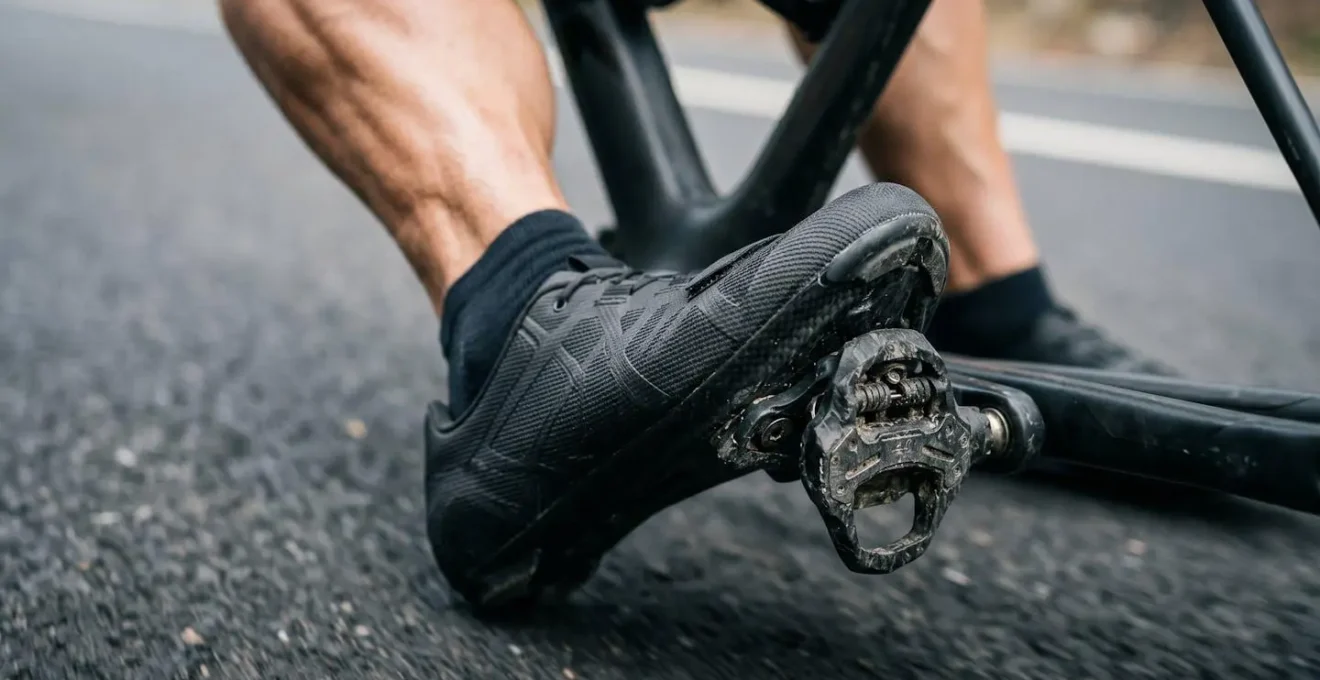
As this image illustrates, focusing on the contact point between foot and pedal is crucial. By driving the heel down, you initiate a chain reaction that travels up the leg, engaging the hamstrings and, most importantly, the glutes. This conscious technique adjustment, combined with a proper bike fit, is the most effective way to sculpt a balanced, powerful lower body rather than simply building bigger quads.
The “T-Rex” Physic: Why Cyclists Need Core and Arm Workouts?
A common but undesirable aesthetic among some cyclists is the “T-Rex” look: powerful, well-developed legs paired with a noticeably weaker upper body and core. This isn’t just a matter of visual proportion; it’s a sign of a significant performance leak. A strong core is the essential link that transfers the power generated by your legs to the pedals. Without it, your upper body is unstable on the bike, leading to wasted energy, poor posture, and an increased risk of injury.
As Christopher Schwenker, a cycling expert, states, “Without a stable core, even cyclists with significant leg strength cannot utilize their power effectively.” Your core—which includes your abs, obliques, and lower back—acts as a rigid platform. When you push down on a pedal, a weak core will allow your hips to rock and your torso to twist, dissipating force that should be driving you forward. A strong core locks everything in place, ensuring that every watt of power from your legs goes directly into the drivetrain. This stability also improves your comfort on long rides and your control when cornering or climbing out of the saddle.
Incorporating off-bike strength work is non-negotiable for any cyclist serious about performance or aesthetics. You don’t need to become a bodybuilder, but dedicating time to core and basic upper body exercises will create a more balanced, resilient, and aesthetically pleasing physique. Simple, effective exercises can be done at home with minimal equipment. Focus on movements that challenge your stability and mimic the demands of cycling. For instance:
- Dead Bug: Lying on your back, you extend an opposite arm and leg while keeping your lower back pressed into the floor. This teaches your core to resist rotation, exactly as it needs to on the bike.
- Bird Dog: From a hands-and-knees position, you extend an opposite arm and leg while keeping your spine neutral. This builds stability across your entire posterior chain.
- Russian Twists: This exercise strengthens the obliques, which are crucial for controlling the bike and preventing your torso from twisting under load.
EPOC Effect: Does a Hard Ride Keep Burning Calories on the Sofa?
The conventional wisdom that only long, slow rides burn fat is an oversimplification. While steady-state cardio is effective, it’s not the only tool for sculpting a lean physique. High-Intensity Interval Training (HIIT) on the bike offers a powerful, time-efficient alternative that continues to shape your body long after the workout is over. This is due to a phenomenon called Excess Post-exercise Oxygen Consumption, or EPOC.
In simple terms, EPOC is the “afterburn” effect. When you perform short bursts of all-out effort, like hill repeats or sprint intervals, you create a significant metabolic disturbance in your body. Your system is forced to work incredibly hard to recover and return to its normal resting state. This recovery process requires a lot of oxygen and, therefore, burns a significant number of extra calories for hours after you’ve stepped off the bike. So yes, a hard ride absolutely keeps you burning calories while you’re relaxing on the sofa.

Beyond the afterburn, HIIT has another aesthetic benefit: it’s incredibly effective at building lean muscle. The intense muscle contractions required during sprinting stimulate Type II muscle fibers, which have the greatest potential for growth and giving your muscles a toned, defined look. In fact, some research shows that sprint interval training can be as effective as traditional strength training for certain muscle-building signals. This makes HIIT a double-win for aesthetics: you burn more fat at rest and build lean, defined muscle at the same time. A balanced training plan should include both long, slow rides and these short, sharp efforts to maximize your body’s sculpting potential.
Zone 2 Fat Oxidation: Why Riding Slower Burns More Fat?
It sounds counterintuitive: how can riding slower burn more fat? This paradox is at the heart of one of the most effective training strategies for improving body composition: Zone 2 training. While high-intensity workouts burn more total calories per minute, low-to-moderate intensity rides in Zone 2 burn a higher *percentage* of their calories from fat stores. This makes Zone 2 the primary “fat-burning zone.”
At lower intensities, your body’s aerobic system can easily supply the necessary oxygen to your muscles to metabolize fat for fuel. As you increase the intensity and push into higher heart rate zones, your body needs energy more quickly. It can’t process fat fast enough, so it switches to its more readily available fuel source: carbohydrates (glycogen) stored in your muscles. Therefore, by staying in Zone 2—typically a conversational pace where you can speak in full sentences—you are training your body to become more efficient at using its vast fat reserves for energy.
But the benefits of Zone 2 training go far beyond the calories burned during the ride itself. It’s about fundamentally changing your muscle physiology for better aesthetics and performance. As expert Chris McGlory, PhD, explains:
Endurance performance is more about remodelling the muscle so that it has more mitochondrial proteins that process oxygen, not simply having more muscle proteins.
– Chris McGlory PhD., assistant professor at Queen’s University in Canada, Discerning Cyclist
This “remodelling” is key. Zone 2 rides increase the density and efficiency of mitochondria in your muscle cells. Mitochondria are the “powerhouses” that burn fat and create energy. More mitochondria mean a higher metabolic rate, both on and off the bike. You become a better fat-burning machine 24/7. This is the true secret to achieving a lean, defined look: not just burning fat during a workout, but upgrading your body’s entire metabolic engine.
Fat Burning vs Cardio: Which Heart Rate Zone Lowers Blood Pressure Best?
The conversation around heart rate zones is often dominated by performance and aesthetics—the “fat-burning zone” versus the “cardio zone.” However, a well-structured training plan benefits your overall health just as much as your physique, particularly when it comes to cardiovascular health and managing blood pressure. The good news is that the optimal approach for health often aligns perfectly with the best approach for aesthetics.
Rather than obsessing over finding one “magic” heart rate zone, modern sports science points to the effectiveness of a polarized training model. This model, which has been shown to be highly effective for improving cardiovascular health metrics, prescribes that the majority of your training time (around 80%) should be spent at a low intensity (like Zone 2), while a smaller portion (around 20%) should be dedicated to high-intensity efforts (Zones 4 and 5).
This approach delivers the best of both worlds. The long, low-intensity sessions are excellent for improving mitochondrial function, enhancing fat utilization, and building a strong aerobic base, all of which contribute to lower resting heart rate and blood pressure. The short, high-intensity sessions provide the necessary stimulus to improve your VO2 max (your body’s maximum oxygen uptake), strengthen your heart muscle, and improve the elasticity of your blood vessels. Sticking to only one zone, whether it’s moderate or high intensity, is less effective for long-term cardiovascular health than this balanced, polarized approach.
Ultimately, the best heart rate zone for lowering blood pressure isn’t a single zone, but a strategic combination of them. By spending most of your time building your aerobic engine in Zone 2 and peppering in short bursts of high-intensity work, you create a powerful stimulus for your entire cardiovascular system to adapt and become stronger and more efficient.
Squats vs Lunges: Which Gym Exercise Translates Best to Pedal Power?
To build a truly proportional and powerful cyclist’s physique, what you do in the gym is as important as what you do on the bike. Strength training complements cycling by building raw power, correcting muscle imbalances, and increasing injury resilience. When it comes to lower-body exercises, squats and lunges are king, but they offer different benefits for the aesthetically-minded cyclist.
Squats are the ultimate tool for building raw, bilateral strength. They heavily recruit the glutes and quads, building the foundational power needed for hard efforts. However, cycling is not a bilateral movement. You power one leg at a time. This is where unilateral exercises like lunges and their variations (such as Bulgarian split squats) become invaluable. As the experts at TrainingPeaks note, “Working one leg at a time will help correct muscle imbalances since each leg is forced to support the load independently.” This is crucial for both performance and aesthetics, as it ensures one leg isn’t doing more work than the other, which can lead to asymmetries and an unbalanced look.
Lunges more closely mimic the single-leg action of a pedal stroke, improving stability and coordination. They also allow for better targeting of the hamstrings and glutes, helping to counteract the quad-dominance that many cyclists develop. For the best translation to pedal power and a balanced physique, a combination of both is ideal.
This comparative table, based on analysis from resources like TrainingPeaks, breaks down how key exercises contribute to your cycling goals.
| Exercise | Primary Muscles Targeted | Cycling Application | Aesthetic Benefit |
|---|---|---|---|
| Squats | Gluteus, quadriceps, hamstrings, core | Power phase similar to bike; builds raw power through hip and knee extension | Overall leg mass and quad emphasis; bilateral strength development |
| Lunges (including Bulgarian Split Squats) | Hamstrings, hips, lower back (unilateral) | Mimics one-leg-at-a-time pedaling; corrects muscle imbalances between legs | More symmetrical development; better glute and hamstring targeting for balanced look |
| Single-leg Romanian Deadlifts | Hamstrings, glutes, lower back | Improves stability and posterior chain activation during pedal stroke | Lean, defined hamstrings and glutes; reduces quad dominance |
The verdict isn’t squats *or* lunges; it’s squats *and* lunges. Use squats to build your power foundation and incorporate lunges and other single-leg work to ensure that power is applied symmetrically and efficiently, resulting in a more balanced and functional physique.
Key Takeaways
- Your leg shape is determined by how you ride and train, not just that you ride. You are in control of the aesthetic outcome.
- A balanced physique comes from a balanced approach: engage your posterior chain (glutes/hamstrings) on the bike and strengthen your core off the bike.
- Vary your intensity. Combine long, slow Zone 2 rides to build your fat-burning engine with short, hard HIIT sessions to boost metabolism and define muscle.
Cycling for Heart Health: What Do NHS Guidelines Really Mean for Over 50s?
While this guide has focused on aesthetics, the principles of smart cycling training are universal and bring profound health benefits, especially for those over 50. Guidelines from health organizations like the NHS often recommend a certain amount of weekly moderate and vigorous activity, and cycling is a perfect way to meet these recommendations. The key is translating these guidelines into a practical, effective, and sustainable weekly plan that supports both heart health and a strong, lean body.
For individuals over 50, maintaining muscle mass (combating sarcopenia), preserving bone density, and supporting cardiovascular health are top priorities. A well-rounded cycling plan addresses all three. The varied intensity of a polarized training model isn’t just for athletes; it’s a fantastic template for healthy aging. The low-intensity rides are gentle on the joints while improving metabolic health, and the short bursts of higher intensity are crucial for challenging the cardiorespiratory system and stimulating bone and muscle.
The idea that cycling automatically makes your legs bigger is a myth that needs dispelling. With the right approach, it’s a tool for building a functional, healthy, and aesthetically pleasing body at any age. As recent research confirms, regular cycling can lead to increased leg muscle mass, which is a positive outcome for metabolic health, especially when combined with a proper diet and a balanced training approach that doesn’t neglect other muscle groups. The goal is not to avoid building muscle, but to build lean, functional muscle as part of a healthy, proportional physique.
Action Plan: A Weekly Cycling Schedule for Over-50s
- Session 1 (Metabolic Health): Begin your week with a 45-minute ride in Zone 2. Maintain a conversational pace to specifically target fat oxidation and improve metabolic efficiency.
- Session 2 (Endurance): Mid-week, perform another 45-minute Zone 2 ride. This session focuses on building cardiovascular endurance and stimulating mitochondrial development for long-term health.
- Session 3 (Strength & Density): Incorporate a 30-minute ride that includes hills or structured intervals. This higher-intensity effort is vital for maintaining bone density and preventing age-related muscle loss (sarcopenia).
- Session 4 (Active Recovery): Add an optional, short leisure ride of 20-30 minutes at a very light pace. This session aids recovery, maintains mobility, and adds to your overall activity without causing stress.
- Review and Adapt: At the end of each week, listen to your body. If you feel strong, consider slightly increasing the duration or intensity. If you’re tired, prioritize recovery. Consistency is more important than intensity.
Start sculpting your ideal cyclist’s physique today by integrating these principles of on-bike technique, strategic nutrition, and balanced off-bike training into your routine. You have the power to shape your body and your health.